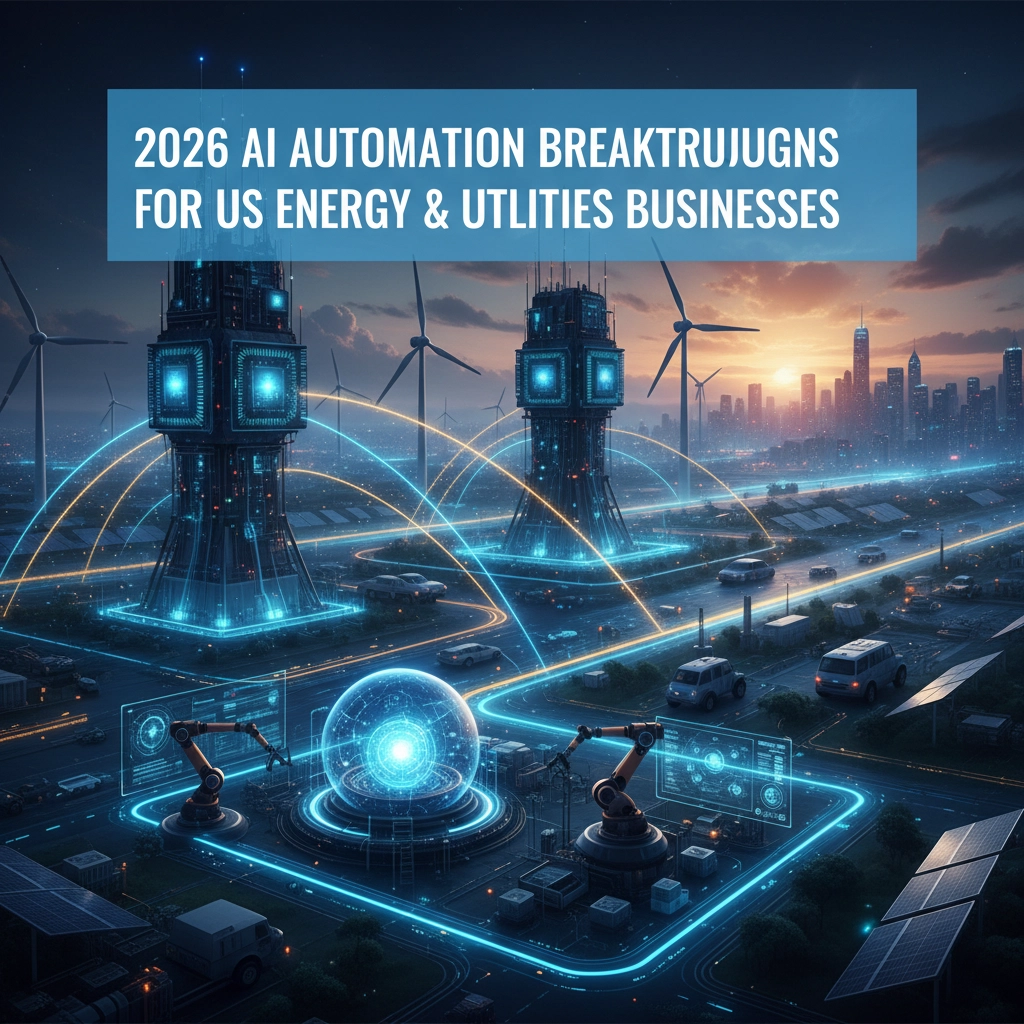
The energy and utilities sector is experiencing a revolutionary transformation as we approach 2026. With 92% of energy executives planning to digitize operations through AI-powered automation by 2026, the industry is shifting from reactive maintenance and static planning to intelligent, predictive systems that optimize everything from grid performance to customer interactions.
For US energy providers and utility companies, this represents both an unprecedented opportunity and a critical competitive imperative. Companies that embrace these AI breakthroughs are already witnessing significant improvements in operational efficiency, cost reduction, and customer satisfaction.
Predictive Maintenance: The Foundation of Smart Operations
Traditional maintenance schedules in the energy sector have relied on fixed intervals or reactive responses to equipment failures. This approach costs the industry billions annually in unnecessary maintenance, unexpected outages, and customer dissatisfaction. By 2026, AI-powered predictive maintenance will fundamentally reshape how utilities manage their infrastructure.

IoT-enabled sensors combined with machine learning algorithms can now analyze real-time data including temperature fluctuations, vibration patterns, electrical loads, and performance metrics to predict equipment failures before they occur. This technology can reduce operational costs by up to 40% while preventing costly service interruptions that can cost utilities millions in lost revenue and regulatory penalties.
The most advanced systems automatically generate work orders when AI detects patterns indicating imminent failure, allowing maintenance teams to address issues proactively. This approach has already demonstrated the ability to reduce outage durations by up to 40% and lower overall operational costs by 25%, according to U.S. Department of Energy studies.
For utility companies, implementing predictive maintenance requires strategic coordination between field operations, data analytics teams, and customer service departments: areas where specialized virtual assistants can streamline workflows and ensure seamless communication across all stakeholders.
Grid Optimization and Intelligent Energy Management
The modern electrical grid faces unprecedented complexity with bidirectional energy flows, distributed renewable resources, and dynamic demand patterns. Traditional control systems designed for predictable, centralized generation are struggling to manage today's decentralized energy ecosystem.
AI algorithms deployed across 2026 will revolutionize grid management through real-time forecasting, automated fault detection, and coordinated load balancing. These systems can analyze usage patterns across entire service territories, automatically rebalancing distribution loads to prevent strain on specific network segments.

Intelligent grid optimization includes several breakthrough capabilities:
Real-time Voltage Management: AI systems predict and mitigate low-voltage events before they affect customers, maintaining power quality standards while reducing equipment stress.
Cross-Utility Coordination: Advanced AI models coordinate electric, gas, and water operations, optimizing resource allocation across multiple utility services for maximum efficiency.
Infrastructure Prioritization: AI automatically identifies and prioritizes infrastructure upgrades based on real-time system vulnerabilities and predicted demand growth.
Automated Emergency Response: During outages or extreme weather events, AI systems instantly reroute power flows, deploy emergency resources, and communicate with affected customers through automated channels.
The complexity of managing these systems requires sophisticated backend support, data analysis, and customer communication: areas where virtual assistants specializing in utility operations can provide invaluable support to overwhelmed utility teams.
Renewable Energy Integration and Demand Forecasting
Integrating intermittent renewable energy sources represents one of the greatest operational challenges for grid operators. Weather-dependent solar and wind generation creates constant variability that traditional forecasting methods cannot adequately predict.
By 2026, AI systems will combine hyperlocal weather data, satellite imagery, historical performance records, and real-time sensor data to achieve unprecedented accuracy in renewable energy forecasting. These predictions enable seamless coordination between variable renewable sources, energy storage systems, and traditional power plants.
Modern demand forecasting has evolved beyond basic consumption patterns. AI systems now incorporate behavioral data, weather forecasts, local events, economic cycles, and even social media trends to predict energy consumption with remarkable granularity. This enables utilities to:
- Adjust generation and procurement strategies in real-time
- Offer personalized energy-saving recommendations to customers
- Optimize time-of-use pricing strategies
- Coordinate demand response programs more effectively
The data analysis and customer outreach required for effective demand management often overwhelms utility customer service teams. Strategic implementation of specialized virtual assistants can handle routine customer inquiries, process demand response enrollments, and manage personalized energy efficiency communications.
Customer Service Automation and Billing Intelligence
Customer service represents a massive operational expense for utilities, with millions of routine inquiries about billing, outages, service connections, and energy efficiency programs. AI automation in 2026 will transform how utilities interact with customers while dramatically reducing operational costs.

Intelligent Billing Systems can automatically detect billing anomalies, identify potential meter issues, and process payment arrangements without human intervention. These systems can resolve up to 80% of billing inquiries instantly, freeing customer service representatives to handle complex issues that require human expertise.
Automated Outage Management includes AI-powered systems that detect outages instantly, automatically notify affected customers through multiple channels, provide accurate restoration timeframes, and update customers throughout the restoration process.
Energy Efficiency Consulting utilizes AI to analyze individual customer usage patterns and provide personalized recommendations for reducing energy costs. These systems can automatically enroll eligible customers in efficiency programs and track program effectiveness.
However, even with advanced automation, utilities still need human oversight for complex customer issues, regulatory compliance, and relationship management. Professional virtual assistants trained in utility operations can bridge this gap, handling escalated inquiries and ensuring customers receive personalized attention when automated systems reach their limits.
Workflow Optimization and Administrative Efficiency
Beyond customer-facing operations, AI automation is revolutionizing internal utility workflows. Document processing, regulatory reporting, vendor management, and project coordination are being streamlined through intelligent automation.
Regulatory Compliance Automation: AI systems can automatically compile regulatory reports, track compliance deadlines, and flag potential violations before they become costly penalties.
Vendor and Contractor Management: Automated systems can process invoices, verify work completion, and manage contractor scheduling across multiple projects simultaneously.
Project Coordination: AI-powered project management tools can automatically adjust schedules based on weather, resource availability, and regulatory requirements.
These administrative improvements require careful change management and ongoing optimization: areas where experienced virtual assistants can provide crucial support to utility management teams.
Enterprise Implementation Strategies
The 2026 AI breakthroughs are being driven by utilities building hybrid computing infrastructures that blend edge computing, cloud capabilities, and on-premises systems. However, successful implementation requires more than just technology deployment.

Utilities must navigate significant challenges including high initial integration costs, workforce training requirements, and the complexity of deploying AI systems alongside existing infrastructure. Industry experts emphasize that human oversight remains essential: AI should serve as a decision-support tool rather than an autonomous controller.
The most successful utility AI implementations combine advanced technology with strategic human resources that can manage complex workflows, ensure compliance, and maintain customer relationships during the transition period.
Preparing Your Utility for the AI Revolution
As we approach 2026, utility companies cannot afford to delay their AI automation initiatives. The competitive advantages gained through predictive maintenance, grid optimization, and customer service automation will determine which companies thrive in the evolving energy landscape.
However, successful implementation requires more than technology investment. Utilities need strategic support for workflow optimization, customer communication, regulatory compliance, and change management throughout the transition process.
About Virtual Nexgen Solutions
At Virtual Nexgen Solutions, we understand the unique challenges facing energy and utility companies implementing AI automation. Our specialized virtual assistants are trained in utility operations, regulatory requirements, and customer service excellence. We provide the human expertise needed to maximize your AI investments while maintaining operational excellence.
From managing customer communications during system implementations to supporting administrative workflows and ensuring regulatory compliance, our team becomes an extension of your utility operations. We help bridge the gap between advanced AI capabilities and the personalized service your customers expect.
Don't let the complexity of AI implementation overwhelm your team. Partner with professionals who understand both technology and utility operations.
Ready to optimize your utility operations for 2026? Visit www.virtualnexgen.com to learn how our specialized virtual assistants can support your AI automation initiatives. Schedule your consultation today at https://calendly.com/virtualnexgen-info/30min and discover how to maximize your AI investments while maintaining exceptional customer service.