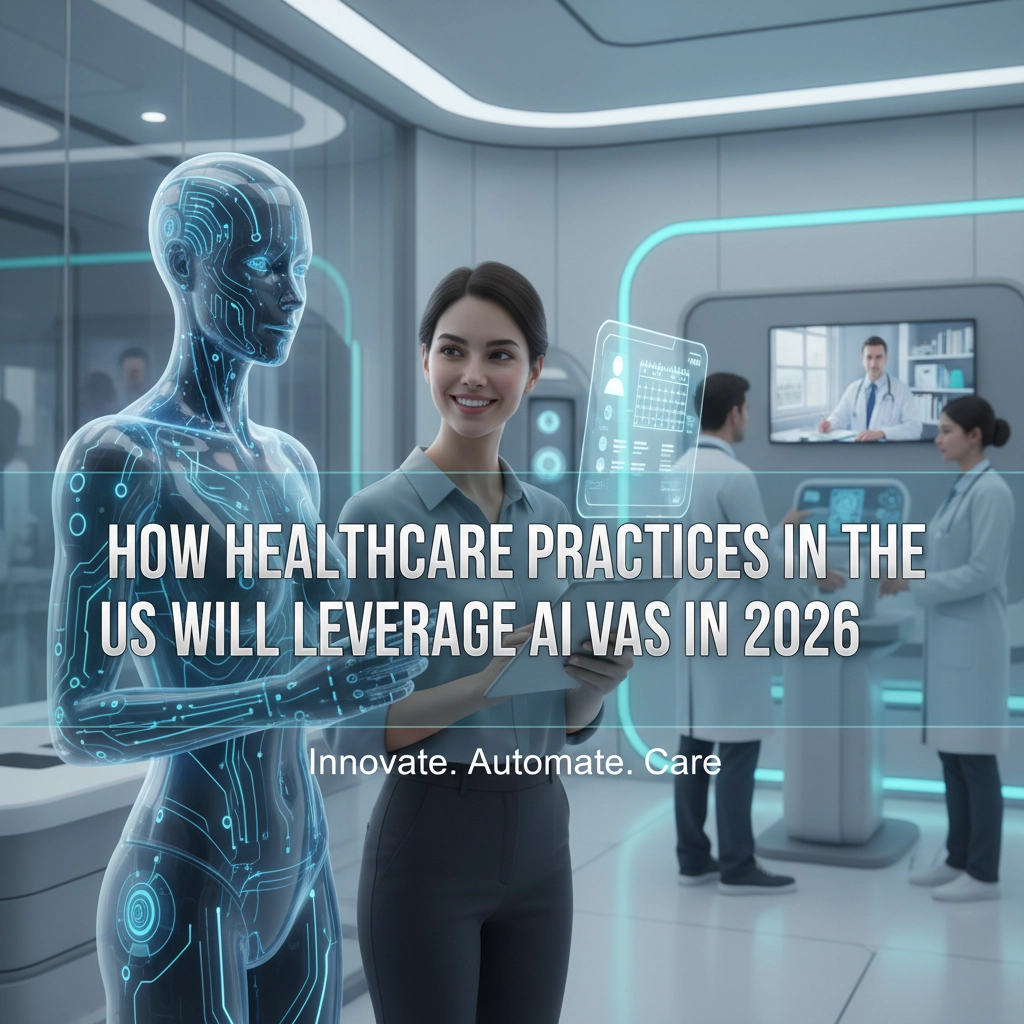
As we approach 2026, healthcare practices across the United States are on the brink of a revolutionary transformation. Artificial Intelligence Virtual Assistants (AI VAs) are no longer futuristic concepts: they're becoming essential infrastructure that will define competitive advantage in healthcare delivery. With 47% of healthcare organizations already using or planning to implement AI virtual assistants, and projections showing 90% of US hospitals leveraging AI chatbots by 2025, the question isn't whether your practice should adopt AI VAs, but how quickly you can implement them effectively.
The numbers speak volumes: the global AI virtual assistant market in healthcare reached $677.93 million in 2023 and is projected to explode to $9.3 billion by 2030, representing a staggering 33.77% compound annual growth rate. For US healthcare practices, this represents the most significant operational shift since the introduction of electronic health records.
The 2026 Healthcare AI VA Landscape
By 2026, AI virtual assistants will handle over 40% of routine patient interactions, fundamentally reshaping how healthcare practices operate. These intelligent systems will become the first point of contact for patients, managing everything from appointment scheduling to preliminary health assessments, allowing healthcare professionals to focus on what matters most: patient care.

Healthcare professionals currently spend nearly 16 hours per week on administrative tasks: a burden that AI VAs will substantially reduce by up to 30%. Major hospital networks have already demonstrated dramatic returns, with some reporting 60% reductions in administrative call volume after implementing virtual assistant technology.
Key Areas Where Healthcare Practices Will Leverage AI VAs
Administrative Automation Revolution
The administrative backbone of healthcare practices will be completely transformed by 2026. AI VAs will seamlessly handle:
- Appointment Scheduling and Management: Intelligent systems will manage complex scheduling across multiple providers, automatically optimizing appointments based on urgency, provider availability, and patient preferences.
- Insurance Verification and Prior Authorization: Real-time verification processes that previously took hours will be completed in minutes, reducing claim denials and improving cash flow.
- Patient Intake and Registration: Comprehensive digital intake forms that adapt based on patient responses, ensuring complete and accurate information collection.
- Prescription Refill Management: Automated prescription renewal processes that coordinate with pharmacies and alert providers to potential issues.
Enhanced Patient Communication and Engagement
Patient satisfaction metrics show that over 70% of patients report satisfaction when using AI virtual assistants for health-related inquiries. By 2026, these systems will provide:
- 24/7 Patient Support: Immediate responses to common questions, medication reminders, and basic health guidance available around the clock.
- Multilingual Capabilities: Breaking down language barriers with fluent communication across multiple languages, ensuring equitable care access.
- Personalized Health Education: Tailored information delivery based on individual patient conditions, treatment plans, and health literacy levels.
- Chronic Disease Management: Continuous monitoring and engagement for patients with diabetes, hypertension, COPD, and other chronic conditions, resulting in 30% better medication adherence.

Clinical Decision Support and Documentation
The clinical applications of AI VAs will extend far beyond administrative tasks:
- Voice-Driven Documentation: Converting physician voice notes into structured medical records, saving an estimated $12 billion annually for US providers by 2027.
- Clinical Alert Systems: Real-time monitoring of patient data to flag critical lab results, medication interactions, and care protocol deviations.
- Care Coordination: Seamless communication between specialists, primary care providers, and ancillary services.
Step-by-Step Implementation Guide for 2026
Phase 1: Assessment and Planning (Month 1-2)
- Conduct a comprehensive workflow analysis to identify high-impact automation opportunities
- Evaluate current IT infrastructure and identify necessary upgrades
- Establish HIPAA compliance protocols and data security measures
- Create implementation timeline and budget allocation
Phase 2: Technology Integration (Month 3-4)
- Select AI VA platform that integrates with existing EHR systems
- Configure automated workflows for priority use cases
- Implement staff training programs for new technologies
- Establish quality assurance and monitoring protocols
Phase 3: Pilot Testing and Optimization (Month 5-6)
- Launch pilot program with limited patient population
- Monitor performance metrics and patient satisfaction scores
- Refine AI responses and workflow automation
- Gather staff feedback and adjust processes
Phase 4: Full Deployment and Scale (Month 7-12)
- Roll out AI VA capabilities across all practice locations
- Continuously optimize based on performance data
- Expand automation to additional workflows
- Measure ROI and plan for advanced features

Measurable ROI and Benefits
Healthcare practices implementing AI VAs in 2026 will see immediate and long-term returns:
- Operational Efficiency: 40% reduction in call center volume and 30% decrease in administrative workload
- Cost Savings: Estimated 20-30% reduction in administrative costs within the first year
- Patient Outcomes: 20% drop in readmissions through improved chronic disease management
- Staff Satisfaction: Reduced administrative burden allows clinical staff to focus on patient care
- Revenue Growth: Improved appointment scheduling and reduced no-shows increase practice capacity
Overcoming Implementation Challenges
While the benefits are substantial, successful AI VA implementation requires addressing key challenges:
- Data Quality: Clean, well-organized patient data is essential for effective AI performance
- Staff Training: Comprehensive training programs ensure smooth adoption and maximize benefits
- Patient Acceptance: Clear communication about AI capabilities and human oversight builds patient trust
- Regulatory Compliance: Robust HIPAA compliance and data security protocols are non-negotiable
The Competitive Imperative
Healthcare practices that delay AI VA adoption risk significant competitive disadvantage. Patients increasingly expect the convenience, accessibility, and personalized attention that AI virtual assistants provide. Organizations implementing these technologies comprehensively in 2026 will establish market leadership through superior operational efficiency, better patient outcomes, and enhanced staff satisfaction.

The telehealth market alone processes 5 million virtual primary care appointments per quarter in the US, and AI assistants are becoming critical to operational success in this growing segment. Practices that integrate AI VAs effectively will capture larger market share and build stronger patient relationships.
Advanced Integration Opportunities
Looking beyond basic automation, 2026 will see sophisticated AI VA applications:
- Wearable Device Integration: Real-time monitoring of patient vitals through connected devices, enabling proactive intervention
- Predictive Analytics: AI systems that identify patients at risk for complications before symptoms manifest
- Personalized Treatment Plans: Dynamic care protocols that adjust based on individual patient responses and outcomes
- Remote Patient Monitoring: Comprehensive virtual care programs that extend practice reach beyond traditional boundaries
Ready to Transform Your Healthcare Practice?
The transformation to AI-powered healthcare delivery isn't a distant future: it's happening now. Healthcare practices that partner with experienced AI VA providers will lead the industry in efficiency, patient satisfaction, and clinical outcomes.
At Virtual Nexgen Solutions, we specialize in implementing comprehensive AI virtual assistant solutions tailored specifically for healthcare practices. Our proven methodology has helped numerous US healthcare organizations achieve dramatic improvements in operational efficiency while maintaining the highest standards of patient care and HIPAA compliance.
Don't let your practice fall behind in the AI revolution. Book a consultation with our healthcare AI specialists to discover how Virtual Nexgen Solutions can transform your practice operations and prepare you for success in 2026 and beyond.
Schedule Your Free Healthcare AI VA Consultation Today
About Virtual Nexgen Solutions
Virtual Nexgen Solutions is a leading provider of AI and virtual assistant services, specializing in healthcare automation solutions. We help US healthcare practices leverage cutting-edge AI technology to improve operational efficiency, enhance patient care, and drive sustainable growth. Our comprehensive platform combines advanced AI capabilities with industry-specific expertise to deliver measurable results for healthcare organizations of all sizes.
Visit virtualnexgen.com to learn more about our healthcare AI VA solutions and discover how we can help your practice thrive in the digital healthcare ecosystem.