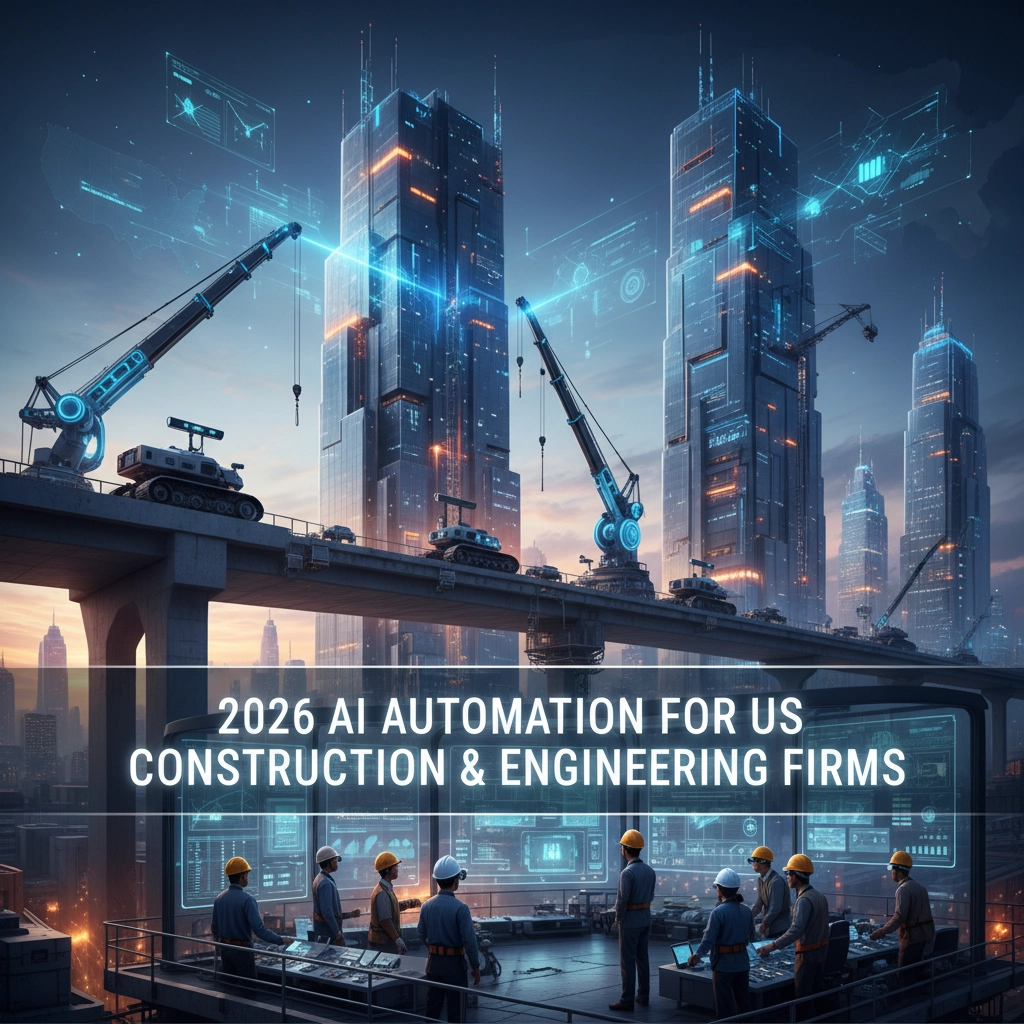
The construction and engineering landscape has undergone a dramatic transformation in 2026. What was once considered experimental technology has become essential infrastructure for competitive firms across the United States. AI automation is no longer a "nice-to-have" – it's the baseline standard that separates industry leaders from those struggling to keep pace.
For construction and engineering firms operating in today's challenging environment of labor shortages, supply chain volatility, and razor-thin margins, AI automation offers a path to sustainable growth and operational excellence. The companies embracing these technologies are witnessing measurable improvements in project delivery, cost control, and workforce efficiency that directly impact their bottom line.
Revolutionizing Design and Planning Operations
Generative Design and Engineering Optimization
AI-powered generative design tools are transforming how architects and engineers approach complex projects. These sophisticated systems can evaluate thousands of design alternatives in minutes, considering multiple variables simultaneously – site conditions, budget constraints, energy efficiency goals, structural requirements, and local building codes.

The impact is remarkable: design teams report reducing conceptual design time by 40-60% while exploring significantly more innovative solutions than traditional methods would allow. For a major commercial project in Texas, one engineering firm used generative AI to optimize HVAC layouts, resulting in 25% energy efficiency improvements and $300,000 in operational cost savings over the building's lifecycle.
Intelligent Project Scheduling
Construction scheduling has been revolutionized by AI systems that analyze historical project data, weather patterns, labor availability, and material delivery schedules to create adaptive timelines. These platforms minimize conflicts and downtime by continuously evaluating resource constraints and task dependencies.
When conditions change – whether due to unexpected weather delays, supply chain disruptions, or permit issues – AI scheduling assistants automatically resequence activities to minimize impact. Industry data shows that firms using AI-driven predictive scheduling are reducing project delays by up to 60% compared to traditional planning methods.
Transforming Field Operations and Workforce Management
Automation and Robotics on the Job Site
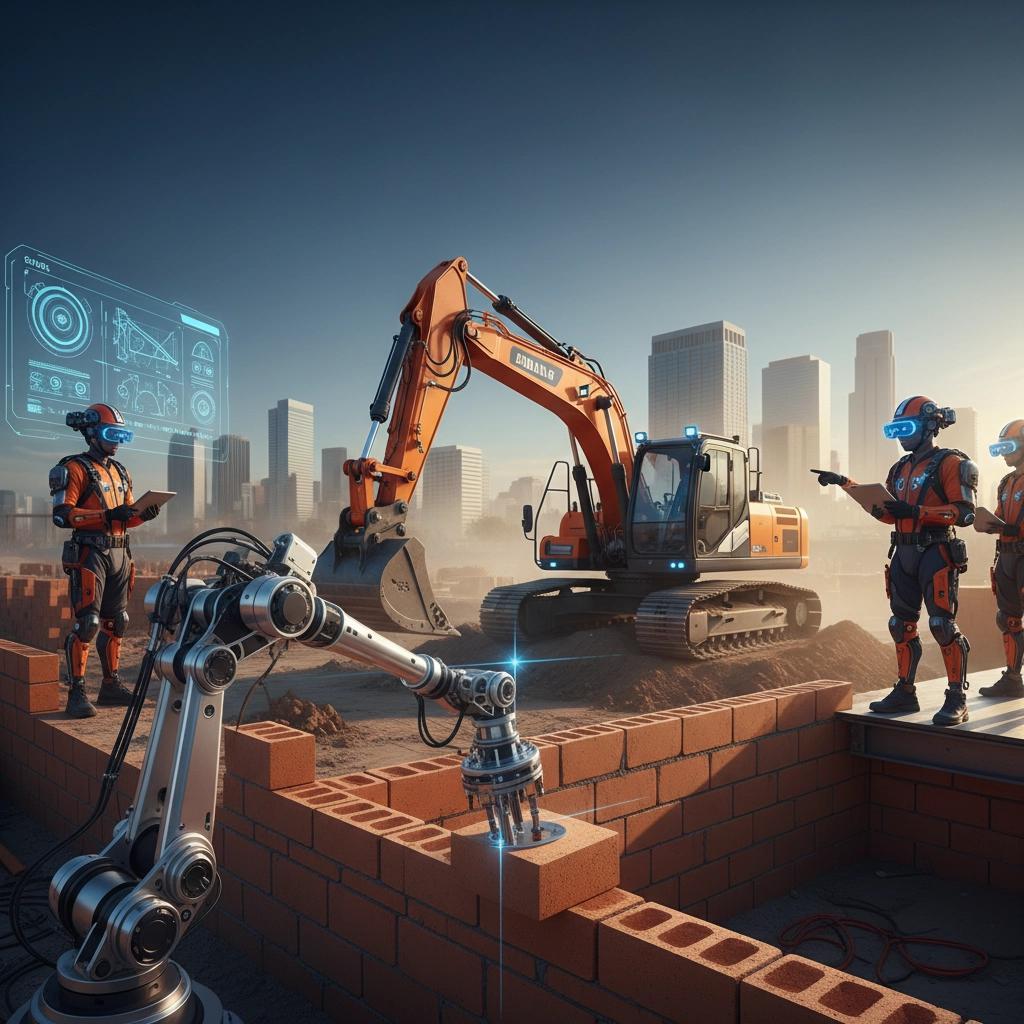
On-site automation has become increasingly visible across US construction sites in 2026, addressing the industry's persistent labor shortage while enhancing safety and precision. Contractors are deploying AI-powered robots and autonomous equipment to handle repetitive, labor-intensive, or hazardous tasks with remarkable accuracy.
Autonomous equipment now performs bricklaying, rebar tying, and 3D component printing, while heavy machinery equipped with AI-driven systems grade terrain and excavate following digital plans with GPS guidance. These systems require minimal human supervision while maintaining consistent quality and safety standards.
Strategic Workforce Planning
AI workforce planning platforms help construction firms navigate the ongoing skilled labor shortage by optimizing resource allocation across multiple projects. These systems analyze skill availability against project demand, recommending optimal timing and locations for personnel deployment.
The algorithms also provide insights into compensation strategies aligned with local market conditions, helping firms attract and retain talent in competitive markets. This capability allows companies to maintain operational flexibility while maximizing workforce productivity.
Streamlining Back Office and Financial Operations
Automated Administrative Workflows
AI has transformed back-office operations by automating traditionally manual processes like invoice capture, coding, and accounts payable/receivable processing. Machine learning models can compress billing cycle times by more than 50% compared to manual processes while identifying under-billing and margin erosion early.
Cloud-based enterprise resource planning systems now integrate job costing, finance, and field reporting in real-time, enabling project leaders to make informed decisions quickly. This visibility allows firms to pull forward profitable work or adjust procurement timing proactively rather than reactively.
Precision Cost Estimation and Risk Management
Advanced Cost Prediction
AI-driven cost estimation systems evaluate thousands of variables – labor costs, commodity pricing, site conditions, regional factors, and historical project data – to achieve approximately 95% accuracy in project bidding. This precision helps contractors win more competitive bids while protecting profit margins.

These systems continuously learn from completed projects, refining their algorithms to account for regional variations and market conditions. Machine learning risk models identify potential cost overruns before they materialize, enabling proactive mitigation strategies that protect project profitability.
Predictive Equipment Maintenance
AI-powered predictive maintenance systems are preventing approximately 80% of equipment breakdowns by analyzing performance data and identifying failure patterns before they occur. These systems monitor equipment health through sensors and historical data, scheduling maintenance activities during planned downtime rather than emergency situations.
This capability significantly reduces unexpected project delays and extends equipment lifecycle value, providing substantial cost savings over traditional reactive maintenance approaches.
Supply Chain and Material Optimization
AI demand forecasting systems predict material needs by project stage, region, and seasonal factors, reducing material waste by up to 30%. These platforms provide supply chain visibility that prevents the inefficiencies previously causing millions in idle inventory costs.
The integration of AI forecasting with procurement workflows streamlines material flow and reduces carrying costs while ensuring materials arrive precisely when needed. This just-in-time approach improves cash flow while minimizing storage requirements on constrained job sites.
Building Information Modeling and Digital Twins
Enhanced BIM systems powered by AI now predict energy performance, identify maintenance needs, and estimate operational costs with unprecedented accuracy. When paired with digital twin technology, project teams can monitor real-time building behavior during construction and throughout the asset's lifecycle.
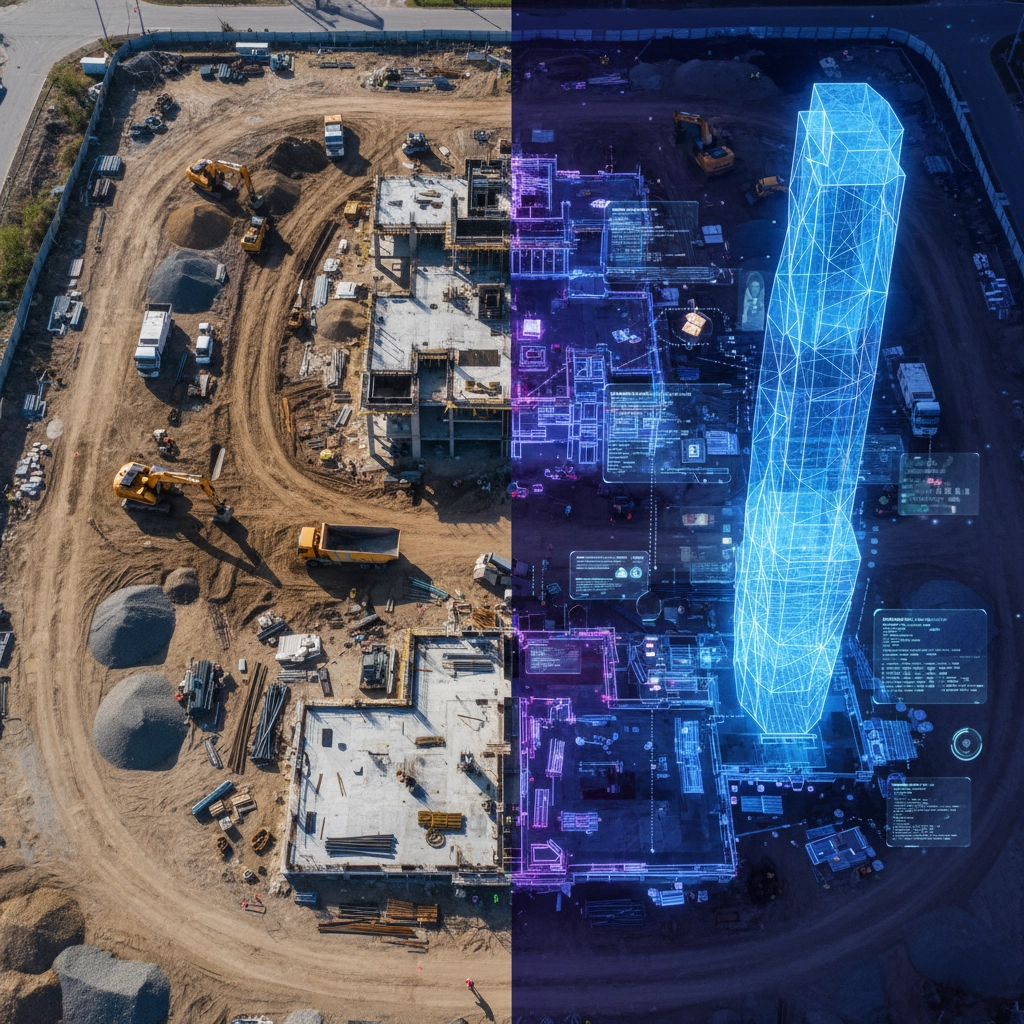
This capability creates valuable feedback loops connecting design intent to actual performance, supporting both construction efficiency and long-term asset management. For facility owners, these digital twins provide the foundation for optimizing building operations and reducing lifecycle costs.
Strategic Implementation Framework for 2026
Successful AI adoption requires a structured approach that aligns technology investments with business objectives:
Launch Cross-Functional Task Forces – Establish teams including operations, finance, and IT leadership to ensure AI initiatives support overall business strategy and receive adequate resources.
Begin with Strategic Pilots – Start with focused pilot projects: one field-facing initiative (AI scheduling or safety analytics) and one back-office focused solution (invoice automation or cost forecasting). This approach demonstrates ROI while building organizational confidence.
Define Measurable Success Metrics – Track specific KPIs including margin improvement, cash flow enhancement, and cycle time reduction to validate investment decisions and guide expansion efforts.
Standardize and Scale Proven Solutions – Document successful processes, provide comprehensive team training, and expand validated solutions firm-wide rather than deploying tools without ensuring actual adoption.
Overcoming Implementation Challenges
The construction industry's primary challenge isn't deploying cutting-edge technology – it's ensuring genuine adoption through aligned incentives, clear performance metrics, and comprehensive training programs. Successful firms focus on practical, ROI-driven tool selection that prevents technology fatigue while building data fluency across their organizations.
The most effective implementations pair AI-driven precision with experienced human judgment, using automation to handle routine tasks while freeing skilled professionals to focus on complex decision-making and client relationships.
The Competitive Advantage of Early Adoption
2026 represents a maturation point where AI adoption directly influences competitive positioning in the US construction market. Firms combining strategic technology investment with workforce development and disciplined implementation are achieving measurable advantages: 20-30% improvements in project delivery times, 15-25% reductions in operational costs, and significantly enhanced safety records.
These improvements translate directly to competitive advantages in bidding, client satisfaction, and profitability that compound over time.
Ready to Transform Your Construction Operations?
Virtual Nexgen Solutions specializes in helping construction and engineering firms implement AI automation strategies that deliver measurable results. Our experienced team understands the unique challenges facing the construction industry and can design customized solutions that fit your specific operational needs and budget requirements.
Don't let your competitors gain an unfair advantage. Book a free 30-minute consultation to discover how AI automation can transform your project delivery, reduce costs, and improve profitability.
About Virtual Nexgen Solutions
Virtual Nexgen Solutions is a leading provider of AI and virtual assistant services, helping businesses across industries leverage cutting-edge technology to improve efficiency and drive growth. Our team of experts specializes in implementing customized automation solutions that deliver real ROI while integrating seamlessly with existing operations. Learn more at virtualnexgen.com.