The manufacturing landscape in America is on the brink of a revolutionary transformation. As we approach 2026, AI virtual assistants are set to become the backbone of modern manufacturing operations, fundamentally changing how US manufacturers approach production, quality control, and business operations. This isn't just about automation anymore: it's about creating intelligent partnerships between human expertise and artificial intelligence.
The Manufacturing Revolution is Here
US manufacturing businesses are experiencing unprecedented pressure to increase efficiency, reduce costs, and maintain competitive advantages in a global marketplace. Traditional methods of managing complex supply chains, monitoring production lines, and ensuring quality control are reaching their limits. Enter AI virtual assistants: sophisticated systems that promise to transform every aspect of manufacturing operations.
Current industry data shows that 75% of small businesses are already investing in AI technologies, with manufacturing leading the charge. The momentum building toward 2026 suggests that companies embracing AI virtual assistants early will establish themselves as industry leaders, while those delaying adoption risk losing ground to more technologically advanced competitors.
Production Monitoring and Operational Excellence
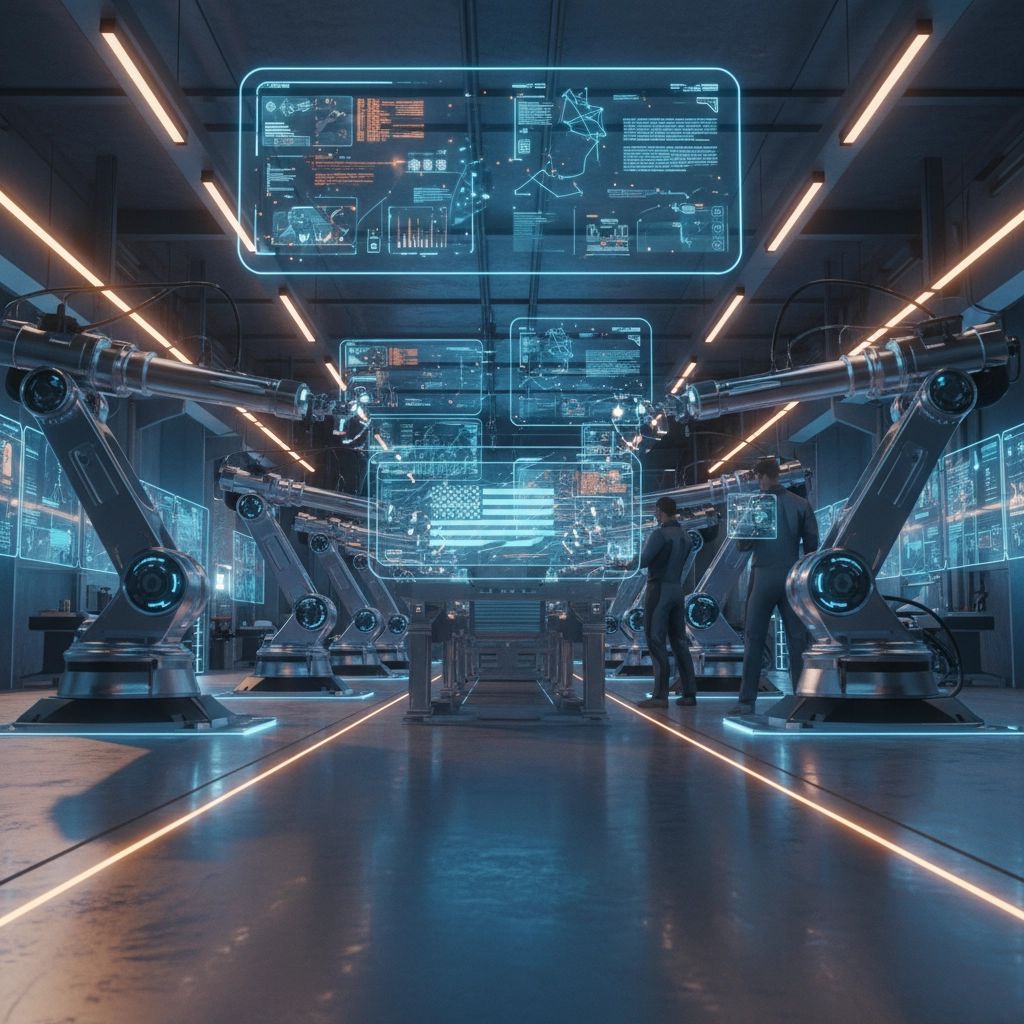
AI virtual assistants will revolutionize production monitoring by providing unprecedented visibility into manufacturing processes. These intelligent systems monitor every production step, from raw material sourcing through final assembly, delivering real-time data that enables manufacturing teams to prove compliance, trace product origins, and respond instantly to emerging problems.
Unlike traditional monitoring systems that require constant human oversight, AI virtual assistants operate continuously, analyzing video feeds, sensor data, and production metrics simultaneously. This multimodal approach combines visual understanding with practical knowledge, automatically detecting quality control issues, identifying potential safety hazards, and optimizing workspace efficiency without requiring human intervention.
The transparency capabilities extend beyond simple monitoring. AI assistants create detailed audit trails, automatically generate compliance reports, and flag potential issues before they escalate into costly problems. This proactive approach transforms manufacturing from reactive problem-solving to predictive optimization.
Supply Chain Transformation
The complexity of modern supply chains demands intelligent management systems that can process vast amounts of data while making real-time decisions. AI virtual assistants excel at linking data between suppliers, manufacturing plants, and distributors, creating seamless communication networks that reduce bottlenecks and optimize operations.
By 2026, autonomous AI agents will independently manage inventory levels, monitoring stock across multiple locations, predicting demand patterns based on historical data and market trends, and automatically placing orders with suppliers. This capability is particularly valuable for managing global supply chains where time zones, language barriers, and varying regulations create additional complexity.
Smart routing algorithms will optimize delivery schedules, minimize shipping costs, and reduce environmental impact while maintaining just-in-time inventory principles. These systems consider factors like weather patterns, traffic conditions, fuel costs, and supplier reliability to make optimal logistics decisions that human planners might overlook.

Enhanced Decision-Making Capabilities
Manufacturing leaders will benefit from AI virtual assistants functioning as decision-making copilots, processing complex data sets and providing specific recommendations for operational improvements. Rather than spending hours reviewing dashboards and reports, executives receive actionable insights that combine real-time operational data with predictive modeling.
These AI systems analyze market trends, production capacity, resource allocation, and competitive positioning to suggest strategic adjustments. Predictive analytics capabilities enable manufacturers to anticipate demand fluctuations, identify potential equipment failures before they occur, and optimize production schedules to minimize downtime and maximize efficiency.
The decision-making process becomes more collaborative, with AI assistants presenting multiple scenarios and their potential outcomes, allowing human managers to make informed choices while understanding the implications of each option.
Workflow Automation and Process Optimization
AI virtual assistants will manage entire manufacturing workflows end-to-end, from initial project scheduling and resource allocation through final quality inspection and shipping coordination. Employees will spend less time on repetitive administrative tasks and more time on strategic activities that require human creativity and problem-solving skills.
Personalized workflow optimization considers individual employee strengths, preferences, and working patterns to create customized task assignments that maximize productivity while improving job satisfaction. These systems learn from employee performance data to continuously refine and improve workflow efficiency.
Quality control processes become automated through intelligent visual inspection systems that can identify defects, measure tolerances, and verify specifications with greater accuracy and consistency than human inspectors. This doesn't replace human expertise but augments it, allowing quality control professionals to focus on complex problem-solving and process improvement initiatives.
Step-by-Step Adoption Strategy
Phase 1: Assessment and Planning (Months 1-2)
Begin by evaluating current manufacturing processes, identifying bottlenecks, and determining which areas would benefit most from AI virtual assistant implementation. Conduct a thorough audit of existing technology infrastructure and establish baseline performance metrics.
Phase 2: Pilot Implementation (Months 3-4)
Start with a limited scope pilot program focusing on one specific area, such as inventory management or quality control. This approach allows teams to learn the technology while minimizing operational disruption.
Phase 3: Integration and Training (Months 5-6)
Expand AI virtual assistant capabilities to additional processes while providing comprehensive training for employees. Focus on change management to ensure smooth adoption and address any concerns about job displacement.
Phase 4: Full Deployment (Months 7-12)
Implement AI virtual assistants across all applicable manufacturing processes, continuously monitoring performance and making adjustments based on real-world results.
Real-World Applications and Use Cases
Predictive Maintenance: AI virtual assistants analyze equipment sensor data to predict when machines require maintenance, scheduling repairs during planned downtime to avoid unexpected production interruptions.
Quality Assurance: Intelligent visual inspection systems examine products at multiple production stages, identifying defects that might escape human detection while maintaining detailed quality records for compliance purposes.
Resource Optimization: AI assistants manage energy consumption, raw material usage, and workforce scheduling to minimize waste while maintaining production targets.
Regulatory Compliance: Automated compliance tracking ensures manufacturing processes meet industry standards and government regulations, generating required documentation and flagging potential violations before they become costly problems.
Preparing for Workforce Changes
The integration of AI virtual assistants will significantly impact manufacturing employment, with studies suggesting that AI could replace up to two million manufacturing workers by 2026. However, this transformation also creates new opportunities for workers who develop skills in AI management, data analysis, and strategic planning.
Successful manufacturers will invest in employee retraining programs, focusing on skills that complement AI capabilities rather than compete with them. This includes critical thinking, creative problem-solving, complex communication, and strategic decision-making abilities that remain uniquely human.
The Competitive Advantage
Manufacturing businesses that embrace AI virtual assistants will gain substantial competitive advantages through faster response times, lower operational costs, improved quality control, and enhanced decision-making capabilities. McKinsey estimates that generative AI could add up to $4.4 trillion annually to the global economy through productivity gains and cost reductions.
Early adopters will establish themselves as industry leaders, attracting customers who value reliability, efficiency, and innovation. The democratization of AI tools means that even small and mid-sized manufacturers can access these technologies through cloud-based solutions, leveling the playing field in many market segments.
Ready to Transform Your Manufacturing Operations?
The future of manufacturing is here, and AI virtual assistants are leading the transformation. Don't let your competitors gain the advantage while you're still evaluating options.
Ready to see how AI virtual assistants can revolutionize your manufacturing business? Book a free consultation with our experts at Virtual Nexgen Solutions. We'll show you exactly how our AI-powered solutions can streamline your operations, reduce costs, and boost productivity. Schedule your meeting today and take the first step toward manufacturing excellence.
About Virtual Nexgen Solutions
Virtual Nexgen Solutions is a leading provider of AI and virtual assistant services, specializing in helping businesses across industries harness the power of artificial intelligence to optimize operations and drive growth. Our expert team designs custom AI solutions that integrate seamlessly with existing workflows, ensuring maximum efficiency and ROI. Visit us at virtualnexgen.com to learn more about how we're transforming businesses through intelligent automation.