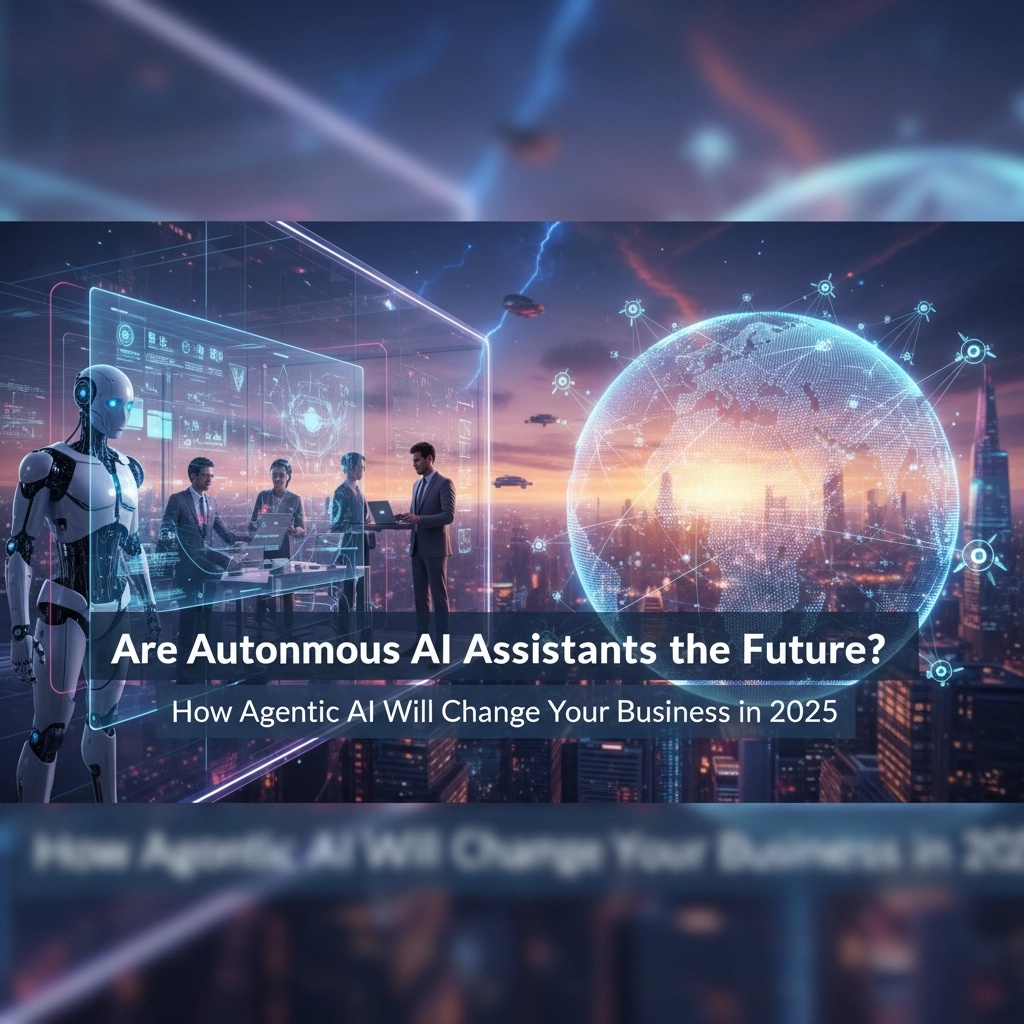
The business world is experiencing a seismic shift. While companies have been experimenting with AI assistants for years, 2025 marks the emergence of something entirely different: autonomous AI agents that don't just respond to commands but proactively solve problems, make decisions, and execute complex workflows without human intervention.
The numbers tell the story. Deloitte reports that 25% of enterprises using generative AI will launch agentic AI pilots in 2025, with adoption expected to double to 50% by 2027. But what exactly are autonomous AI assistants, and how will they transform your business operations?
Understanding the Revolutionary Shift: Traditional AI vs. Agentic AI
Traditional AI assistants like Siri, Alexa, and even ChatGPT operate as sophisticated question-answering systems. You ask, they respond. You command, they execute. Agentic AI flips this relationship entirely.
Instead of waiting for instructions, autonomous AI assistants proactively identify problems, initiate solutions, and complete entire processes independently. Think of the difference between a reactive customer service rep who only responds to complaints versus a proactive account manager who identifies potential issues before customers even notice them.

Here's what sets agentic AI apart:
- Proactive problem identification before issues escalate
- Autonomous decision-making within defined parameters
- Cross-system workflow coordination across multiple business tools
- Real-time adaptation based on changing circumstances
- Complete process ownership from detection to resolution
This evolution is powered by advances in large language models (LLMs), multi-modal AI capabilities, and sophisticated integration frameworks that connect seamlessly with existing business infrastructure.
How Agentic AI is Transforming Business Operations Today
Customer Support Revolution
The most dramatic transformation is happening in customer service. Autonomous AI agents now resolve support tickets, process refunds, and propose solutions without escalation. Gartner forecasts that by 2029, agentic AI will autonomously resolve 80% of common customer service issues without human intervention, potentially reducing operational costs by 30%.
Instead of flagging issues for human review, these systems take immediate corrective action. A customer's payment fails? The AI agent automatically retries the transaction, sends personalized communication about the issue, and updates the customer's account status: all within seconds.
Supply Chain and Operations Optimization
Autonomous AI agents are revolutionizing supply chain management by dynamically adjusting shipments, reducing bottlenecks, and managing inventory in real-time. These systems work 24/7, continuously monitoring metrics, generating status reports, and coordinating cross-team tasks that would traditionally require multiple human touchpoints.

The Mayo Clinic exemplifies this transformation in healthcare, testing AI-driven health assistants that analyze patient symptoms, recommend preliminary diagnoses, handle patient triage based on symptom severity, and schedule follow-up care automatically. These systems reduce wait times while optimizing doctor workloads through intelligent initial care decisions.
Industry-Specific Applications Driving Adoption
Financial Services and Fraud Detection
Self-learning AI agents monitor transactions in real-time, detect anomalies, and take immediate corrective action without requiring human approval for routine decisions. This represents a massive evolution from traditional fraud detection systems that simply flagged suspicious activity for human review.
These systems don't just identify potential fraud: they assess risk levels, implement protective measures, and communicate with customers about account security, all while learning from each interaction to improve future decision-making.
Sales and Marketing Automation
Modern Marketing Virtual Assistants score leads, draft personalized emails, schedule follow-ups automatically, and analyze campaign performance without manual intervention. They can identify the optimal time to contact prospects, personalize messaging based on behavioral data, and even adjust campaign strategies based on real-time performance metrics.
Human Resources and Talent Management
HR departments benefit from autonomous candidate screening, automated onboarding and training management, and intelligent responses to policy and benefits questions. These AI agents can coordinate interview schedules, send personalized communication to candidates, and even make initial hiring recommendations based on predefined criteria.
Key Trends Shaping the Agentic AI Landscape
Multi-Agent Collaboration
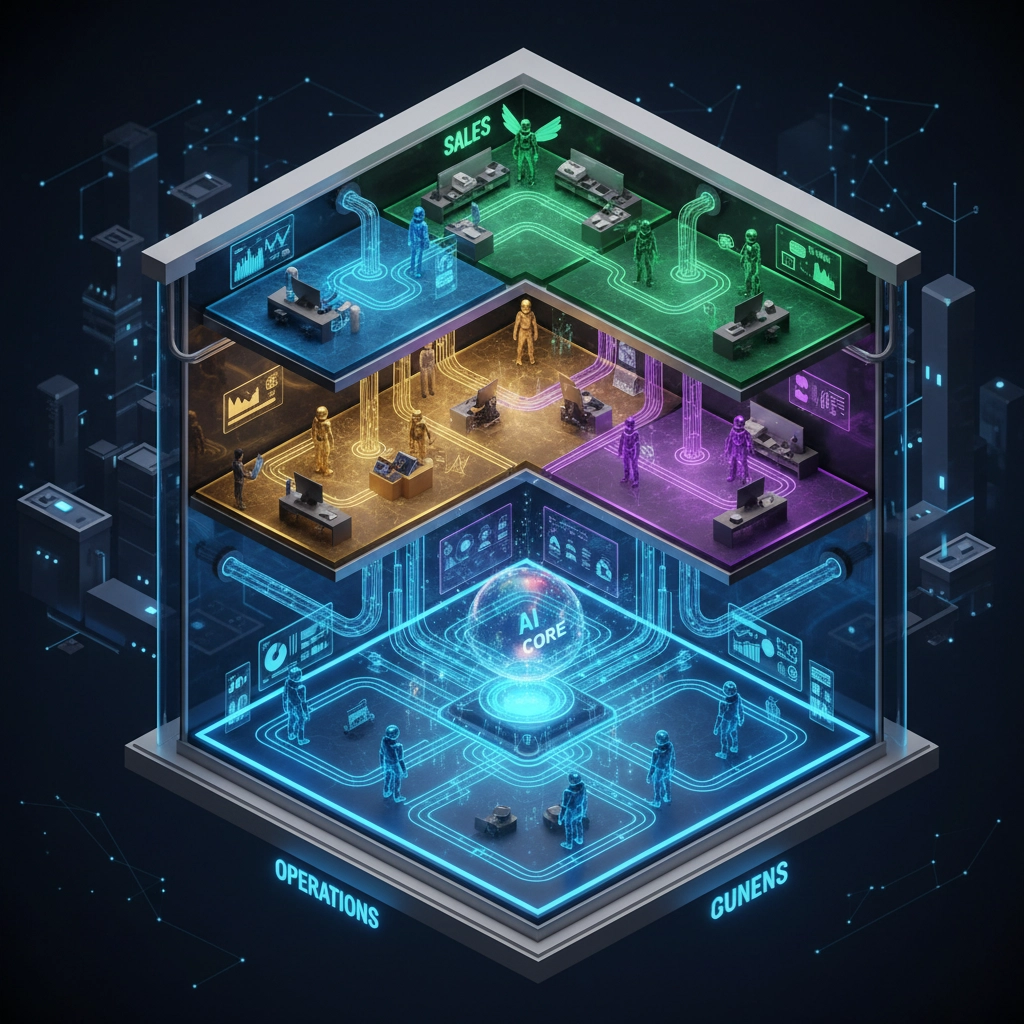
The future isn't just one AI assistant: it's specialized AI agents working together. Different agents handle customer service, sales, analytics, or Bookkeeping Virtual Assistants tasks, coordinating among themselves without constant human direction.
No-Code Customization Revolution
Perhaps the most democratizing aspect of modern agentic AI is the ability for non-technical teams to create and customize assistants without writing code. This accessibility is rapidly expanding adoption beyond IT departments to every corner of the organization.
Deep Integration Capabilities
Modern AI assistants connect directly to CRMs, project management tools, databases, and ERPs to execute tasks independently. This seamless integration eliminates the data silos that have historically limited AI effectiveness.
Industry-Specific Intelligence
Niche-focused assistants for legal, finance, healthcare, and manufacturing embed domain-specific knowledge into their decision-making processes. For example, Real Estate Virtual Assistants understand property valuation methods, mortgage processes, and market trends in ways that generic AI assistants simply cannot match.
The Competitive Advantage of Early Adoption
Nearly 70% of Fortune 500 companies already use Microsoft 365 Copilot to automate simple tasks, establishing a foundation for more sophisticated agentic implementations. However, the real competitive advantage lies in deploying autonomous AI agents for complex, multi-step processes that directly impact customer experience and operational efficiency.

Organizations adopting agentic AI now are seeing:
- Reduced operational costs through 24/7 autonomous problem-solving
- Faster response times with proactive issue identification
- Scalable operations without proportional headcount increases
- Improved customer satisfaction through consistent, intelligent service
- Data-driven decision making with real-time insights and automated responses
Looking Beyond 2025: The Long-Term Vision
Within the next year, generative AI and conversational agents will become standard across industries for customer service, internal communications, and marketing. But the long-term vision extends far beyond simple automation.
We're heading toward highly autonomous and self-managing AI ecosystems where agents execute sophisticated strategies, coordinate autonomously with other agents, and handle entire organizational processes independently. Complex networks of specialized AI agents will collaboratively manage large-scale, multi-domain business initiatives with minimal human oversight.
This isn't science fiction: it's the logical evolution of the AI capabilities we're already seeing in 2025.
Your Next Steps in the Agentic AI Revolution
The question isn't whether autonomous AI assistants are the future: they're already here and transforming businesses today. The real question is how quickly your organization can integrate these capabilities to remain competitive.
At Virtual Nexgen Solutions, we've been at the forefront of this transformation, helping businesses implement autonomous AI assistants that don't just automate tasks but fundamentally improve how work gets done. Our specialized virtual assistants are designed to work autonomously while integrating seamlessly with your existing systems and processes.
Ready to explore how agentic AI can transform your business operations? Schedule a free consultation with our team at Virtual Nexgen Solutions and discover how autonomous AI assistants can give your business the competitive edge it needs in 2025 and beyond.
The future of business automation isn't just autonomous: it's already here. The question is whether you'll be leading the transformation or following from behind.