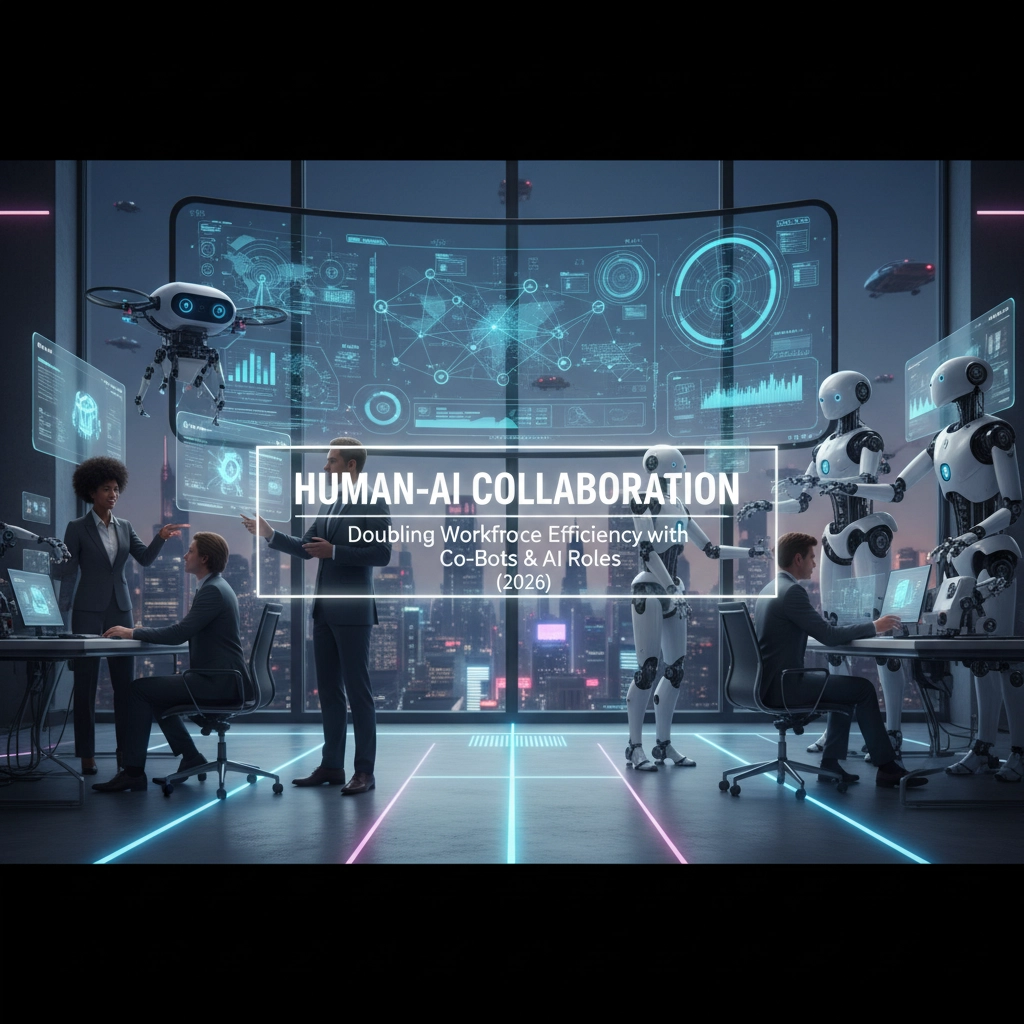
The workforce landscape of 2026 isn't about humans versus machines: it's about humans with machines creating unprecedented productivity gains. Companies implementing strategic human-AI collaboration are seeing productivity increases of up to 73%, with workers saving an average of 2.2 hours per week through intelligent automation partnerships.
But here's what most businesses are missing: simply deploying AI tools isn't enough. The organizations winning in 2026 are those mastering the art of human-AI collaboration, creating "superworker" environments where co-bots amplify human capabilities rather than replace them.
The Co-Bot Revolution: Beyond Traditional Automation
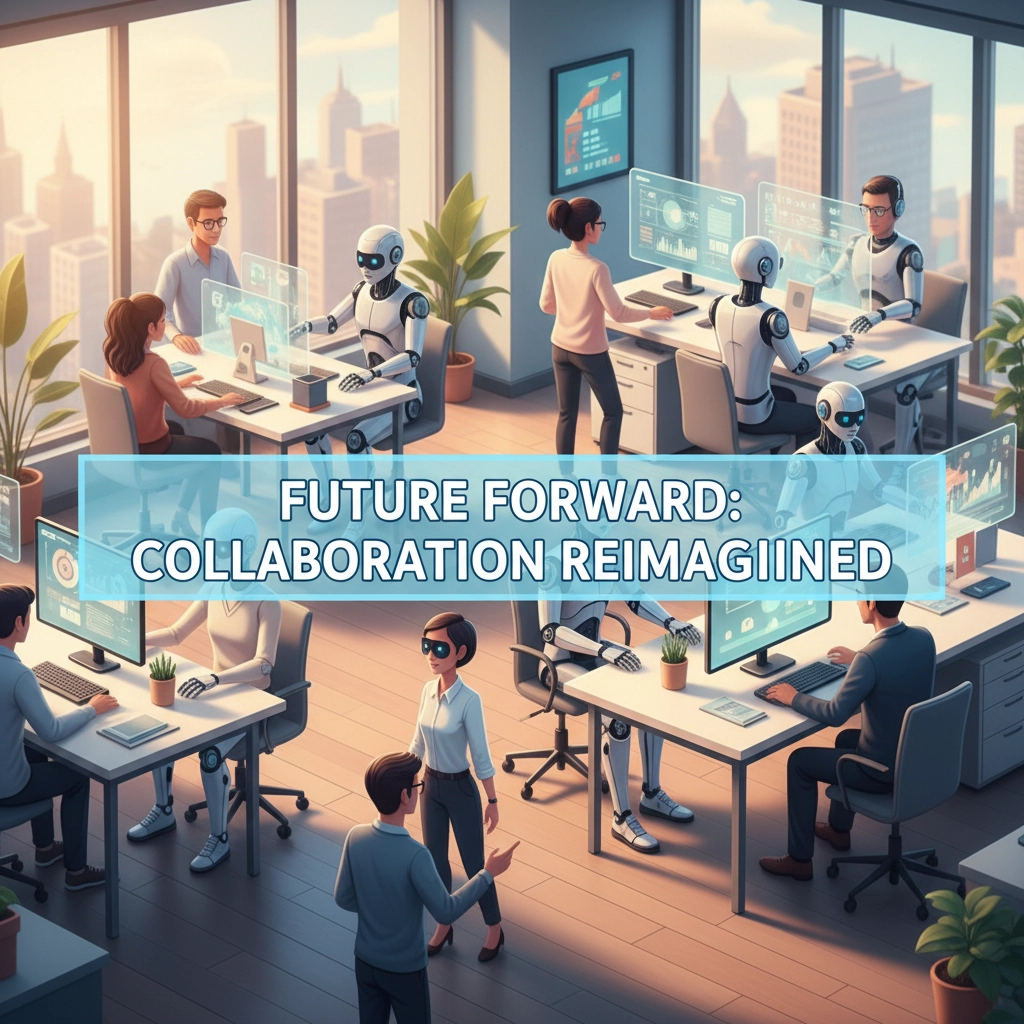
Co-bots (collaborative robots) and AI agents are fundamentally different from the automation tools of the past. Instead of rigid, rule-based systems, today's AI collaborators adapt, learn, and work alongside humans in real-time.
What makes 2026 different:
- AI co-pilots are now embedded directly into workflows, not standalone tools
- Machine learning adapts to individual work styles and preferences
- Natural language interfaces make AI collaboration as simple as having a conversation
- Predictive AI anticipates needs before humans even recognize them
The Federal Reserve Bank of St. Louis found that over 50% of employees using AI daily report saving 3+ hours weekly, but the real transformation comes from how that time is reinvested into strategic, creative, and relationship-building activities that only humans can perform.
Quantifiable ROI: The Numbers Behind Human-AI Success
Smart business leaders want data, not hype. Here's what the research reveals about human-AI collaboration ROI:
Productivity Metrics:
- 73% greater productivity when workers are paired with AI agents
- Average time savings of 2.2 hours per week per employee
- 20x higher workforce productivity in companies achieving "Dynamic Organization" status
- 84% of large organizations report AI streamlines processes without replacing employees
Cost Efficiency Gains:
- Reduced error rates in data-heavy processes like payroll and compliance
- Faster decision-making through AI-powered analytics and insights
- Decreased training time for new employees using AI-guided onboarding
- Lower operational costs through optimized resource allocation
The key insight? Organizations seeing maximum ROI aren't just implementing AI: they're redesigning workflows to optimize human-AI partnerships.
Emerging AI Job Roles: The New Workforce Hierarchy
The rise of human-AI collaboration is creating entirely new career paths and transforming existing roles. Here are the hottest AI-related positions emerging in 2026:

AI Workflow Orchestrators: These professionals design and manage human-AI collaborative processes, ensuring seamless integration between team members and AI agents.
Prompt Engineers: Specialists who craft and optimize AI instructions to maximize output quality and efficiency for specific business use cases.
AI Ethics & Compliance Officers: Professionals ensuring AI implementations meet regulatory requirements and ethical standards while maintaining transparency and accountability.
Human-AI Interface Designers: UX professionals who create intuitive interfaces that make AI collaboration natural and productive for non-technical employees.
Superworkers: Individual contributors who leverage AI to achieve exponential productivity gains, focusing on creativity, strategy, and complex problem-solving while AI handles routine execution.
These roles represent the future of work: positions that didn't exist five years ago but are now essential for competitive advantage.
Implementation Strategy: Building Your Human-AI Collaborative Framework
Successfully implementing human-AI collaboration requires more than buying software. It demands a strategic approach that addresses technology, processes, and people simultaneously.
Phase 1: Assessment and Planning
- Audit current workflows to identify AI-suitable tasks
- Map employee skills to determine AI augmentation opportunities
- Establish clear goals and success metrics for human-AI partnerships
Phase 2: Pilot Program Development
- Start with one department or process
- Select AI tools that integrate with existing systems
- Train a core group of "AI champions" who can guide broader adoption
Phase 3: Scaled Implementation
- Gradually expand successful pilots to other departments
- Develop standardized training programs for all employees
- Create feedback loops for continuous improvement
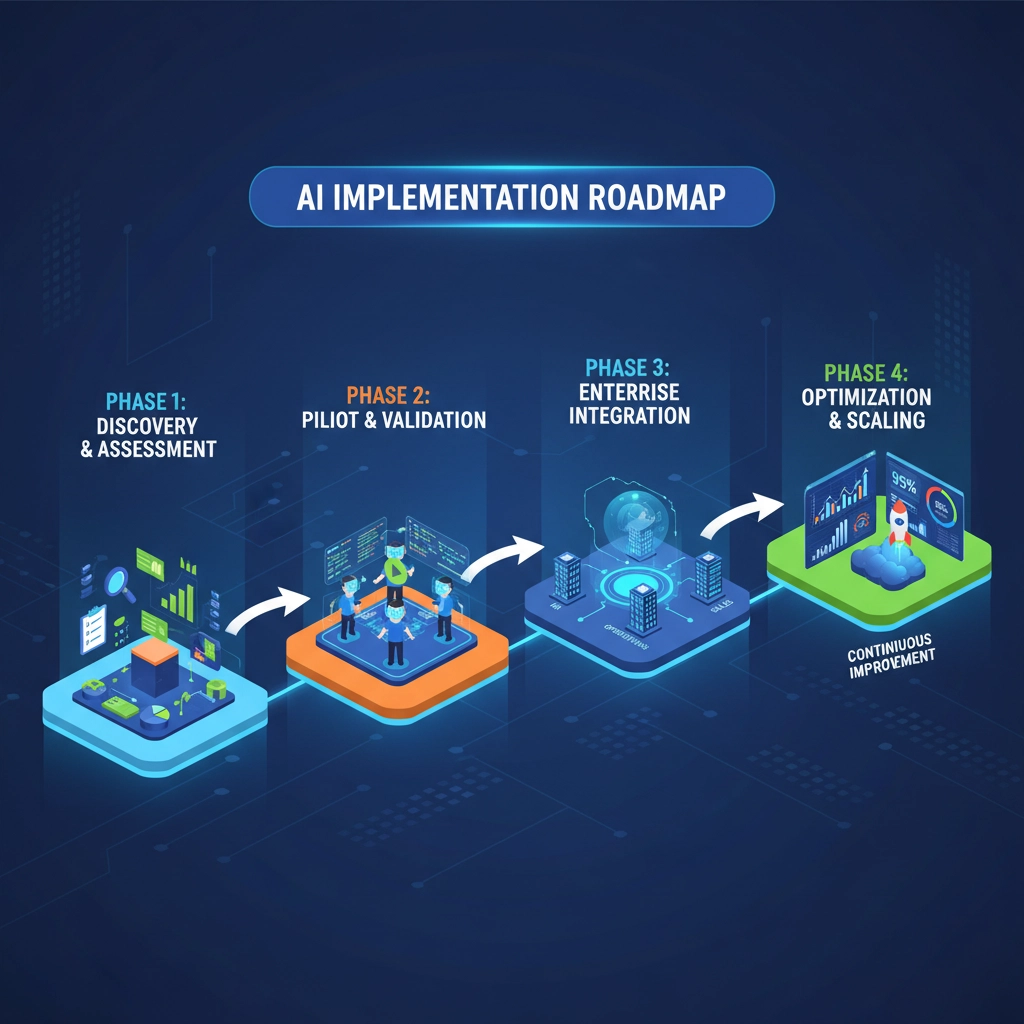
Phase 4: Optimization and Evolution
- Use data analytics to refine human-AI workflows
- Regularly update AI training based on business changes
- Foster a culture of continuous learning and adaptation
The most successful implementations focus on augmenting human capabilities rather than replacing them, creating environments where both humans and AI can perform at their highest potential.
Overcoming Common Implementation Challenges
Even with the best intentions, many organizations struggle with human-AI collaboration. Here are the most common obstacles and proven solutions:
Challenge 1: Employee Resistance
Solution: Focus on demonstrating value rather than mandating adoption. Show employees how AI makes their work more interesting and impactful, not how it monitors or replaces them.
Challenge 2: Lack of AI Literacy
Solution: Invest in comprehensive training programs that build AI understanding across all levels of the organization, from executives to frontline workers.
Challenge 3: Integration Complexity
Solution: Partner with experienced AI implementation specialists who understand both the technical and human sides of transformation.
Challenge 4: Unclear ROI Measurement
Solution: Develop new metrics that capture the effectiveness of human-AI collaboration rather than treating AI and human contributions separately.
Organizations that address these challenges proactively see faster adoption rates and better long-term outcomes from their AI investments.
Future-Proofing Your Business with Strategic Human-AI Partnerships
The companies thriving in 2026 and beyond aren't just using AI: they're building AI-native cultures that continuously evolve with technological advancement.
Key Success Factors:
- Continuous Learning: Regular upskilling programs that keep employees ahead of AI capabilities
- Flexible Architecture: Technology infrastructure that can adapt to new AI tools and capabilities
- Human-Centric Design: AI implementations that enhance rather than diminish the human experience
- Ethical Framework: Clear guidelines ensuring AI use aligns with company values and regulatory requirements

The goal isn't to create a workforce dependent on AI, but rather a workforce that can leverage AI as a powerful amplifier of human potential.
Transform Your Business with Expert Human-AI Implementation
The opportunity for human-AI collaboration has never been greater, but success requires expert guidance and strategic implementation. At Virtual Nexgen Solutions, we specialize in helping businesses navigate the complex world of AI integration while maintaining focus on human potential and productivity.
Our team understands that effective human-AI collaboration isn't just about technology: it's about creating sustainable workflows that empower your team to achieve extraordinary results. Whether you're looking to implement AI-powered virtual assistants, optimize existing processes, or develop entirely new collaborative frameworks, we provide the expertise and support you need to succeed.
Don't let your competitors gain the human-AI collaboration advantage. Schedule a consultation today to discover how Virtual Nexgen Solutions can help you double your workforce efficiency while creating meaningful career growth opportunities for your team.
Ready to revolutionize your workforce? Book your free 30-minute strategy session now: https://calendly.com/virtualnexgen-info/30min
The future of work is human-AI collaboration. The question isn't whether to adopt this approach: it's how quickly you can implement it effectively. Let Virtual Nexgen Solutions guide your transformation and unlock the exponential productivity gains waiting in your organization.