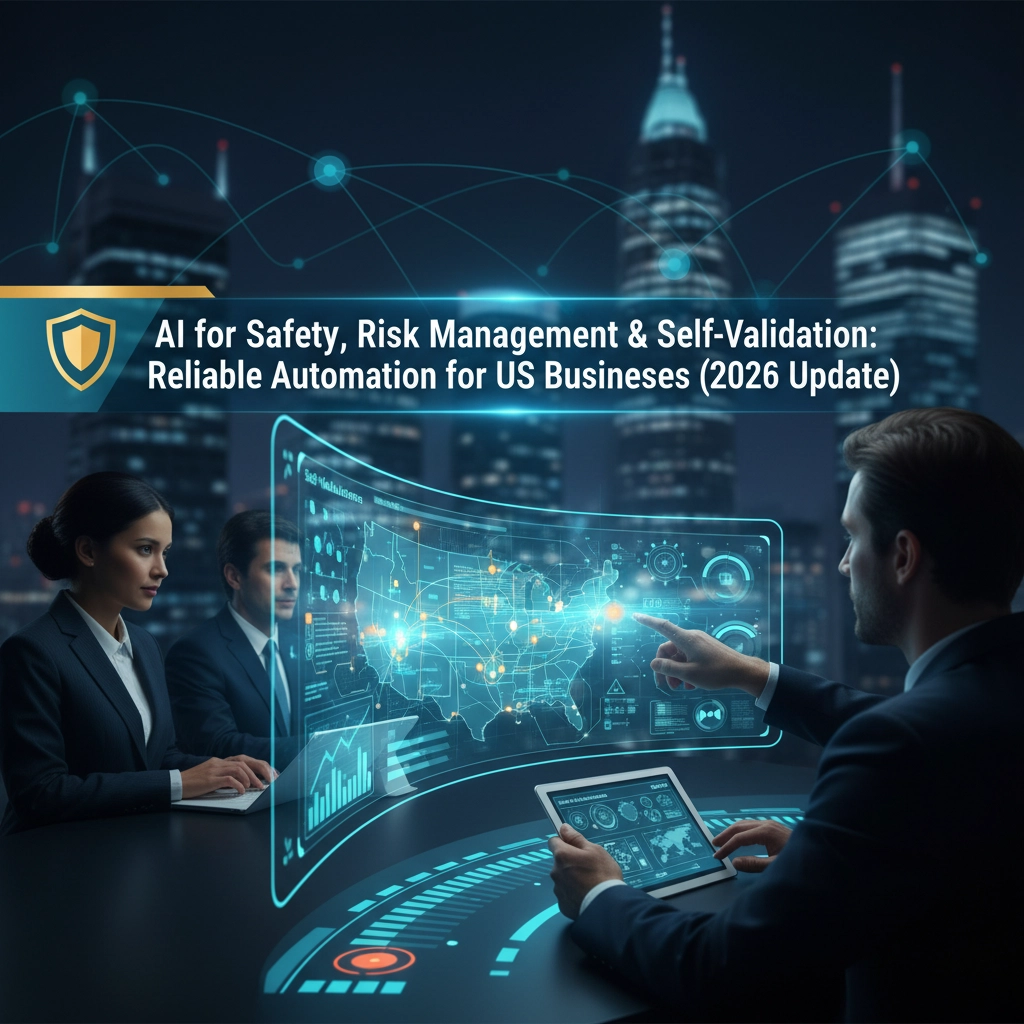
US businesses are entering a new era where artificial intelligence isn't just automating routine tasks: it's becoming the backbone of safety protocols, risk management systems, and self-validating business operations. As we move through 2026, companies that master AI-driven safety and risk management are gaining significant competitive advantages while those that lag behind face mounting operational vulnerabilities.
The shift from reactive to proactive risk management through AI represents one of the most significant business transformations of our time. Organizations are discovering that AI doesn't just detect problems faster: it can predict and prevent them entirely.
The Current State of AI in Business Safety and Risk Management
Today's AI systems are fundamentally changing how businesses approach safety and risk. Unlike traditional methods that rely on historical data and human analysis, modern AI systems process real-time information streams to identify potential threats, safety violations, and operational risks as they emerge.
Real-Time Threat Detection
AI-powered systems now monitor business environments 24/7, analyzing everything from employee behavior patterns to equipment performance metrics. These systems can detect anomalies that human observers might miss, such as subtle changes in machinery vibrations that could indicate potential failures, or unusual access patterns that might signal security breaches.
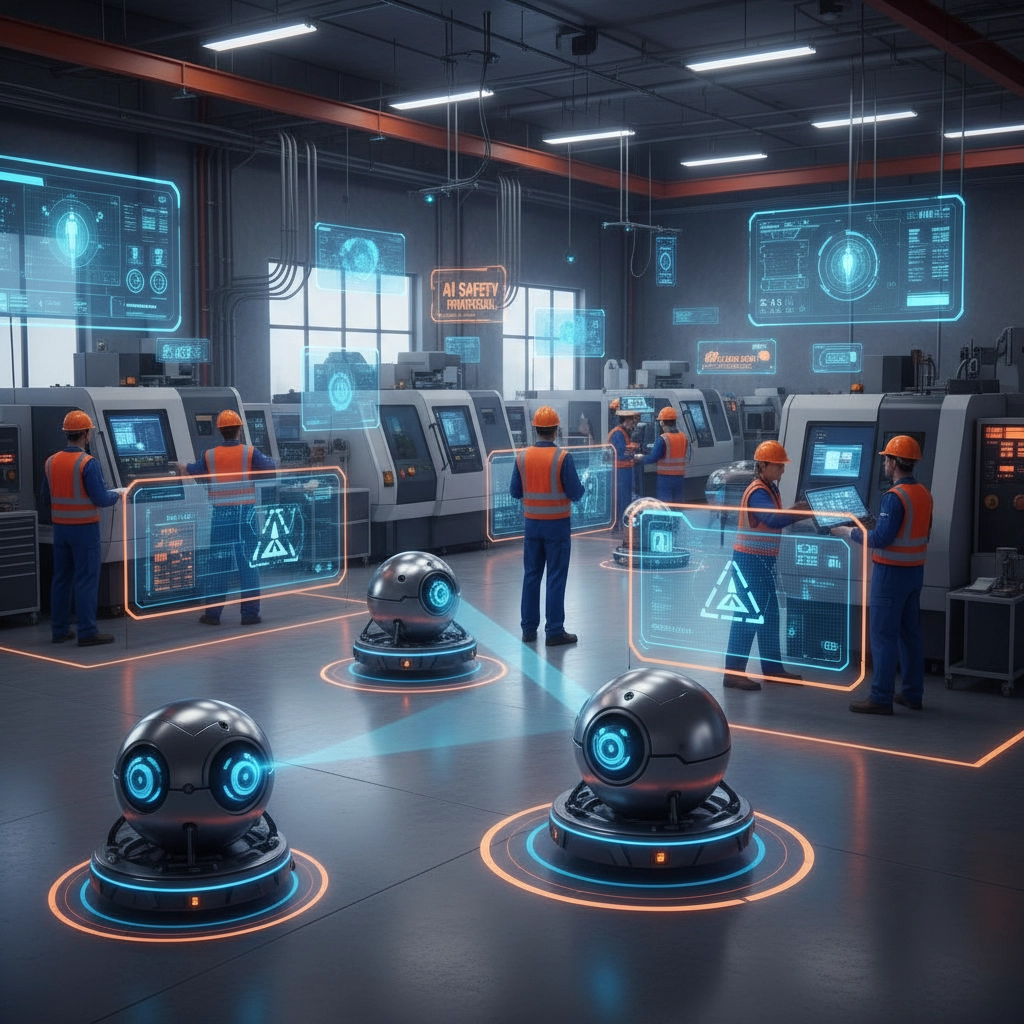
Manufacturing facilities are deploying computer vision systems that instantly identify when workers aren't wearing proper safety equipment or when they enter dangerous zones. These systems don't just sound alarms: they can automatically shut down machinery or reroute processes to prevent accidents.
Predictive Risk Assessment
The power of AI lies in its ability to analyze vast amounts of data to predict future risks. Financial institutions use AI to detect fraudulent transactions in milliseconds, while healthcare organizations employ predictive analytics to identify patients at risk of complications before symptoms appear.
Construction companies are using AI to analyze weather data, equipment status, and worker schedules to predict optimal work conditions and identify potential safety hazards days in advance. This proactive approach has reduced workplace injuries by up to 40% in early-adopting organizations.
Key Applications Transforming Business Operations
Autonomous Monitoring Systems
Businesses are implementing AI agents that serve as autonomous monitors across their operations. These systems don't require human supervision for routine monitoring tasks, freeing up staff to focus on strategic decision-making while ensuring continuous oversight of critical business functions.
Smart office buildings now use AI to monitor air quality, optimize energy usage, and ensure security protocols are followed. When anomalies are detected, these systems can automatically adjust environmental controls, notify security personnel, or even evacuate areas if necessary.
Intelligent Compliance Management
Regulatory compliance has become significantly easier with AI systems that automatically monitor business activities against current regulations. These systems update themselves as regulations change and can flag potential compliance issues before they become violations.
Healthcare organizations use AI to ensure patient data handling meets HIPAA requirements, while financial services employ AI to monitor transactions for anti-money laundering compliance. The self-updating nature of these systems means businesses stay compliant even as regulations evolve.

Advanced Fraud Prevention
AI fraud detection has evolved beyond simple pattern matching to sophisticated behavioral analysis. Modern systems learn normal behavior patterns for individual users, departments, and business processes, then flag any deviations that could indicate fraud or security threats.
E-commerce businesses report that AI-powered fraud detection systems have reduced false positives by 60% while increasing actual fraud detection rates by 85%. This improvement means legitimate transactions proceed smoothly while suspicious activity gets immediate attention.
Self-Validation: The Challenge of AI Monitoring AI
One of the most complex aspects of AI-driven safety and risk management is ensuring the AI systems themselves remain reliable and secure. Self-validation has emerged as a critical concern as businesses become more dependent on automated decision-making systems.
The Governance Challenge
As AI systems become more autonomous, businesses must implement robust governance frameworks to ensure these systems operate within acceptable parameters. This includes setting clear boundaries for automated decisions, establishing audit trails for AI actions, and implementing human oversight protocols for critical decisions.
The challenge lies in balancing automation efficiency with human control. Too much oversight slows down the benefits of AI automation, while too little oversight creates risks of system failures or inappropriate automated actions.
Data Integrity and Model Reliability
AI systems are only as reliable as the data they're trained on and the models they use. Businesses must implement continuous monitoring of their AI systems' performance to ensure accuracy and reliability over time.
This includes monitoring for data drift, where the characteristics of incoming data change over time, potentially reducing system accuracy. It also involves detecting potential bias in AI decision-making and ensuring fair treatment across different user groups or business scenarios.

Security of AI Systems
As AI systems become more powerful and autonomous, they also become attractive targets for cyber attacks. Businesses must secure their AI systems against attempts to manipulate their training data, compromise their decision-making processes, or use them as entry points for broader system attacks.
Advanced AI security measures include encrypted model storage, secure communication protocols between AI components, and continuous monitoring for unusual AI behavior patterns that might indicate compromise.
Implementation Strategies for Maximum ROI
Start with High-Impact, Low-Risk Applications
Successful AI implementation for safety and risk management typically begins with applications that offer clear benefits with minimal downside risk. Customer service chatbots, automated report generation, and basic monitoring systems provide excellent starting points for businesses new to AI automation.
These initial implementations allow organizations to develop AI expertise, establish governance protocols, and demonstrate value before moving to more complex applications like autonomous decision-making or critical safety systems.
Integrate with Existing Systems
The most successful AI implementations integrate seamlessly with existing business systems rather than requiring complete operational overhauls. Modern AI platforms can connect with existing ERP systems, CRM platforms, and specialized industry software to enhance current processes rather than replace them.
This integration approach reduces implementation costs, minimizes business disruption, and allows for gradual expansion of AI capabilities as organizations become more comfortable with the technology.
Focus on Human-AI Collaboration
Rather than replacing human decision-makers, the most effective AI safety and risk management systems augment human capabilities. AI handles data processing, pattern recognition, and routine monitoring, while humans focus on strategic decisions, complex problem-solving, and exception handling.
This collaborative approach ensures that businesses maintain human oversight while gaining the efficiency and accuracy benefits of AI automation.
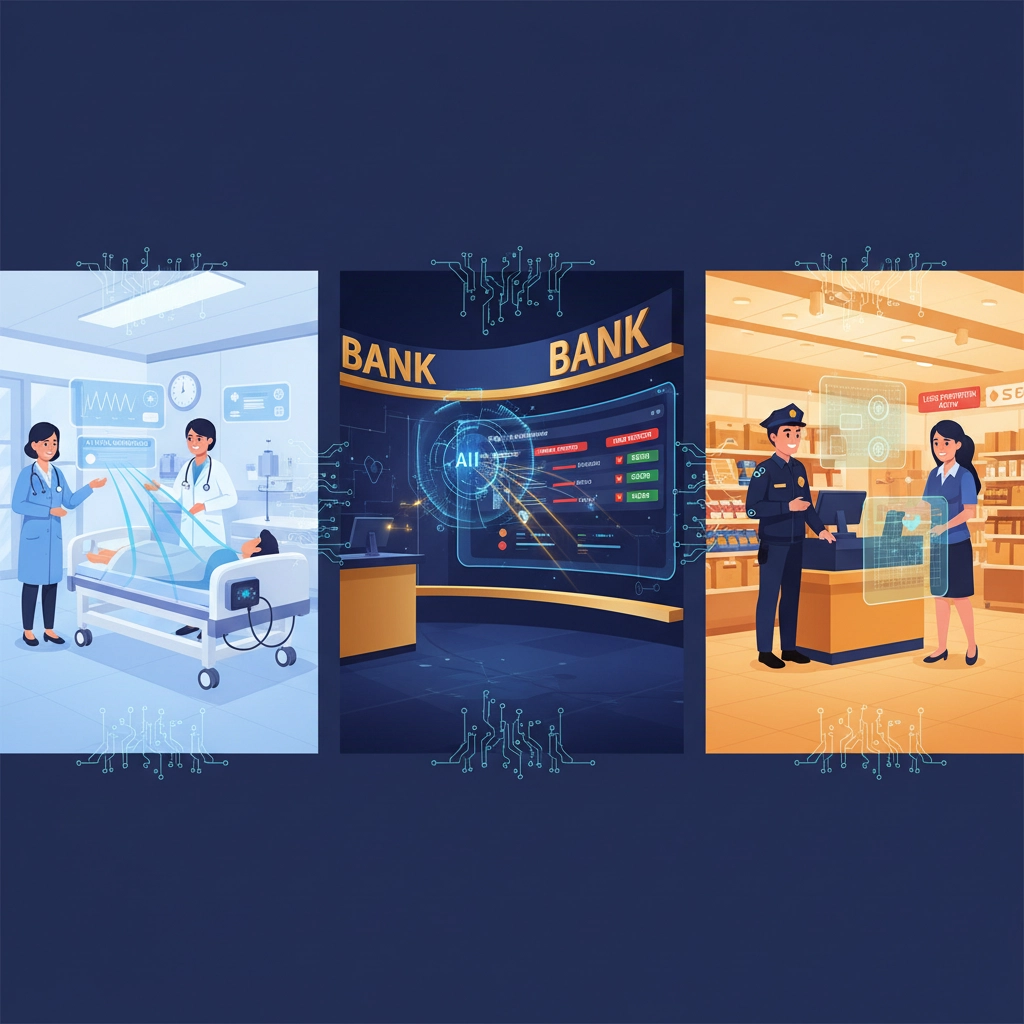
Industry-Specific Applications and Benefits
Different industries are discovering unique applications for AI in safety and risk management:
Healthcare: AI systems monitor patient vital signs, predict medical emergencies, and ensure medication safety protocols are followed. These systems have reduced medical errors by up to 50% in participating hospitals.
Financial Services: Real-time transaction monitoring, automated compliance reporting, and predictive risk assessment help financial institutions prevent fraud while maintaining customer satisfaction.
Manufacturing: Predictive maintenance, quality control monitoring, and safety protocol enforcement ensure smooth operations while minimizing workplace accidents and equipment failures.
Retail: Inventory monitoring, loss prevention, and customer behavior analysis help retailers optimize operations while preventing theft and ensuring customer safety.
The Future of AI-Driven Business Safety
As we progress through 2026, AI systems are becoming more sophisticated and autonomous. The trend is toward AI systems that not only detect and respond to current issues but actively work to prevent problems from occurring.
Predictive Prevention
Future AI systems will excel at preventing issues rather than just responding to them. These systems will analyze countless variables to predict potential problems and automatically implement preventive measures.
Adaptive Learning
AI systems are becoming better at learning from new experiences and adapting their responses accordingly. This means safety and risk management systems will continuously improve their effectiveness without requiring constant human intervention.
Integration Across Business Functions
The future sees AI safety and risk management systems integrated across all business functions, creating comprehensive protective networks that ensure business continuity and operational excellence.
Transform Your Business with Professional AI Implementation
Implementing AI for safety, risk management, and self-validation requires expertise in both AI technology and business operations. The complexity of modern AI systems means that successful implementation often depends on having experienced professionals guide the process.
At Virtual Nexgen Solutions, we specialize in helping US businesses implement AI automation solutions that enhance safety, reduce risk, and improve operational reliability. Our team understands the unique challenges of AI implementation and can help you navigate the complexities of modern business automation.
Whether you're looking to implement your first AI safety system or expand existing automation capabilities, our experts can help you design and deploy solutions that deliver measurable results while maintaining the highest standards of safety and reliability.
Ready to explore how AI can transform your business safety and risk management? Schedule a free 30-minute consultation with our AI automation experts. We'll assess your current operations and show you exactly how AI can enhance your safety protocols, reduce operational risks, and create more reliable business processes.
Don't let your competition gain the advantage of AI-driven safety and risk management. Contact Virtual Nexgen Solutions today and discover how professional AI implementation can transform your business operations while keeping your organization secure and compliant.