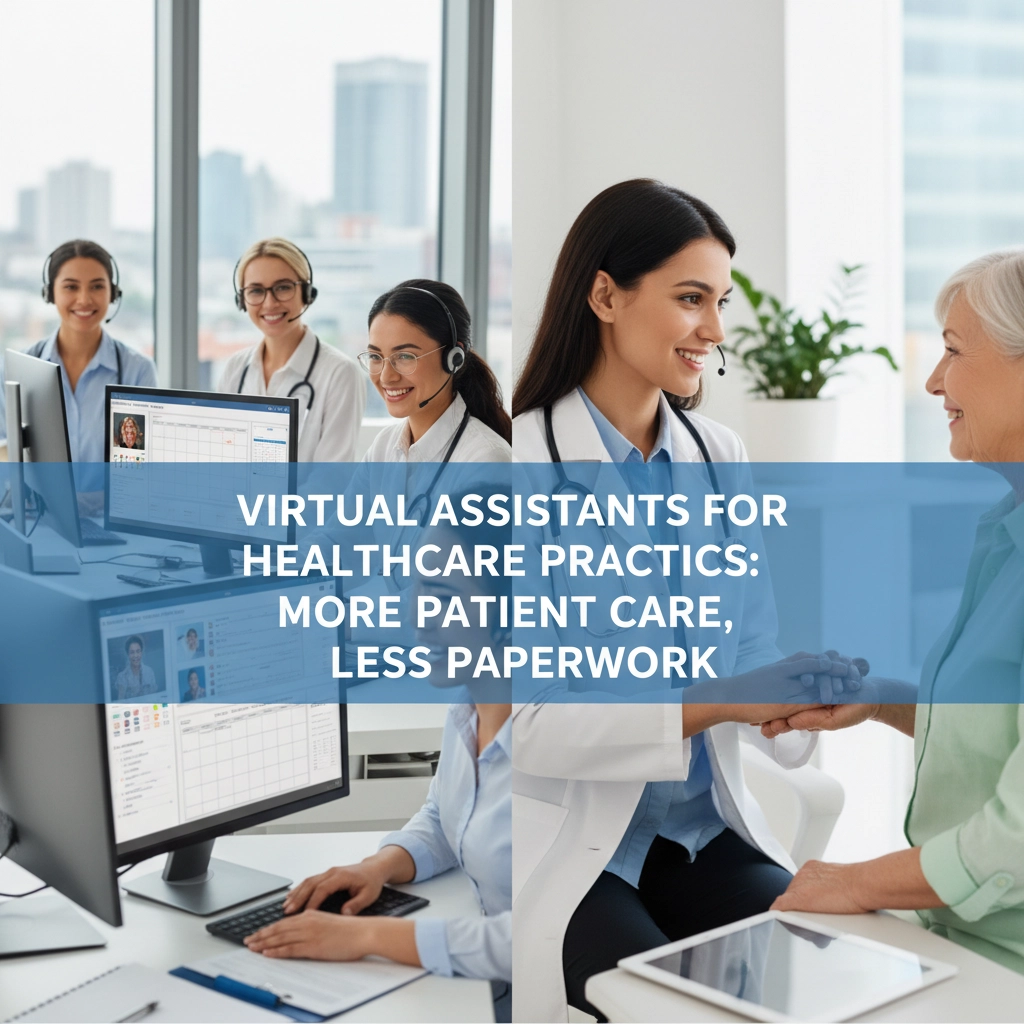
Healthcare providers entered medicine to heal people, not to spend hours buried in paperwork. Yet the reality of modern healthcare practices tells a different story: physicians and staff spend up to 60% of their time on administrative tasks, leaving precious little time for actual patient care. Virtual assistants are changing this equation, allowing healthcare practices to reclaim their time and refocus on what matters most: their patients.
The Administrative Burden Crushing Healthcare Practices
Healthcare practices today are drowning in paperwork. Between insurance verifications, appointment scheduling, data entry, patient follow-ups, and compliance documentation, administrative tasks have become the silent killer of productivity and patient satisfaction.
Consider this: the average medical practice loses $150,000 annually due to inefficient administrative processes. Staff members spend countless hours on repetitive tasks like:
- Manually scheduling and rescheduling appointments
- Calling patients for appointment confirmations
- Processing insurance verifications
- Entering patient data into multiple systems
- Managing prescription refills and referrals
- Following up on missed appointments
This administrative overload doesn't just cost money: it burns out staff, frustrates patients, and forces healthcare providers to choose between thorough patient care and keeping up with paperwork.

How Virtual Assistants Transform Healthcare Operations
Virtual assistants for healthcare practices aren't just glorified answering services. They're sophisticated, HIPAA-compliant professionals who handle the administrative backbone of your practice while you focus on patient care.
Automated Appointment Management
Virtual assistants revolutionize how practices handle scheduling. Instead of playing phone tag with patients, they manage your entire appointment calendar 24/7. Patients can book, reschedule, or cancel appointments through multiple channels: phone, web, or mobile app: without waiting for business hours.
The impact is immediate: practices using virtual assistants see up to 40% fewer no-shows thanks to automated reminder systems that reach patients through their preferred communication method. Whether it's text messages, emails, or phone calls, patients receive timely reminders with appointment details and preparation instructions.
Streamlined Insurance Verification
Insurance verification is one of the most time-consuming administrative tasks in healthcare. Virtual assistants handle this process before patients even step foot in your office. They verify coverage, check copay amounts, obtain pre-authorizations when needed, and flag any potential issues.
This proactive approach eliminates surprises at check-in and reduces claim denials by up to 25%. Patients know their financial responsibility upfront, and your staff can focus on clinical preparation rather than insurance paperwork.
Intelligent Data Entry and Record Management
Virtual assistants excel at data entry tasks that bog down clinical staff. They update patient records, enter test results, manage referral documentation, and ensure all information is accurately recorded in your practice management system.
The accuracy improvement is remarkable: virtual assistants reduce data entry errors by 90% compared to manual processes, thanks to systematic double-checking and automated validation protocols.

Enhancing Patient Experience Through Technology
While reducing administrative burden for staff, virtual assistants simultaneously elevate the patient experience in ways that drive loyalty and referrals.
24/7 Patient Access
Modern patients expect convenience. Virtual assistants provide round-the-clock access to your practice, allowing patients to:
- Schedule appointments outside business hours
- Get answers to routine questions
- Request prescription refills
- Access test results when convenient
- Receive post-visit care instructions
This accessibility dramatically improves patient satisfaction scores and reduces emergency room visits for non-urgent concerns.
Personalized Patient Communication
Virtual assistants access patient histories to provide personalized interactions. They remember previous appointments, current treatments, and specific patient preferences. This personalized touch makes patients feel valued and heard: critical factors in building long-term patient relationships.
For chronic disease management, virtual assistants provide consistent check-ins, medication reminders, and lifestyle coaching support that improves treatment adherence and health outcomes.
Proactive Care Coordination
Virtual assistants don't wait for problems to arise: they proactively manage patient care through:
- Automated health screenings and wellness reminders
- Follow-up calls after procedures or treatment changes
- Care gap identification for preventive services
- Medication adherence monitoring
- Appointment scheduling for ongoing treatments

The Financial Impact: ROI That Makes Sense
The financial benefits of healthcare virtual assistants extend far beyond labor cost savings. While replacing a full-time administrative employee (average salary $35,000-45,000) with virtual assistant services typically costs 60-70% less, the real value lies in practice efficiency gains.
Revenue Recovery
Virtual assistants help practices recover lost revenue through:
- Reduced no-shows: 40% decrease translates to $50,000-100,000 in additional annual revenue for typical practices
- Faster insurance processing: Quicker verifications mean fewer claim denials and faster reimbursements
- Increased appointment capacity: Efficient scheduling allows practices to see 15-20% more patients without extending hours
Operational Cost Reductions
Beyond direct labor savings, virtual assistants reduce costs through:
- Lower staff turnover (less burnout means better retention)
- Reduced overtime pay for overwhelmed staff
- Decreased training costs for new employees
- Minimized errors requiring correction and reprocessing
Most healthcare practices see complete ROI on virtual assistant services within 3-6 months, with ongoing savings that improve practice profitability year over year.
Implementation Best Practices for Maximum Success
Successfully integrating virtual assistants requires strategic planning and clear protocols. The most successful healthcare practices follow these implementation guidelines:
Start with High-Volume, Low-Complexity Tasks
Begin by automating appointment scheduling and basic patient inquiries. These high-frequency tasks provide immediate relief for staff while allowing you to refine processes before expanding to more complex functions.
Establish Clear Communication Protocols
Define exactly when virtual assistants should escalate issues to clinical staff. Create decision trees for common scenarios and ensure seamless handoffs between virtual and in-house team members.
Maintain HIPAA Compliance
Work only with virtual assistant providers who understand healthcare regulations and maintain proper security protocols. Ensure all communication channels are encrypted and audit trails are maintained for compliance reporting.

The Future of Healthcare Administration
Virtual assistants represent just the beginning of healthcare's administrative transformation. As artificial intelligence and automation technologies advance, we'll see even more sophisticated capabilities including:
- AI-powered clinical decision support
- Automated prior authorization processing
- Intelligent patient triage and routing
- Predictive analytics for patient no-shows and care gaps
- Voice-activated documentation and charting
Practices that embrace virtual assistants now position themselves to easily adopt these future innovations, staying ahead of competitors still trapped in manual administrative processes.
Transform Your Practice with Virtual Nexgen Solutions
The choice is clear: continue struggling with administrative overload, or partner with Virtual Nexgen Solutions to reclaim your time and refocus on patient care. Our healthcare-specialized virtual assistants understand the unique challenges of medical practices and deliver HIPAA-compliant support that improves both operational efficiency and patient satisfaction.
Ready to see more patients and less paperwork? Our healthcare virtual assistants are already helping practices across the country reduce administrative costs by up to 60% while improving patient experience scores. Don't let another day slip by managing appointments when you could be changing lives.
Schedule your free consultation today to discover how Virtual Nexgen Solutions can transform your practice operations. Book your 30-minute strategy session at https://calendly.com/virtualnexgen-info/30min and take the first step toward more patient care and less paperwork.
Visit Virtual Nexgen Solutions to learn more about our comprehensive healthcare virtual assistant services and start your journey toward practice transformation today.