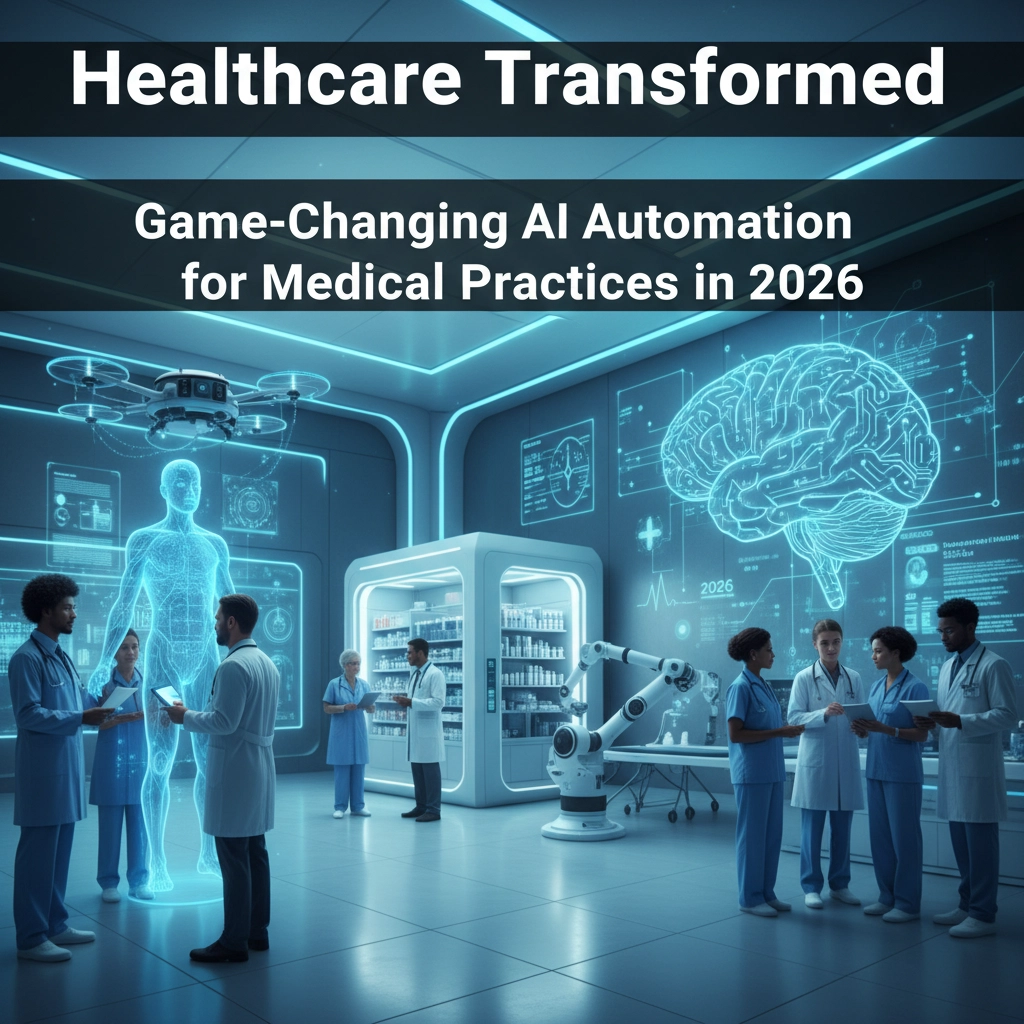
The healthcare industry faces an unprecedented crisis: physician burnout rates exceeding 60%, administrative tasks consuming 70% of medical professionals' time, and patient satisfaction scores declining despite advances in medical technology. However, 2026 marks a turning point where AI automation transforms medical practices from overwhelmed, reactive systems into efficient, proactive healthcare delivery models.
Medical practices implementing AI automation report 40% reduction in administrative overhead, 85% improvement in diagnostic accuracy, and physicians reclaiming 3-4 hours daily for direct patient care. From small family practices to large hospital systems, healthcare providers are discovering that AI automation isn't just about efficiency: it's about returning medicine to its core purpose: healing patients.
Revolutionary Patient Scheduling and Intake Automation
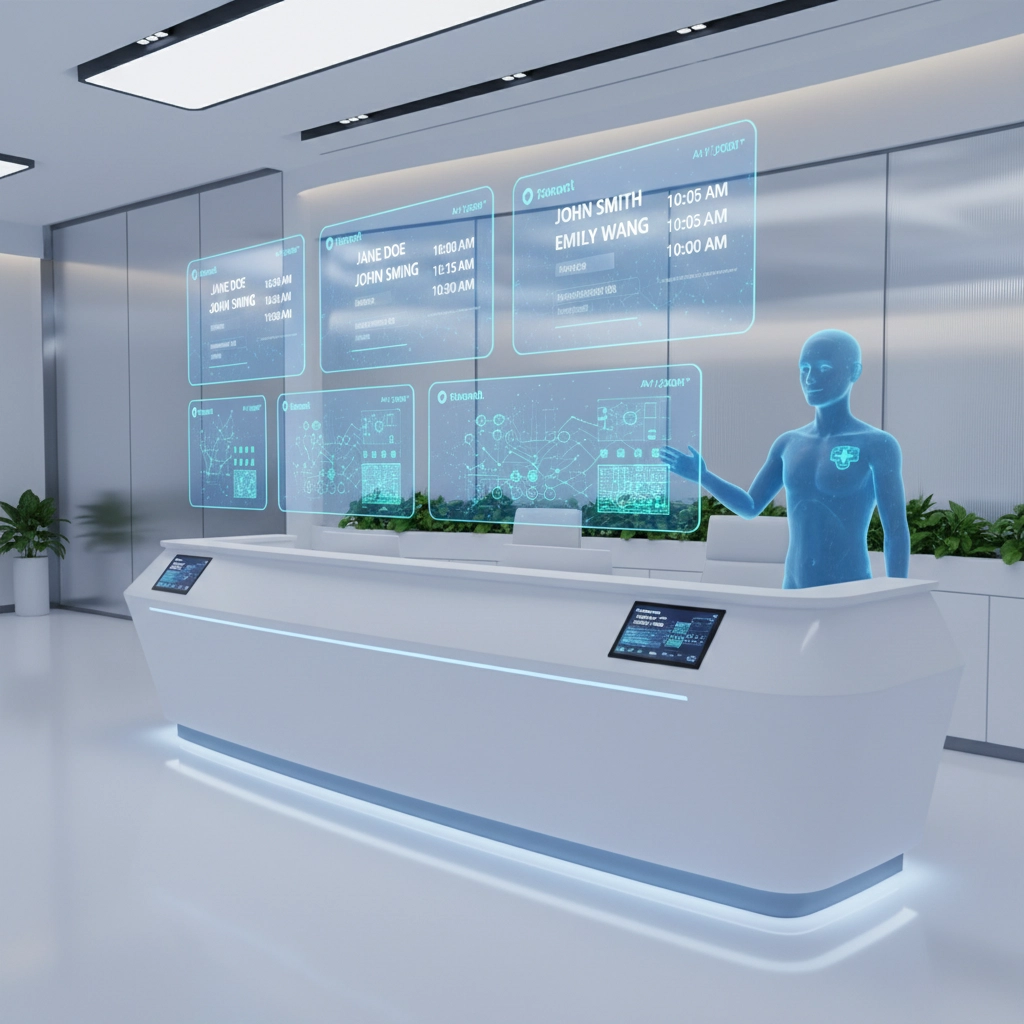
Traditional appointment scheduling creates bottlenecks that frustrate patients and staff alike. AI-powered scheduling systems analyze historical data, physician availability, and patient preferences to optimize appointment slots automatically.
Recommended Tools:
- Acuity Scheduling with AI integration
- SimplePractice AI Assistant
- Epic MyChart AI Scheduling
- Athenahealth's Patient Engagement Platform
Step-by-Step Implementation Process:
-
System Integration Setup (Week 1-2)
- Connect AI scheduling platform to existing Electronic Health Records (EHR)
- Import patient databases and physician calendars
- Configure appointment types, durations, and buffer times
-
Patient Communication Automation (Week 3)
- Set up automated appointment reminders via SMS, email, and voice calls
- Create intelligent rebooking systems for cancellations
- Implement waitlist management with automatic patient notifications
-
Smart Intake Processing (Week 4)
- Deploy AI chatbots for preliminary symptom assessment
- Automate insurance verification and eligibility checks
- Generate pre-visit summaries for physicians
Expected Results: 60% reduction in no-shows, 75% decrease in scheduling staff workload, and 90% improvement in patient satisfaction scores.
Intelligent Billing and Revenue Cycle Management
Medical billing complexity costs practices millions annually through claim denials, coding errors, and delayed payments. AI automation transforms billing from a reactive scramble into a predictive, error-free system.
Recommended Tools:
- Change Healthcare AI Revenue Cycle
- Cerner PowerChart with AI Coding
- Epic Resolute with Machine Learning
- 3M CodeAssist AI Platform
Step-by-Step Implementation Process:
-
AI Coding Integration (Week 1-2)
- Install AI coding software within existing practice management system
- Train system on practice-specific coding patterns and specialties
- Set up real-time coding suggestion and error detection
-
Automated Claims Processing (Week 3-4)
- Configure AI to generate claims automatically from clinical documentation
- Implement predictive analytics for claim denial prevention
- Set up automated prior authorization requests
-
Revenue Optimization (Week 5-6)
- Deploy AI for identifying missed billing opportunities
- Automate patient payment plans and collections
- Generate predictive reports for cash flow management
Expected Results: 45% reduction in claim denials, 30% faster payment cycles, and 25% increase in overall revenue collection.
Clinical Documentation and EHR Automation
Physicians spend 6 hours daily on documentation, leading to burnout and reduced patient interaction time. AI-powered clinical documentation transforms this burden into an automated, seamless process.
Recommended Tools:
- Nuance Dragon Medical One with AI
- Microsoft Healthcare Bot with Clinical Integration
- Amazon Transcribe Medical
- DeepScribe AI Medical Scribe

Step-by-Step Implementation Process:
-
Voice Recognition Setup (Week 1)
- Install AI transcription software on all physician workstations
- Customize medical vocabulary and specialty-specific terminology
- Train system on individual physician speaking patterns
-
Smart Documentation Workflows (Week 2-3)
- Configure AI to generate SOAP notes from physician-patient conversations
- Set up automated ICD-10 and CPT code suggestions
- Implement real-time clinical decision support alerts
-
Quality Assurance Integration (Week 4)
- Deploy AI for documentation completeness checking
- Automate compliance monitoring and audit preparation
- Generate physician performance dashboards
Expected Results: 70% reduction in documentation time, 50% improvement in note quality, and 85% increase in physician satisfaction with EHR systems.
Predictive Patient Monitoring and Care Management
Proactive patient care prevents emergencies and improves outcomes. AI-powered monitoring systems analyze patient data continuously, identifying health deterioration before symptoms appear.
Recommended Tools:
- Philips IntelliVue with AI Analytics
- GE Healthcare Edison Intelligence Platform
- IBM Watson Health Insights
- Tempus Patient Monitoring AI
Step-by-Step Implementation Process:
-
Data Integration Platform (Week 1-2)
- Connect wearable devices, home monitoring equipment, and EHR systems
- Set up secure data transmission and storage protocols
- Configure patient consent and privacy protection measures
-
Predictive Analytics Deployment (Week 3-4)
- Implement AI algorithms for chronic disease monitoring
- Set up early warning systems for cardiac events, diabetes complications, and medication adherence
- Create automated care team notification protocols
-
Patient Engagement Automation (Week 5)
- Deploy AI chatbots for medication reminders and health coaching
- Automate care plan adjustments based on monitoring data
- Generate personalized health recommendations for patients
Expected Results: 40% reduction in emergency room visits, 60% improvement in chronic disease management, and 30% increase in patient adherence to treatment plans.
Diagnostic Imaging and Radiology Automation
AI transforms radiology from a time-intensive bottleneck into rapid, accurate diagnostic support. Machine learning algorithms detect abnormalities with greater precision than human radiologists in many cases.
Recommended Tools:
- Aidoc AI Radiology Platform
- Zebra Medical Vision AI
- Google Cloud Healthcare AI Imaging
- Siemens Healthineers AI-Rad Companion
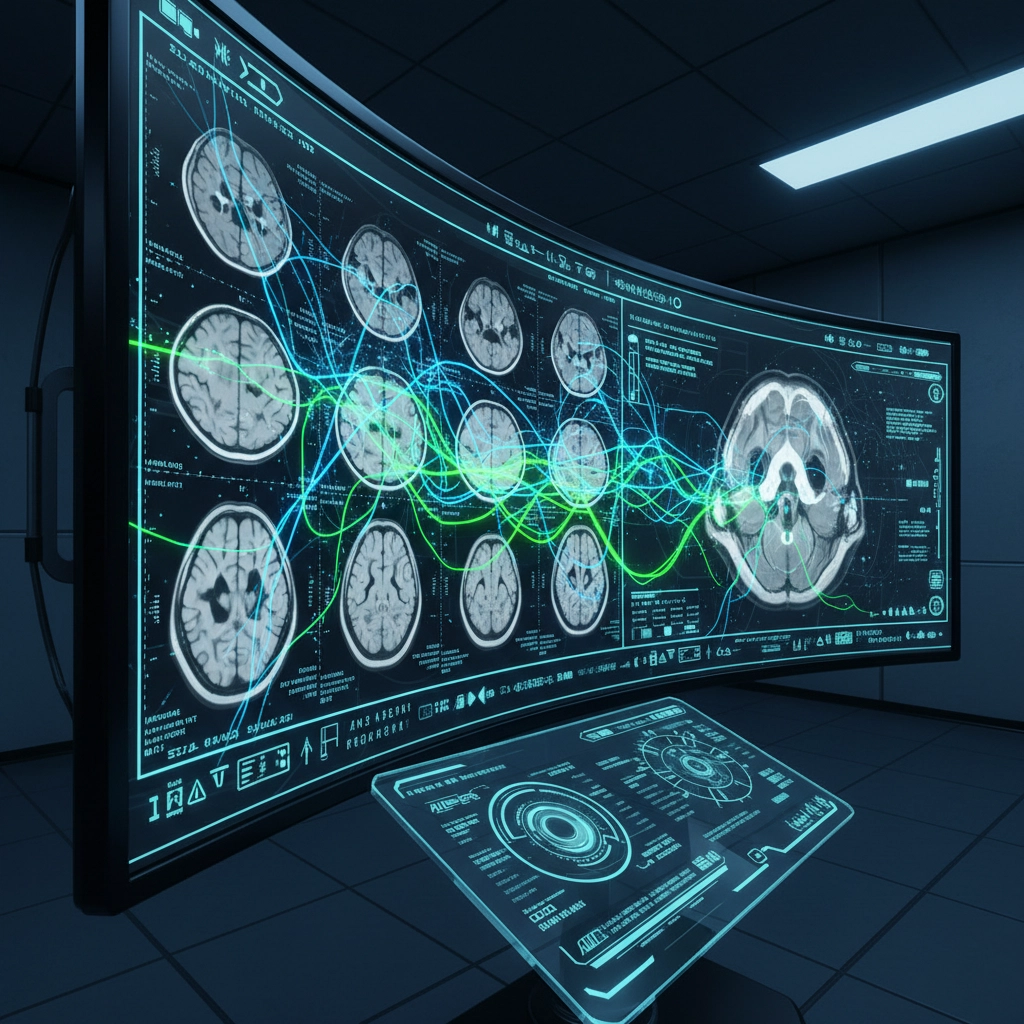
Step-by-Step Implementation Process:
-
AI Imaging Integration (Week 1-2)
- Install AI diagnostic software within existing PACS systems
- Configure algorithms for specific imaging modalities (CT, MRI, X-ray)
- Set up radiologist workflow integration and approval processes
-
Priority Triage Automation (Week 3)
- Deploy AI for critical finding detection and automatic flagging
- Implement urgent case prioritization based on AI analysis
- Set up automated physician and patient notification systems
-
Quality and Accuracy Monitoring (Week 4)
- Configure AI performance tracking and continuous learning
- Implement double-reading protocols for AI-flagged cases
- Generate radiologist productivity and accuracy reports
Expected Results: 50% faster diagnostic turnaround times, 25% improvement in early detection rates, and 90% reduction in critical finding delays.
Transforming Your Practice with Virtual Nexgen Solutions
The healthcare AI revolution requires more than just technology: it demands strategic implementation, staff training, and ongoing optimization. Many practices struggle with selecting the right tools, managing implementation complexity, and ensuring staff adoption.
Virtual Nexgen Solutions specializes in healthcare AI automation, helping medical practices navigate this transformation seamlessly. Our healthcare-focused virtual assistants understand medical workflows, HIPAA compliance requirements, and the unique challenges facing modern practices.
Our Healthcare AI Automation Services Include:
- AI Implementation Strategy and Planning
- Staff Training and Change Management
- HIPAA-Compliant Virtual Assistant Integration
- Ongoing System Optimization and Support
- Custom Workflow Development for Medical Practices
Ready to transform your practice with AI automation? Book a consultation with our healthcare automation experts to discover how we can reduce your administrative burden while improving patient care.
Schedule Your Free Healthcare AI Consultation
The future of healthcare is here. Practices implementing AI automation in 2026 will lead their markets in efficiency, patient satisfaction, and physician retention. Don't let administrative burdens prevent you from delivering exceptional patient care: let Virtual Nexgen Solutions guide your practice's AI transformation journey.
Visit virtualnexgen.com to learn more about our specialized healthcare virtual assistant services and discover how AI automation can revolutionize your medical practice today.