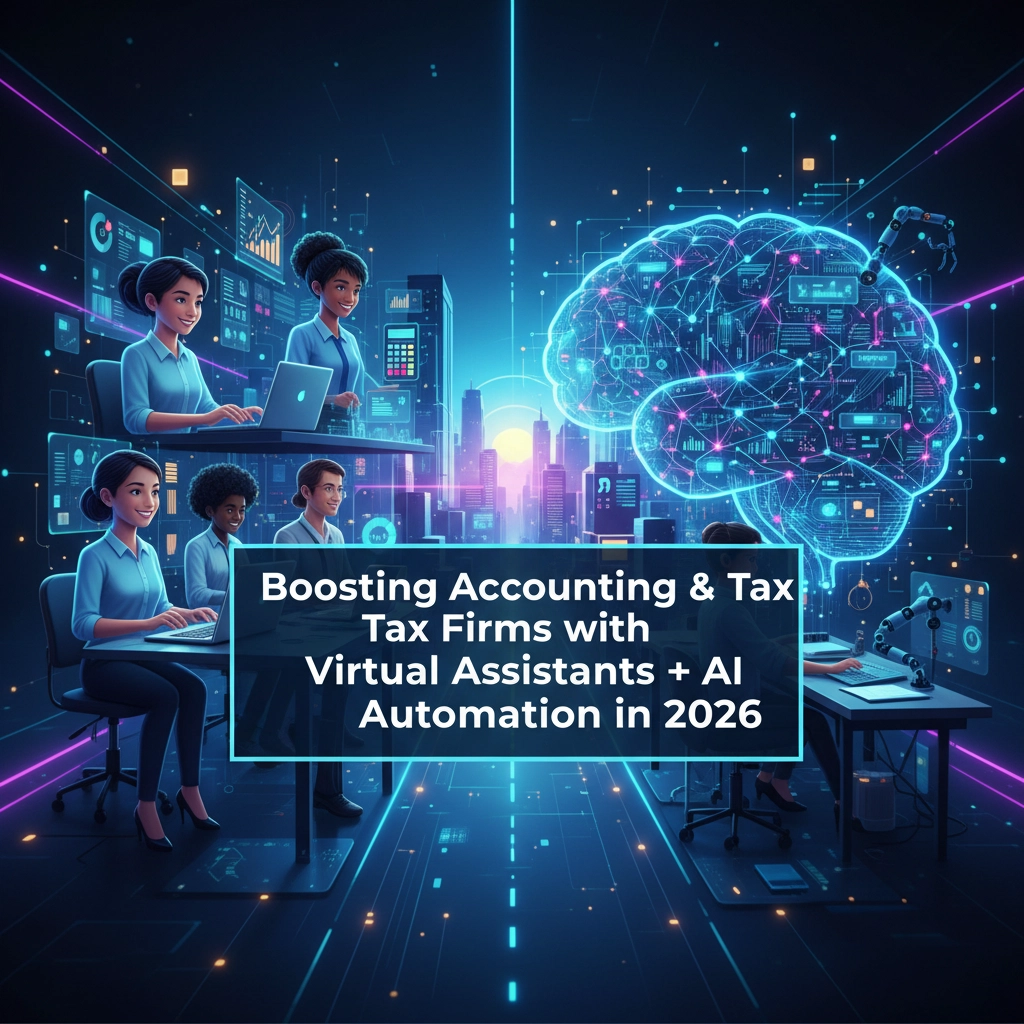
The accounting industry is experiencing a seismic shift as we enter 2026. Traditional manual processes that once consumed countless hours are being replaced by sophisticated virtual assistant services and AI automation systems. For accounting and tax firms across the United States, this transformation isn't just an opportunity: it's becoming essential for staying competitive and delivering the level of service clients expect.
The Growing Pain Points in Modern Accounting
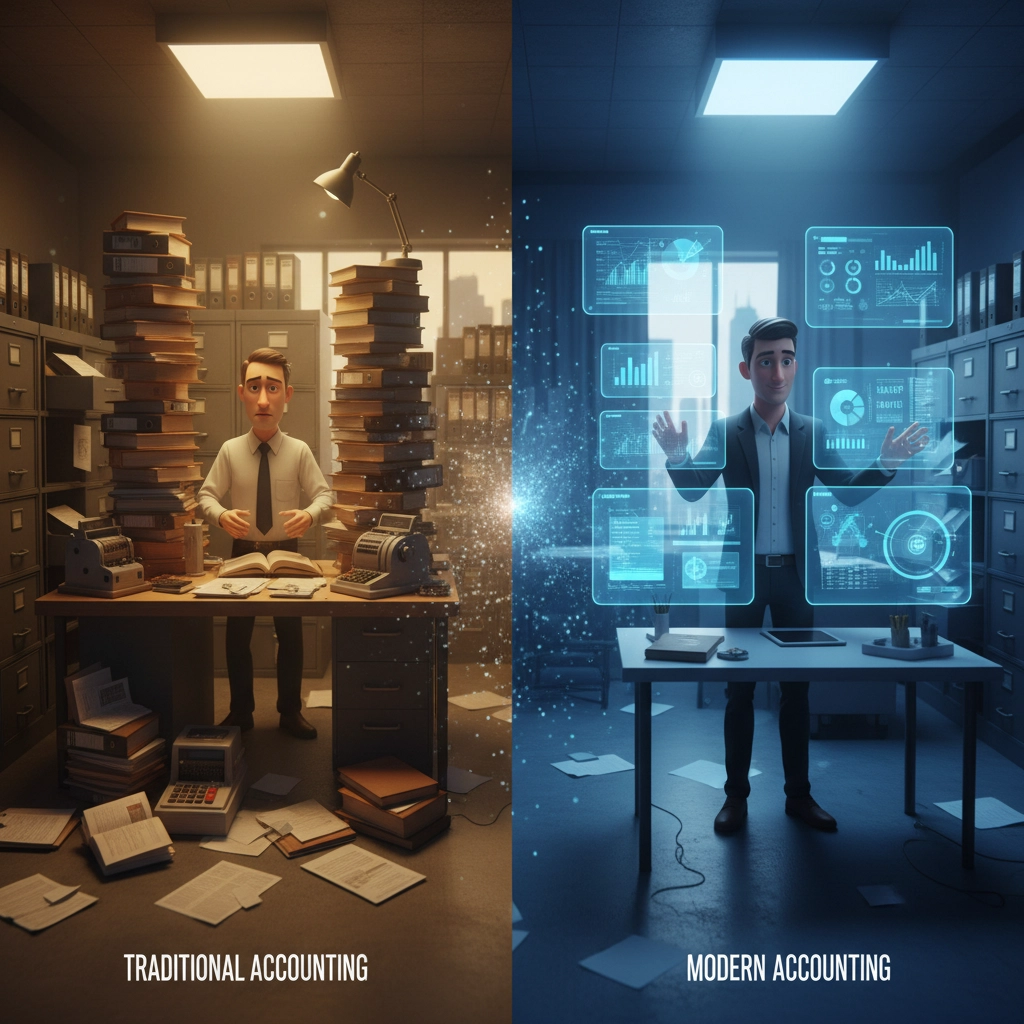
Today's accounting and tax professionals face an overwhelming array of time-consuming tasks that pull them away from high-value client advisory work. Data entry, invoice creation, tax form processing, appointment scheduling, and deadline reminders consume hours that could be better spent on strategic planning and client consultation.
Manual compliance checks alone can take days during busy seasons, while client document handling and follow-up calls create administrative bottlenecks that slow down entire workflows. These repetitive tasks not only drain productivity but also increase the risk of human error: something no accounting firm can afford when dealing with sensitive financial data and tax obligations.
The challenge becomes even more acute during tax season when firms need to scale operations quickly without compromising accuracy or client service quality. Traditional hiring models can't keep pace with these fluctuating demands, leading to burnout, missed deadlines, and ultimately, unhappy clients.
Virtual Assistant Solutions Transforming Accounting Workflows
Virtual assistants for accounting firms are revolutionizing how practices operate by handling the most labor-intensive aspects of financial management. These dedicated professionals specialize in accounting workflows and understand the unique requirements of tax preparation, bookkeeping, and client communication.
A dedicated VA for accountants can manage client intake processes, ensuring all necessary documentation is collected and properly organized before meetings. They handle appointment scheduling across multiple team members, coordinate with clients for document submission, and maintain communication throughout the engagement process.
For bookkeeping functions, virtual assistants excel at data entry automation, bank reconciliations, invoice management, and maintaining accurate financial records. They're trained on popular accounting software platforms and can seamlessly integrate into existing workflows without disrupting established processes.
During tax preparation season, VAs become invaluable for organizing client documents, preparing preliminary tax form drafts, and managing the flood of client communications that typically overwhelm in-house staff. This allows certified accountants to focus on complex tax strategy and compliance reviews where their expertise adds the most value.
AI Automation: The Future of Accounting Efficiency
AI bookkeeping USA firms are leading the charge in implementing automation technologies that transform routine tasks. Receipt capture systems now use machine learning to extract data from photos, automatically categorizing expenses and updating client records in real-time.
Recurring billing automation ensures invoices are generated and sent precisely when needed, with follow-up reminders sent automatically to clients with outstanding balances. This eliminates the manual tracking that traditionally consumed administrative resources.
Compliance alerts powered by AI continuously monitor changing tax regulations and automatically flag potential issues in client files before they become problems. Form auto-fill capabilities can populate standard tax documents using data from previous years, dramatically reducing preparation time.
Automated deadline notifications ensure nothing falls through the cracks, sending reminders to both clients and staff about upcoming filing deadlines, payment due dates, and required documentation submissions. These systems work 24/7, providing the kind of comprehensive oversight that would be impossible with manual processes alone.

Scaling Operations During Peak Season
Tax office VA services become particularly valuable during the intense months of tax season when firms need to handle 3-4 times their normal workload. Virtual assistants can be brought on board quickly to manage the surge in client communications, document processing, and administrative tasks that threaten to overwhelm permanent staff.
Unlike traditional temporary hiring, virtual assistants come with existing training in accounting software and tax preparation workflows. They can begin contributing immediately without the weeks of onboarding required for seasonal employees.
The scalability extends beyond just additional hands: accounting workflow automation allows firms to process significantly more returns without proportional increases in overhead. Automated data extraction, form population, and quality checks mean each professional can handle more clients while maintaining accuracy standards.
Measurable Benefits for Accounting Firms
The financial impact of implementing virtual assistant services and AI automation is substantial. Firms report reducing data entry time by up to 75%, allowing accountants to focus on advisory services that command higher billing rates. Error rates drop significantly when automated systems handle routine data input, reducing the time spent on corrections and revisions.
Client satisfaction improves markedly when communications are handled promptly and professionally by dedicated virtual assistants. Faster response times, more organized documentation processes, and proactive deadline management create the kind of service experience that builds long-term client relationships.
Dedicated VA for accountants typically costs 60-70% less than hiring equivalent in-house staff while providing specialized skills and 24/7 availability. During tax season, this cost advantage becomes even more pronounced as firms avoid the expense of training temporary workers who may only work for a few months.
The cumulative effect of these improvements often results in firms being able to take on 20-30% more clients without additional overhead, directly impacting revenue growth and profitability.

Implementation Strategy for 2026
Successfully integrating virtual assistant services and AI automation requires a strategic approach. Start by identifying the most time-consuming manual processes in your current workflow: typically data entry, client communications, and document organization represent the best initial targets.
Partner with a provider that understands accounting workflows and can provide accounting data entry automation solutions tailored to your specific software and processes. Virtual Nexgen Solutions specializes in exactly these types of implementations, with virtual assistants who are already trained on popular accounting platforms and familiar with tax preparation requirements.
Begin with a pilot program during a slower period to allow your team to become comfortable with the new processes. This approach ensures smooth integration before peak season demands test the system's capabilities.
Training your existing staff on how to work effectively with virtual assistants and automated systems is crucial. The goal is creating seamless collaboration where technology handles routine tasks while your certified professionals focus on complex analysis, strategy, and client advisory services.
The Competitive Advantage
Firms that successfully implement these technologies gain significant competitive advantages. They can offer faster turnaround times, more responsive customer service, and often lower fees due to improved efficiency. This combination makes them attractive to both individual clients and businesses seeking accounting services.
The ability to scale operations quickly during busy periods without compromising quality allows firms to take on larger clients and more complex engagements that might have been overwhelming with traditional manual processes.
Perhaps most importantly, accountants report higher job satisfaction when freed from repetitive manual tasks to focus on the strategic and advisory work that originally drew them to the profession.
Ready to Transform Your Accounting Firm?
The integration of virtual assistants and AI automation isn't just a trend: it's the future of successful accounting practices. Firms that embrace these technologies now will be best positioned to thrive as client expectations continue to evolve and competition intensifies.
Virtual Nexgen Solutions has helped numerous accounting and tax firms implement dedicated bookkeeping virtual assistants and automated workflows that transform their operations. Our virtual assistants are specifically trained in accounting software and tax preparation processes, ensuring they can contribute immediately to your team's productivity.
Don't let another tax season overwhelm your staff while competitors gain ground with more efficient operations. Schedule a consultation today to discover how virtual assistants and AI automation can boost your firm's efficiency, accuracy, and profitability.
Book your free 30-minute strategy session and learn how Virtual Nexgen Solutions can help your accounting firm thrive in 2026 and beyond.