The workplace revolution is here, and it's not what most people expected. Instead of AI replacing human workers, we're witnessing the emergence of sophisticated Virtual Assistant & AI Automation Services that work alongside teams to amplify productivity, streamline operations, and unlock new levels of business efficiency. For US businesses looking to stay competitive in 2025 and beyond, understanding and implementing these human-AI collaboration tools isn't just an option: it's becoming essential.
The New Era of Intelligent Partnerships
Gone are the days when AI was limited to simple, repetitive tasks. Today's advanced AI systems function as intelligent partners that can process multiple data types simultaneously: text, voice, images, and video: while maintaining context and adapting to individual work styles. These tools aren't replacing human judgment; they're enhancing it by handling routine cognitive load and providing data-driven insights that help teams make better decisions faster.
Recent surveys show that both frontline workers and knowledge workers are now using AI tools for multiple hours daily, with productivity improvements ranging from 30-50% in specific functions. The key difference? These aren't standalone AI systems operating in isolation. They're collaborative platforms designed to work seamlessly with human teams.

Meeting Assistants: Transforming How Teams Collaborate
One of the most impactful areas of human-AI collaboration is in meeting management and facilitation. AI-powered meeting assistants are revolutionizing how US businesses conduct meetings by:
Real-Time Transcription and Analysis: Modern meeting assistants don't just transcribe conversations: they identify key decisions, action items, and follow-up tasks while the meeting is happening. They can distinguish between different speakers, capture context, and even flag when important topics need more discussion.
Intelligent Scheduling and Coordination: These tools analyze team calendars, preferences, and project timelines to suggest optimal meeting times and automatically coordinate with multiple stakeholders. They can even reschedule meetings automatically when conflicts arise.
Post-Meeting Automation: After meetings end, AI assistants automatically distribute summaries, assign action items to the right team members, and create calendar reminders for follow-up tasks. This eliminates the administrative burden that typically falls on human team members.
Sentiment and Engagement Analysis: Advanced meeting assistants can analyze voice patterns and participation levels to provide insights about team dynamics, helping managers identify when team members might need additional support or when discussions are becoming unproductive.
For small and medium businesses, this level of meeting intelligence was previously only available to large enterprises with dedicated administrative staff. Now, Dedicated Virtual Assistant for Businesses can provide these capabilities at a fraction of the cost.
Automated Project Management: AI as Your Strategic Partner
Project management is another area where human-AI collaboration is delivering transformative results. Modern AI project management tools go beyond simple task tracking to become strategic partners that help teams navigate complex projects more effectively.

Predictive Timeline Management: AI systems analyze historical project data, team performance patterns, and external factors to predict potential delays before they occur. They can automatically adjust timelines and resource allocation to keep projects on track.
Intelligent Resource Allocation: These tools understand team members' strengths, current workloads, and availability to suggest optimal task assignments. They can identify when someone is approaching burnout or when a project needs additional resources.
Risk Assessment and Mitigation: AI project managers continuously monitor project health indicators and can flag potential risks: from budget overruns to scope creep: while suggesting specific mitigation strategies.
Automated Status Reporting: Instead of requiring team members to manually update project status, AI systems can gather information from various sources (emails, file updates, calendar activities) to automatically generate accurate progress reports.
Cross-Project Intelligence: Advanced systems can identify dependencies and connections between different projects, helping organizations avoid resource conflicts and identify opportunities for synergy.
The ability to Automate Your Business with AI in project management means that human project managers can focus on strategic planning, stakeholder communication, and creative problem-solving rather than administrative overhead.
AI-Powered Recruiting: Finding the Right Talent Faster
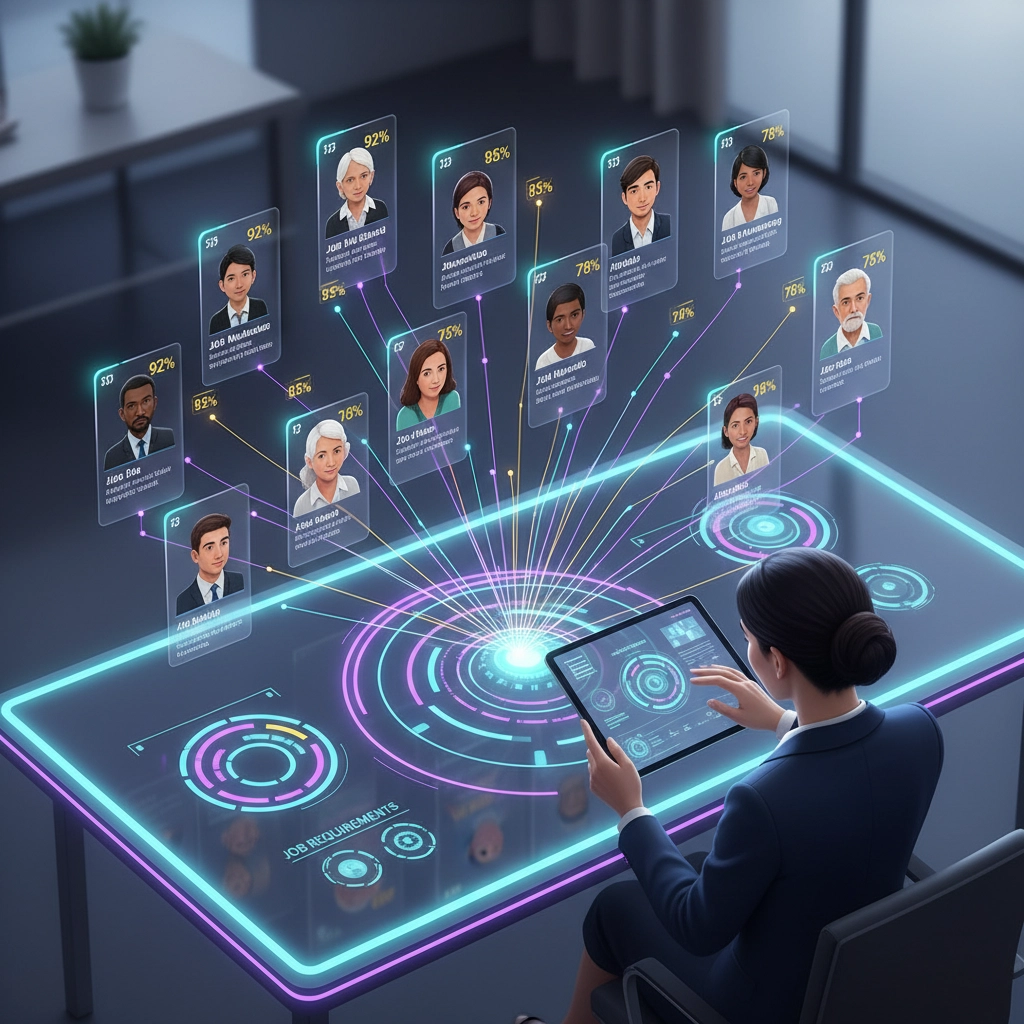
The talent acquisition landscape is being transformed by AI tools that augment human recruiters' capabilities rather than replacing them. These collaborative systems are particularly valuable for US businesses facing tight labor markets and increased competition for skilled workers.
Resume Screening and Candidate Matching: AI recruiting tools can process hundreds of resumes in minutes, identifying candidates whose skills and experience align with specific role requirements. Unlike simple keyword matching, modern AI understands context and can identify transferable skills and potential.
Bias Reduction and Fair Evaluation: When properly implemented, AI recruiting tools can help reduce unconscious bias in hiring by focusing on skills and qualifications rather than demographic information or irrelevant factors.
Candidate Experience Enhancement: AI-powered chatbots can handle initial candidate inquiries, schedule interviews, and provide updates throughout the hiring process, ensuring candidates receive timely communication even when human recruiters are focused on other tasks.
Interview Assistance and Analysis: Some AI tools can participate in video interviews, analyzing candidate responses for communication skills, technical knowledge, and cultural fit indicators while providing real-time feedback to human interviewers.
Onboarding Automation: Once candidates are hired, AI systems can automate much of the onboarding process, from document collection to training schedule creation, ensuring new employees have a smooth transition.

Implementation Strategies for Maximum Impact
Successfully implementing human-AI collaboration tools requires a strategic approach that considers both technological capabilities and human factors:
Start with Clear Objectives: Before implementing any AI tools, businesses should identify specific pain points and productivity goals. Whether it's reducing meeting overhead, improving project delivery times, or streamating recruitment, having clear objectives helps select the right tools and measure success.
Invest in Training and Change Management: The most sophisticated AI tools won't deliver value if team members don't understand how to use them effectively. Successful organizations invest in comprehensive training programs that help employees understand not just how to use AI tools, but when and why to use them.
Ensure Data Quality and Integration: AI collaboration tools are only as good as the data they can access. Organizations need to ensure their systems can integrate with existing tools and that data quality is sufficient to support AI decision-making.
Maintain Human Oversight: While AI tools can handle many tasks autonomously, human oversight remains crucial for quality control, ethical considerations, and strategic decisions. The goal is augmentation, not replacement.
Plan for Scalability: Choose AI tools that can grow with your business. Solutions that work for a 10-person team may not be appropriate for a 100-person organization, so consider long-term scalability in your selection criteria.
Why Virtual Nexgen Solutions is Your Ideal AI Collaboration Partner
At Virtual Nexgen Solutions, we understand that implementing AI collaboration tools can feel overwhelming for busy business owners. That's why we specialize in providing Virtual Assistant & AI Automation Services that seamlessly integrate with your existing operations while delivering immediate productivity gains.
Our team of experts doesn't just provide AI tools: we provide strategic guidance on how to implement these technologies in ways that complement your team's strengths and address your specific business challenges. Whether you need support with meeting management, project coordination, or talent acquisition, we can help you Automate Your Business with AI while maintaining the human touch that makes your business unique.
We've helped hundreds of US businesses transform their operations through intelligent automation, from marketing virtual assistants to specialized real estate support. Our approach focuses on creating collaborative systems that amplify human capabilities rather than replacing them.
The Future of Workplace Productivity
As we look ahead, the trend toward human-AI collaboration will only accelerate. Emerging technologies like explainable AI and adaptive learning systems will make these partnerships even more intuitive and effective. Organizations that embrace this collaborative approach now will have a significant competitive advantage as these technologies continue to evolve.
The key to success isn't just adopting AI tools: it's learning how to work effectively with them as partners. This requires a mindset shift from viewing AI as a replacement for human workers to seeing it as a powerful amplifier of human capabilities.
For US businesses ready to explore how Dedicated Virtual Assistant for Businesses and AI collaboration tools can transform their operations, the time to act is now. The organizations that lead in productivity and efficiency tomorrow are the ones implementing these solutions today.
Ready to discover how AI collaboration tools can transform your business? Book a consultation with our experts today and learn how Virtual Nexgen Solutions can help you implement the right mix of human expertise and AI automation for your unique needs. Your future self: and your bottom line( will thank you.)