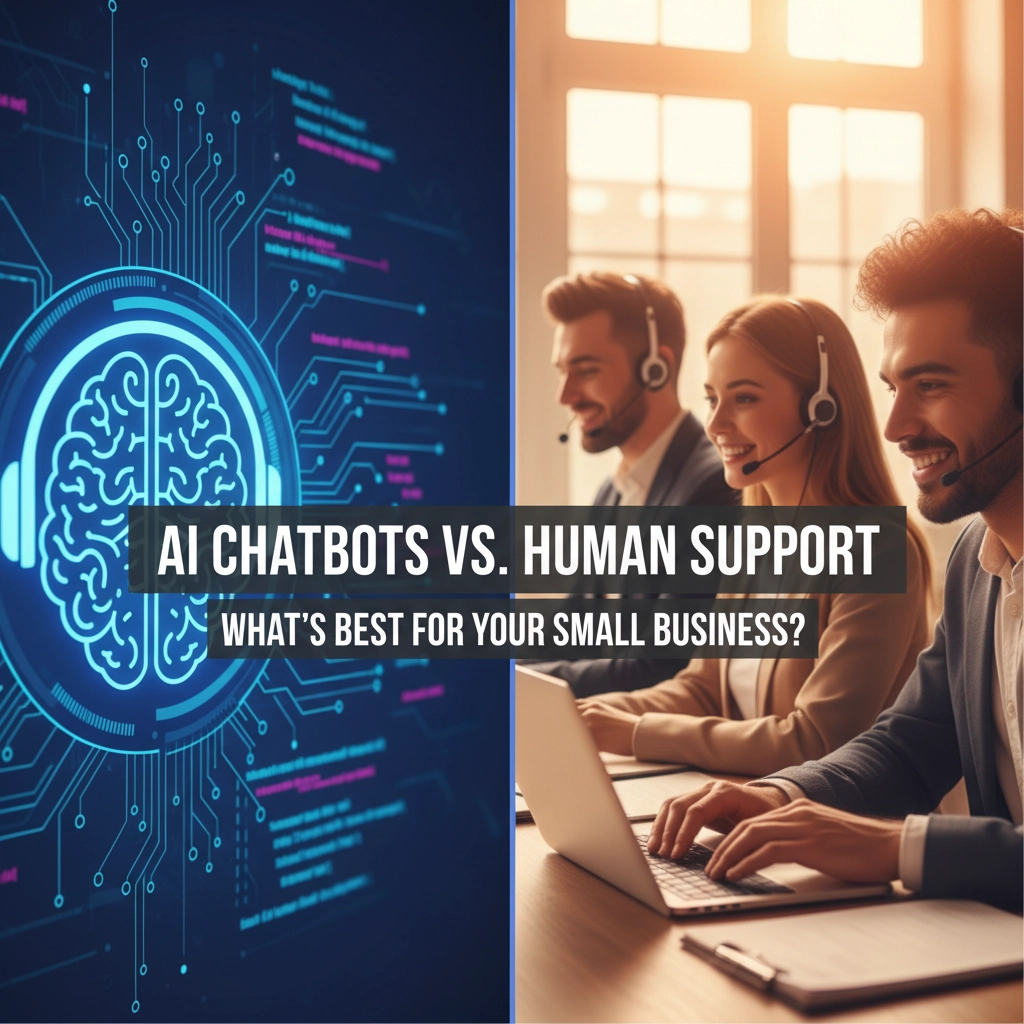
Running a small business means making smart choices about where to invest your limited resources. When it comes to customer support, you're faced with a critical decision: should you rely on AI chatbots, human agents, or find a way to combine both effectively?
The answer isn't as straightforward as you might think. While AI automation experts for businesses are pushing chatbot solutions, and many companies are investing heavily in dedicated virtual assistant for businesses, the reality is that your choice depends on your specific business needs, customer expectations, and growth goals.
The Case for AI Chatbots: Speed, Efficiency, and 24/7 Availability
Instant Response Times That Never Sleep
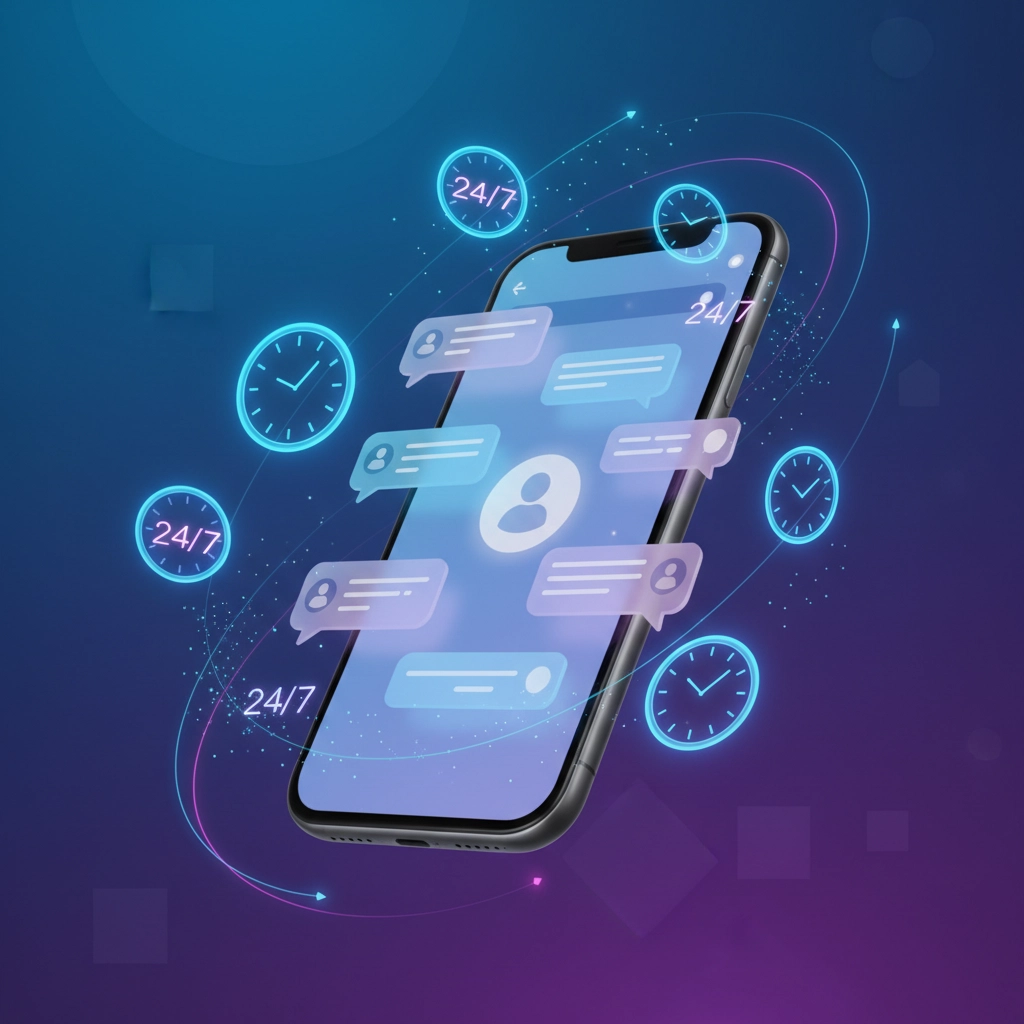
AI chatbots deliver something human agents simply cannot: immediate responses at any hour of the day. Your customers don't work 9-to-5 schedules, and neither do their questions. A well-configured chatbot can handle order inquiries, appointment scheduling, and basic troubleshooting at 3 AM just as effectively as during peak business hours.
For small businesses, this round-the-clock availability can be a game-changer. You're competing with larger companies that have the resources for 24/7 human support teams. An AI chatbot levels that playing field without the overhead costs of night shift employees.
Cost-Effective Scalability
The numbers speak for themselves: AI chatbots can reduce customer support costs by up to 30% while handling multiple conversations simultaneously. As your business grows, a chatbot scales with you without requiring additional hiring, training, or management overhead.
Consider this scenario: your small e-commerce business suddenly receives 200% more customer inquiries during a holiday sale. Human agents would be overwhelmed, leading to longer wait times and frustrated customers. An AI chatbot handles this surge effortlessly, maintaining response quality regardless of volume.
Data-Driven Insights and Consistency
AI chatbots don't have bad days or forget training protocols. They deliver consistent responses based on your predetermined guidelines and continuously learn from each interaction. More importantly, they capture valuable data about customer pain points, frequently asked questions, and behavioral patterns that can inform your business strategy.
Limitations Worth Considering
However, AI chatbots aren't perfect solutions. They excel at handling routine, predictable inquiries but struggle with complex problem-solving, emotional situations, or requests that fall outside their programming. A chatbot can tell you your order status but can't genuinely empathize when that order contains a birthday gift that won't arrive on time.
The Human Touch: Emotional Intelligence and Complex Problem-Solving
Building Trust Through Genuine Connection
Human support agents bring something irreplaceable to customer service: authentic empathy and emotional intelligence. When customers are frustrated, confused, or dealing with sensitive issues, they want to speak with someone who truly understands their situation.
This human connection builds customer loyalty in ways that even the most sophisticated AI cannot replicate. Customers remember feeling heard and valued, and they're more likely to remain loyal to businesses that provide genuine human care during critical moments.
Adaptability and Creative Problem-Solving

Human agents can think outside the box, make judgment calls, and find creative solutions to unique problems. They can read between the lines of customer communications, pick up on subtle cues, and adapt their approach based on the customer's mood and communication style.
For example, when a customer calls with a complex technical issue that involves multiple products and services, a human agent can navigate the conversation naturally, ask clarifying questions, and provide tailored solutions that an AI might miss.
Natural Upselling and Cross-Selling
Experienced human agents can identify genuine opportunities to help customers with additional products or services. Unlike scripted chatbot recommendations, human agents can gauge customer interest, timing, and budget considerations to make suggestions that feel helpful rather than pushy.
The Resource Challenge
The main limitation of human-only support for small businesses is resource constraints. Hiring, training, and retaining quality customer service representatives requires significant investment in time and money. Additionally, human agents are limited by business hours unless you're prepared to staff multiple shifts.
Direct Comparison: AI Chatbots vs. Human Support
| Feature | AI Chatbots | Human Support |
|---|---|---|
| Availability | 24/7 instant response | Limited to business hours |
| Response Speed | Immediate (seconds) | Variable (minutes to hours) |
| Scalability | Handles unlimited simultaneous conversations | Limited by agent availability |
| Cost Per Interaction | Very low after initial setup | Moderate to high ongoing costs |
| Emotional Intelligence | Limited to programmed responses | High empathy and understanding |
| Complex Problem Solving | Rule-based, limited creativity | Unlimited adaptability and judgment |
| Consistency | Perfect consistency every time | Variable based on agent and situation |
| Learning Capability | Continuous improvement through data | Experience-based improvement over time |
| Personal Connection | Professional but impersonal | Genuine relationship building |
The Winning Strategy: A Hybrid Approach
Smart Integration for Maximum Impact
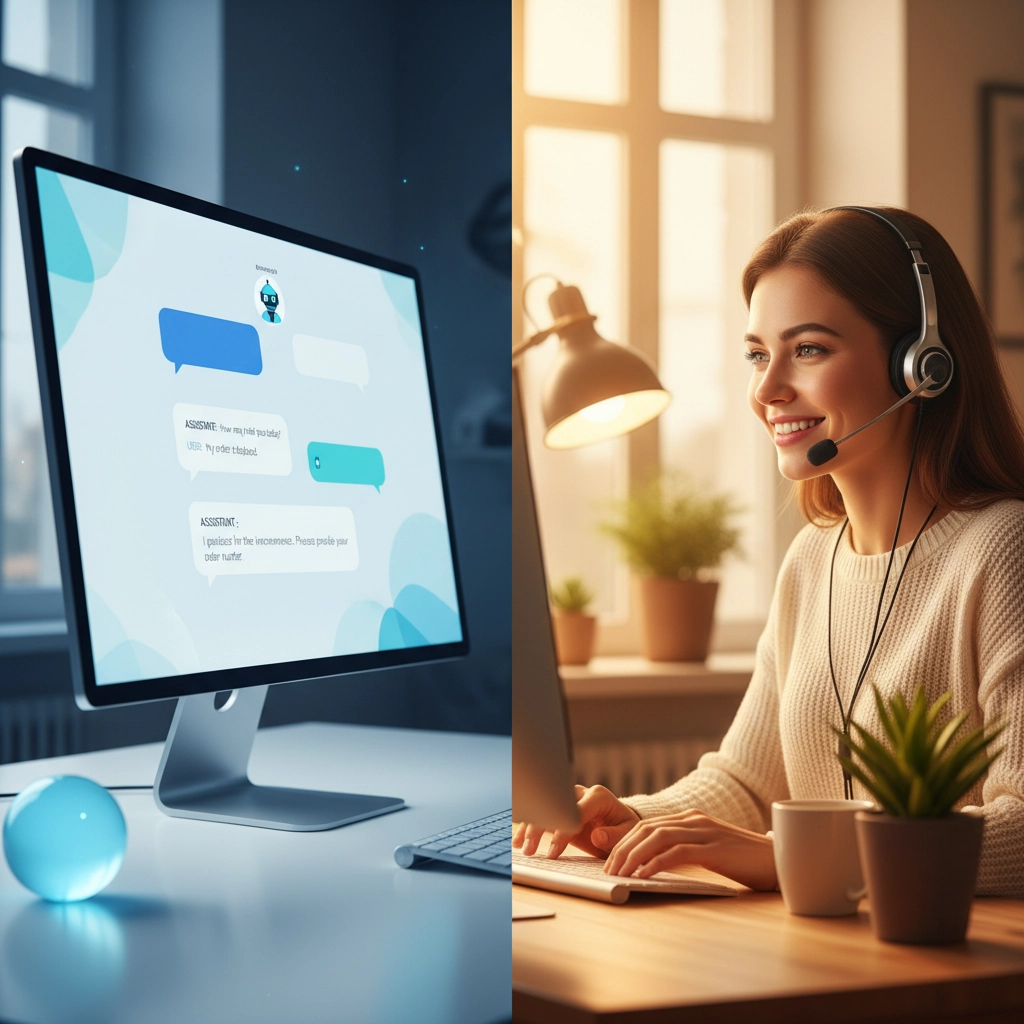
The most successful small businesses don't choose between AI chatbots and human support: they strategically combine both to automate your business with AI while maintaining the human touch where it matters most.
Start by identifying your most common customer inquiries. These routine questions: order tracking, store hours, basic product information, appointment scheduling: are perfect candidates for AI automation. Let your chatbot handle these efficiently while your human team focuses on complex issues that require genuine problem-solving skills.
Seamless Handoff Strategy
Configure your AI system to recognize when a conversation needs human intervention. When customers express frustration, use emotional language, or ask questions outside the chatbot's scope, the system should seamlessly transfer the conversation to a human agent with full context about the customer's previous interactions.
This approach prevents the frustrating experience of customers having to repeat themselves and demonstrates that you're using technology to enhance, not replace, human service.
Implementation Roadmap for Small Businesses
Phase 1: Foundation – Deploy a chatbot to handle your top 10 most frequent inquiries. This immediately reduces your team's workload and improves response times for basic questions.
Phase 2: Optimization – Train your human agents to excel at escalated cases and relationship-building conversations. With routine tasks automated, they can focus on high-value interactions that drive customer loyalty.
Phase 3: Expansion – Gradually expand your chatbot's capabilities based on real data about customer needs and agent feedback. Use insights from both AI and human interactions to continuously refine your support strategy.
Virtual Nexgen Solutions: Your Partner in Balanced Customer Support
At Virtual Nexgen Solutions, we understand that small businesses need customer support strategies that combine efficiency with genuine human connection. Our dedicated virtual assistant for businesses work alongside AI automation tools to create seamless customer experiences that grow with your business.
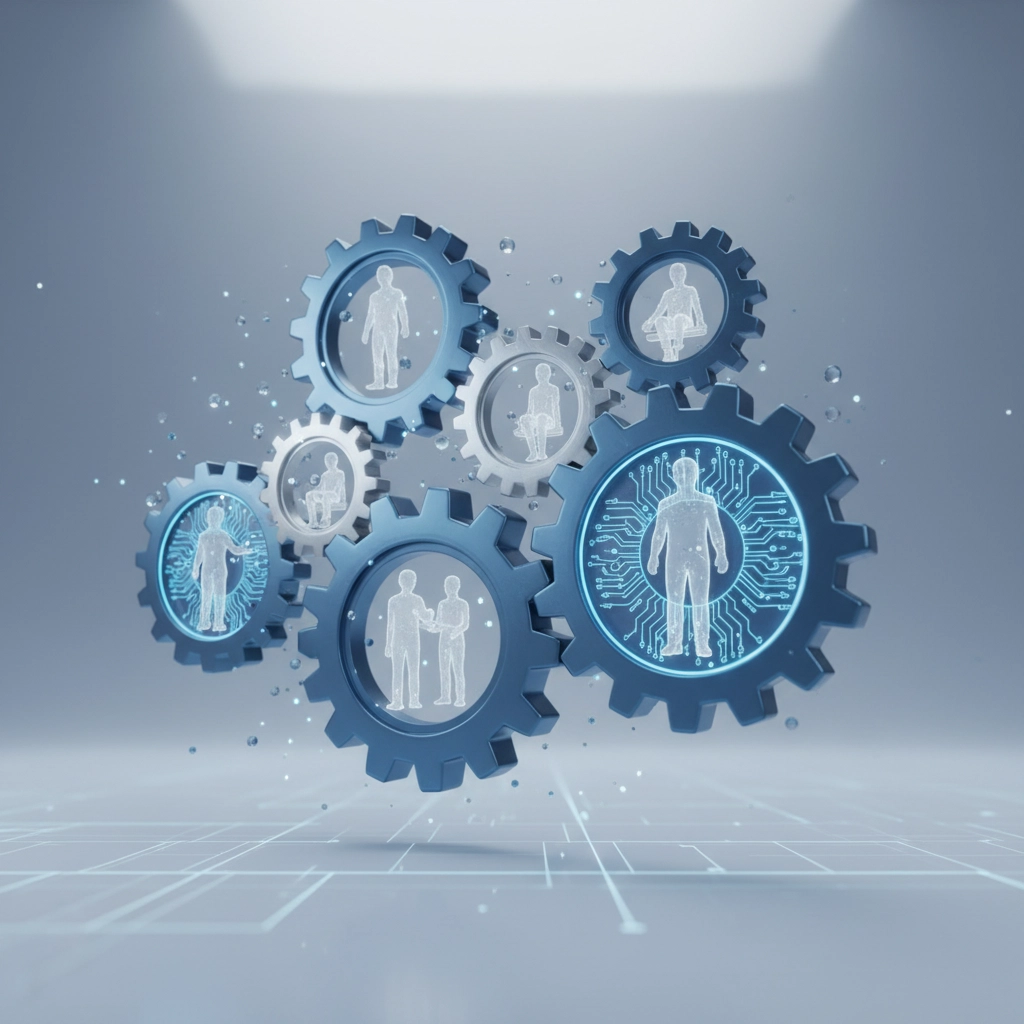
Our team specializes in implementing hybrid support systems that automate routine tasks while ensuring complex customer needs receive expert human attention. Whether you need help with marketing virtual assistants, bookkeeping support, or specialized industry solutions, we provide the balanced approach your customers expect.
Making the Right Choice for Your Business
The question isn't whether to choose AI chatbots or human support: it's how to combine them effectively for your specific business needs. Consider your customer demographics, the complexity of your products or services, and your growth timeline when designing your support strategy.
If you're ready to explore how a hybrid approach can transform your customer support while reducing costs and improving satisfaction, we're here to help. Our AI automation experts for businesses can assess your current support challenges and design a customized solution that leverages both artificial intelligence and human expertise.
Ready to automate your business with AI while maintaining the human touch your customers value? Schedule a free consultation with Virtual Nexgen Solutions today. Let's discuss how our balanced approach to customer support can help your small business compete with larger companies while maintaining the personal service that sets you apart.
Visit Virtual Nexgen Solutions to learn more about our comprehensive virtual assistant and AI automation services designed specifically for growing businesses.