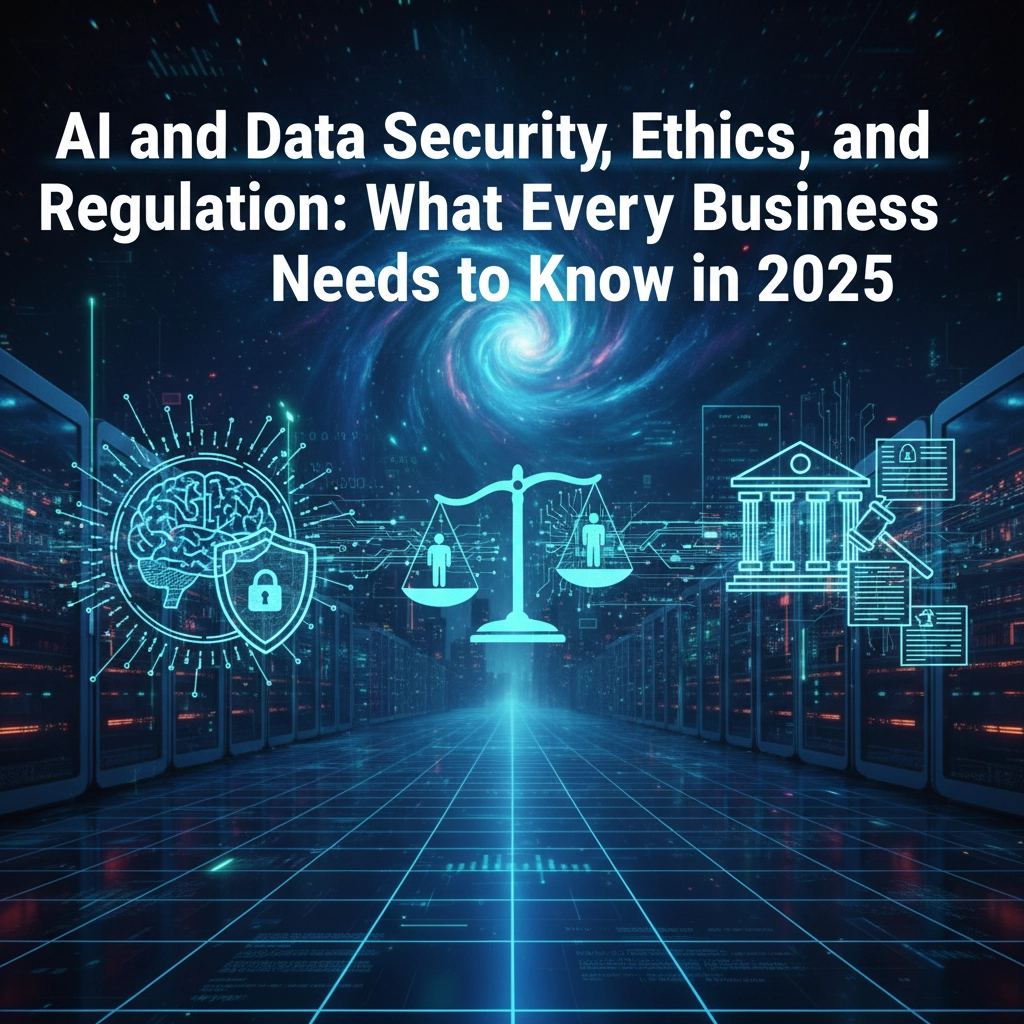
The AI revolution is no longer coming: it's here. As we navigate through 2025, 92% of companies plan to increase their AI investments over the next three years. But here's the catch: only 1% of leaders describe their companies as "mature" in AI deployment. This massive gap between ambition and execution isn't just about technology: it's about navigating an increasingly complex landscape of regulations, security requirements, and ethical considerations.
If you're a business owner wondering how to harness AI's power while staying compliant and secure, you're not alone. The regulatory environment has evolved dramatically, and the stakes have never been higher. Let's break down what you need to know to succeed in this new reality.
The Regulatory Landscape Has Fundamentally Shifted
Gone are the days when AI was an unregulated frontier. 2025 marks the year of comprehensive AI governance, with the EU's Artificial Intelligence Act leading the charge as the world's most comprehensive AI regulation.
The new regulatory framework operates on a risk-based approach:
- Prohibited AI Systems: Government social scoring and real-time biometric surveillance are banned outright
- High-Risk Systems: AI used in recruitment, credit scoring, law enforcement, education, and critical infrastructure face strict compliance obligations
- Limited/Minimal-Risk Systems: Most business AI applications require transparency when customers interact with them
For businesses operating globally, this creates a complex compliance puzzle. You're not just dealing with the EU AI Act: there's Canada's AIDA, various U.S. frameworks, and emerging regulations worldwide. The key is understanding which category your AI systems fall into and ensuring you meet the highest standard across all jurisdictions you operate in.

Data Security Concerns Are Skyrocketing
Here's a startling statistic: 69% of business leaders now cite concerns about AI data privacy: up dramatically from just 43% in Q4 2024. This isn't just executive anxiety; it reflects real risks as AI systems process vast amounts of personal and sensitive data.
Your employees share these concerns too. Approximately 51% worry about cybersecurity risks, 50% about AI inaccuracies, and 43% about personal privacy when it comes to generative AI in the workplace.
Critical Data Security Requirements
To protect your business and customers, you need:
Data Governance Protocols: Document where your training data comes from, how models make decisions, and maintain audit trails for all AI systems.
Cross-Border Compliance: Understand data sovereignty laws: where data can be stored, processed, and transferred, especially when using AI across different countries.
Access Controls: Implement strict protocols for who can access AI systems and the data they process.
Incident Response Plans: Prepare for potential data breaches or AI system failures with clear response procedures.
The challenge intensifies with data localization mandates increasing globally. You need to know exactly where your AI processes data and whether that complies with local laws.
Ethics Isn't Optional: It's Strategic
Strong governance has emerged as the fundamental answer to managing AI-related risks. A comprehensive AI governance program should systematically manage privacy, safety, security, transparency, and non-discrimination requirements.
Building Your AI Ethics Framework
Establish Cross-Functional Oversight: Create an AI Ethics Committee with representatives from legal, compliance, IT, and business functions. This isn't just about checking boxes: it's about making AI decisions that align with your company values.
Address Algorithmic Bias: One of the most critical ethical concerns is bias in automated decision-making. If your AI makes decisions affecting employment, financial access, or customer treatment, you need rigorous testing for fairness before deployment.
Implement Human Oversight: High-risk AI systems require meaningful human-in-the-loop processes. This means ensuring humans can understand, review, and override AI decisions when necessary.

The Speed vs. Safety Dilemma
Every business leader faces this tension: how do you move fast enough to stay competitive while ensuring your AI deployment is safe and compliant?
The answer lies in treating regulation and safety as competitive advantages, not obstacles. Companies that get governance right early will build trust with customers, employees, and regulators: creating a foundation for sustainable AI adoption.
Key Risk Areas to Address
External Threats:
- AI-enabled malware and cyberattacks
- Intellectual property infringement
- Supply chain vulnerabilities
Internal Threats:
- Inadequate governance structures
- Insufficient employee training
- Misuse of AI systems for harmful content
Technical Risks:
- AI hallucinations and inaccuracies
- Biased decision-making
- Inadequate disclosure to customers
Only 31% of employees trust their employers to develop AI safely in certain sectors, compared to a 71% cross-industry average. Building this trust requires transparent communication about your AI practices and robust safety measures.
Practical Steps for Compliance and Security
1. Classify Your AI Systems
Start by identifying every AI system your organization uses and classify them according to risk categories under applicable laws. This includes:
- Customer service chatbots
- Marketing automation tools
- HR screening systems
- Financial decision-making tools
2. Implement Documentation Standards
Maintain comprehensive records of:
- AI system development and deployment processes
- Training data sources and model assumptions
- Testing protocols for accuracy, bias, and fairness
- Decision-making processes and human oversight procedures
3. Establish Transparency Protocols
Develop clear policies for disclosing when customers interact with AI systems, especially for high-risk applications. This includes updating privacy policies, terms of service, and customer communications.
4. Integrate with Existing Frameworks
Align your AI governance with existing compliance frameworks like ISO/IEC 27001 (information security) and ISO 9001 (quality management). This creates unified compliance approaches across departments without duplicating effort.

Industry-Specific Considerations
Different industries face unique challenges:
Healthcare: HIPAA compliance becomes more complex with AI processing patient data
Financial Services: Credit decisions and fraud detection require bias testing and explainability
Real Estate: Property valuation and client screening tools need fair housing compliance
Marketing: Personalized targeting must balance effectiveness with privacy rights
The Role of Professional AI Implementation
Given the complexity of this landscape, many businesses are turning to AI automation experts who understand both the technical and regulatory requirements. Working with experienced virtual assistant and AI automation services providers can help you navigate compliance while maximizing AI's benefits for your specific industry.
At Virtual Nexgen Solutions, we've helped hundreds of businesses implement AI solutions that are not only powerful but also compliant and secure. Our approach focuses on understanding your industry's specific requirements and building AI systems that enhance your operations while meeting all regulatory standards.
Whether you need HIPAA-compliant virtual assistant services for healthcare practices, automated bookkeeping solutions for accounting firms, or AI-powered marketing tools for real estate agencies, the key is working with providers who understand the regulatory landscape.
Looking Forward: Building Sustainable AI Practices
The businesses that will thrive in 2025 and beyond are those that recognize AI governance as requiring serious executive attention. This means treating AI implementation as a strategic business decision, not just a technical upgrade.
Success requires:
- Clear ownership of AI risk and compliance across departments
- Regular assessment and updating of AI systems
- Ongoing employee training on AI safety and ethics
- Proactive engagement with regulatory developments
The regulatory landscape will continue evolving, but the fundamental principles remain: transparency, accountability, security, and ethical use of AI technology.
Take Action Today
The complexity of AI regulation, security, and ethics doesn't have to slow down your business growth. With the right approach and expert guidance, you can implement AI solutions that drive results while staying fully compliant.
Ready to explore how AI can transform your business operations safely and ethically? Our team at Virtual Nexgen Solutions specializes in helping businesses like yours navigate this complex landscape while maximizing AI's potential.
Visit virtualnexgen.com to learn more about our comprehensive AI automation services, or schedule a consultation with our experts at calendly.com/virtualnexgen-info/30min to discuss your specific needs.
Don't let regulatory complexity hold you back from AI's transformative potential. Let's build a solution that works for your business, your customers, and the evolving regulatory environment.