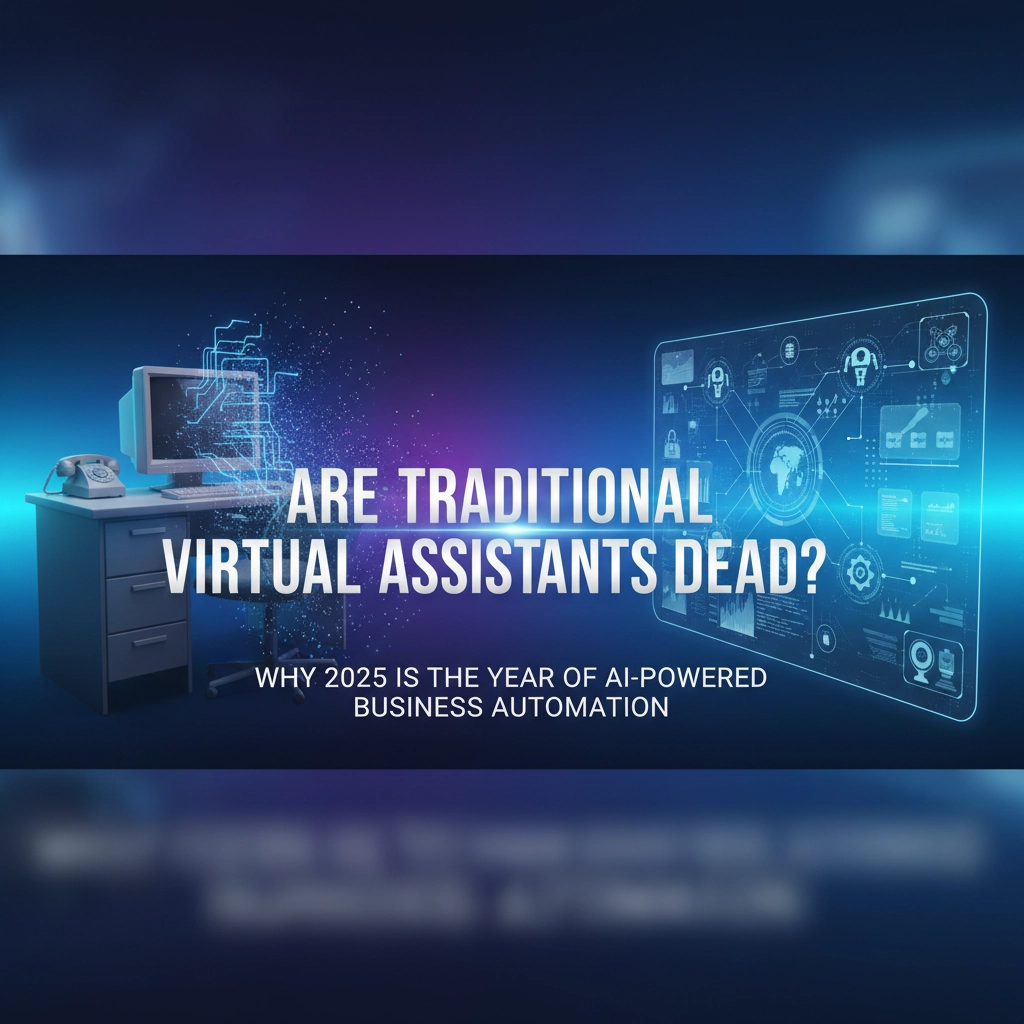
The virtual assistant landscape is experiencing a seismic shift. As we navigate through 2025, business owners are asking a critical question: Are traditional virtual assistants becoming obsolete? The answer isn't a simple yes or no, but rather a nuanced transformation that's reshaping how we think about business automation entirely.
The Great Transition: From Human to AI
The numbers tell a compelling story. According to recent enterprise surveys, 96% of companies plan to expand their AI agent usage this year, reporting an average return on investment of 171%. This isn't just a tech trend: it's a fundamental shift in how businesses operate.
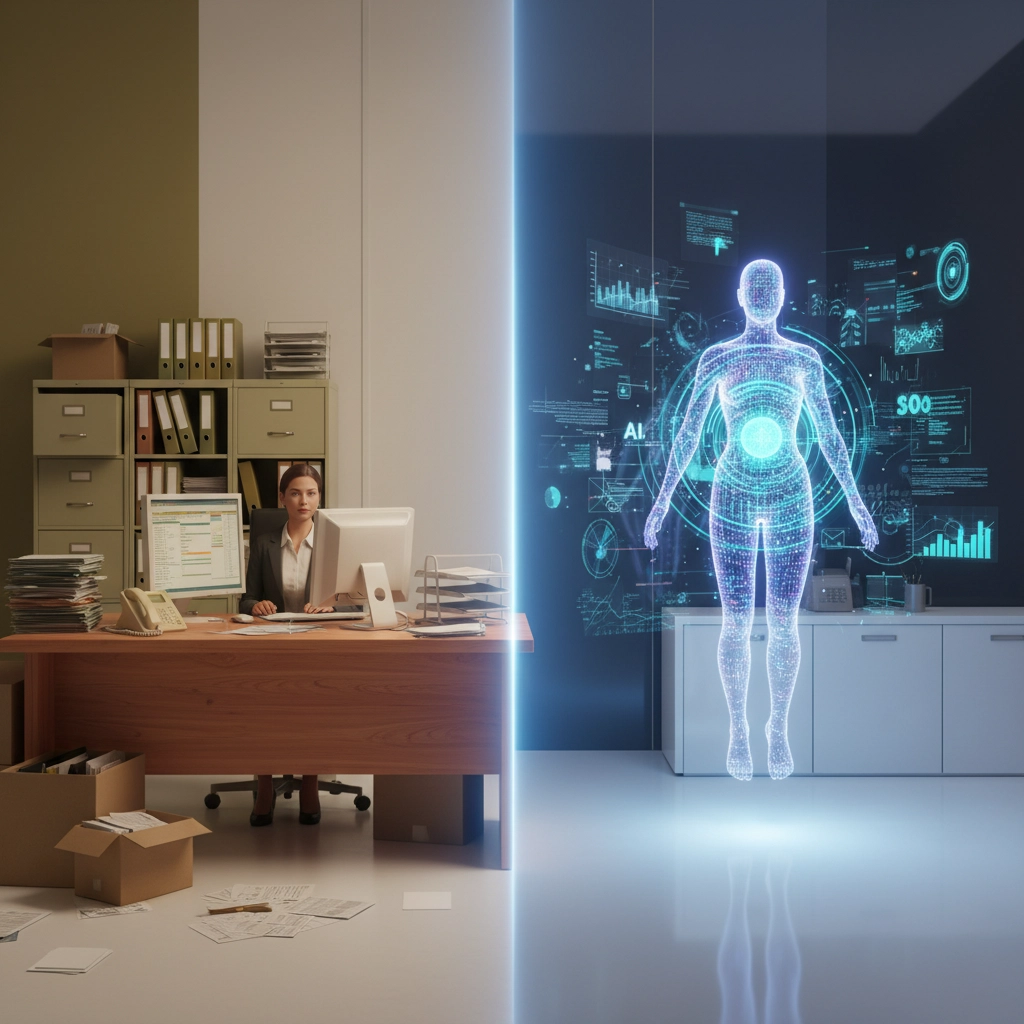
Traditional virtual assistants, while valuable, operate within human limitations. They work specific hours, require training, take breaks, and can handle one task at a time. AI-powered assistants, on the other hand, work 24/7, learn continuously, and can manage multiple complex workflows simultaneously without fatigue or inconsistency.
Consider this: A marketing agency recently integrated AI automation and achieved 30% faster campaign execution with higher client satisfaction rates. Meanwhile, H&M deployed virtual assistants that now resolve 70% of customer queries while boosting conversion rates by 25%. These aren't isolated success stories: they're becoming the new standard.
Why 2025 is the Inflection Point
Several technological breakthroughs have converged to make 2025 the pivotal year for AI-powered business automation:
Multi-Modal Interaction Capabilities
Today's AI assistants can interpret text, voice, video, and images seamlessly. This means they can analyze a screenshot of a problem, understand verbal instructions, and provide written solutions: all in one interaction.
Real-Time Data Integration
Modern AI assistants connect directly to live business intelligence dashboards, enabling instant report generation, real-time alerts, and data-driven decision making that was impossible with traditional automation.
Privacy-Centric Processing
Advanced AI now features on-device processing and encryption, allowing businesses in regulated industries to leverage automation while maintaining strict data security standards.
Autonomous Decision-Making
Unlike rule-based systems that simply execute predefined tasks, 2025's AI assistants act as proactive problem-solvers: identifying issues, suggesting solutions, and making contextual decisions independently.
The Cost-Benefit Reality Check
The economic argument for AI automation is becoming impossible to ignore. AI assistants deliver decisive advantages in three critical areas:
Cost Efficiency
While a skilled virtual assistant might cost $15-25 per hour, AI assistants can handle equivalent work for pennies per task. For businesses processing hundreds of customer inquiries, scheduling dozens of appointments, or generating multiple reports daily, the savings compound rapidly.
Consistency and Quality
Human assistants have good days and bad days. AI assistants perform at the same high level consistently. They don't make transcription errors when tired, forget follow-up tasks, or vary in their communication style.
Speed and Scalability
An AI assistant can simultaneously handle customer service inquiries, schedule appointments, generate reports, and manage social media: tasks that would require a team of traditional VAs.

Where Human VAs Still Hold the Edge
Despite AI's rapid advancement, traditional virtual assistants aren't completely obsolete. They remain valuable for specific scenarios requiring:
Emotional Intelligence and Empathy
Complex customer relationships, sensitive negotiations, and situations requiring genuine emotional understanding still benefit from human insight.
High-Context Problem Solving
When tasks require deep industry knowledge, creative thinking, or navigating ambiguous situations, human VAs bring intuition and initiative that AI hasn't fully replicated.
Relationship Building
For businesses where personal relationships drive success, human VAs can build rapport and trust in ways that feel more authentic than AI interactions.
Industry-Specific AI Revolution
The real transformation happening in 2025 is the emergence of industry-specific AI assistants. Generic virtual assistants are being replaced by specialized AI solutions:
- Real Estate: AI assistants that handle lead qualification, property matching, and transaction coordination
- Healthcare: Systems managing appointment scheduling, insurance verification, and patient follow-ups
- Legal: AI handling document review, case research, and client intake processes
- E-commerce: Assistants managing inventory, customer service, and order processing
These specialized AI systems understand industry terminology, regulations, and best practices in ways that traditional VAs would need extensive training to match.
The Market Speaks Volumes
The virtual assistant market is projected to exceed $8 billion by 2025, while the broader chatbot market will surpass $27 billion by 2030. This explosive growth reflects businesses' recognition that AI automation isn't just a competitive advantage: it's becoming a necessity for operational efficiency.
Companies implementing AI virtual assistants report handling up to 80% of routine support traffic automatically, freeing human staff for strategic, high-value activities. This isn't just about cost savings; it's about transforming business capabilities entirely.

Strategic Implementation: Matching Tool to Task
The smartest businesses in 2025 aren't asking whether to choose AI or human assistants: they're strategically deploying both based on task requirements:
AI-First Scenarios:
- High-volume, repetitive tasks
- 24/7 customer support needs
- Data processing and analysis
- Appointment scheduling and calendar management
- Initial customer qualification
Human-Preferred Scenarios:
- Complex negotiations
- Creative strategy development
- Sensitive customer situations
- High-stakes relationship management
- Ambiguous problem-solving
Looking Ahead: The 2027 Vision
By 2027, AI virtual assistants will approach near-human conversational abilities and function as digital employees capable of negotiating contracts, managing teams, and executing cross-departmental projects autonomously. However, this evolution won't happen overnight: it's a strategic transition where businesses gradually shift from human-dependent to AI-optimized operations.
Making the Smart Choice for Your Business
The question isn't whether traditional virtual assistants are dead, but rather which approach maximizes your business potential. For most companies, the answer involves a hybrid strategy that leverages AI for efficiency and humans for relationship-building.
At Virtual Nexgen Solutions, we've helped hundreds of businesses navigate this transition successfully. Our AI-powered virtual assistant services combine cutting-edge automation with human oversight, ensuring you get the efficiency of AI with the reliability of expert support.
Whether you're looking to implement your first AI assistant or upgrade from traditional VA services, our team can design a solution that fits your specific needs and budget. We specialize in marketing automation, bookkeeping support, and real estate assistance, with AI solutions tailored to your industry.
Ready to discover how AI-powered virtual assistants can transform your business operations? Book a free consultation with our experts to explore your options and see how Virtual Nexgen Solutions can help you stay ahead of the curve in 2025 and beyond.
Schedule your free 30-minute consultation today and learn how AI automation can revolutionize your business efficiency while reducing costs by up to 60%.
Traditional virtual assistants aren't dead; they're evolving. The question is: Will your business evolve with them?