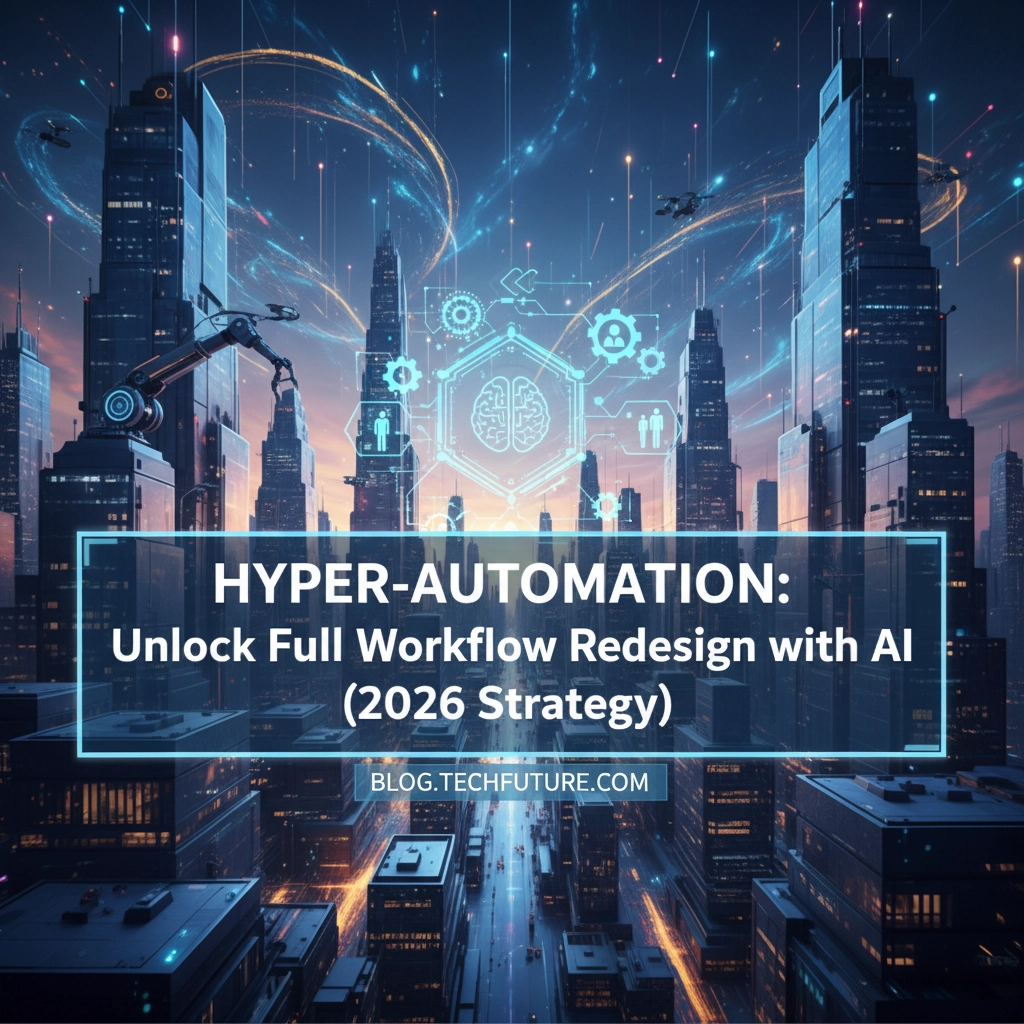
The business automation landscape has reached a critical inflection point. What we're seeing in 2026 isn't just incremental improvement: it's a fundamental transformation from task-based automation to intelligent, decision-making systems that reshape entire business operations. Hyper-automation represents the next evolution, combining artificial intelligence, machine learning, robotic process automation (RPA), and process intelligence into unified platforms that don't just execute tasks: they think, adapt, and optimize continuously.
For US businesses, this shift presents both unprecedented opportunities and urgent competitive pressures. Companies implementing hyper-automation strategies report 3-5x faster cycle times, 70% reduction in manual errors, and significant cost savings across operations. Those who delay adoption risk falling behind competitors who are already leveraging AI-driven workflows to gain market advantages.
The Evolution Beyond Traditional Automation
Traditional automation follows rigid, predefined rules: if this happens, then do that. Hyper-automation in 2026 operates fundamentally differently. Instead of executing predetermined sequences, AI systems understand context, make autonomous decisions, and continuously learn from outcomes.
From Rule-Based to Intelligence-Driven
Modern AI-powered automation doesn't just follow scripts; it interprets situations. For example, when processing customer inquiries, instead of routing based on keywords, AI systems analyze sentiment, urgency, complexity, and customer history to determine the optimal response path. This contextual understanding transforms every business process from mechanical execution to intelligent orchestration.
Goal-Level Automation
Rather than automating individual tasks, hyper-automation focuses on achieving business objectives. An AI system managing inventory doesn't just reorder when stock hits minimums: it predicts demand fluctuations, considers seasonal trends, evaluates supplier reliability, and optimizes purchasing decisions to maximize cash flow and minimize stockouts simultaneously.

Core Components of Hyper-Automation Architecture
Unified Platform Integration
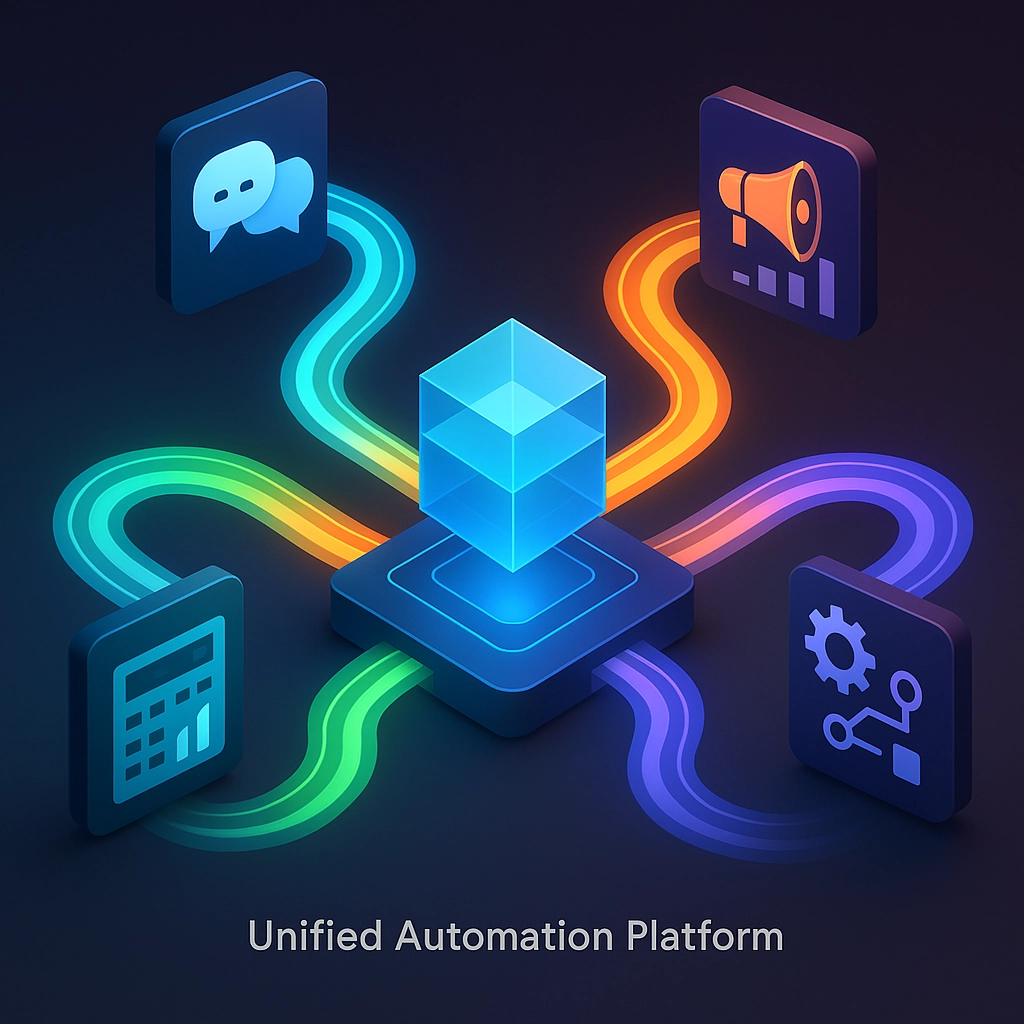
The fragmented approach of managing separate tools for different automation needs has become unsustainable. Leading organizations are adopting integrated platforms that combine workflow automation, AI analytics, process mining, and intelligent document processing in single environments. This unified approach eliminates data silos, reduces training complexity, and enables seamless automation across departments.
Process Intelligence and Mining
Hyper-automation begins with understanding how work actually flows through your organization: not how you think it flows. Process mining technology captures real workflow patterns, identifies bottlenecks, and reveals optimization opportunities that weren't visible before. This data-driven foundation ensures automation efforts target actual pain points rather than perceived problems.
Multimodal AI Capabilities
2026's automation systems process text, voice, images, and structured data simultaneously. A customer service AI can listen to a phone call, extract relevant information from attached documents, update multiple databases, and generate follow-up communications: all within a single intelligent workflow. This multimodal approach creates truly seamless customer experiences while reducing operational complexity.
Industry-Specific Hyper-Automation Applications
Real Estate Operations
Real estate businesses are leveraging hyper-automation to transform property management, client communications, and transaction processing. AI systems automatically qualify leads, schedule showings based on agent availability and client preferences, generate property analyses, and manage complex closing processes. Virtual Nexgen Solutions' real estate virtual assistants combine human expertise with AI capabilities to deliver comprehensive property management support.
Financial Services and Bookkeeping
Financial operations benefit enormously from intelligent automation that goes beyond simple data entry. AI systems now detect anomalies in financial records, automatically categorize transactions, generate compliance reports, and provide predictive cash flow analyses. For businesses seeking comprehensive financial automation, Virtual Nexgen's bookkeeping virtual assistants offer AI-enhanced financial management solutions.
Marketing and Customer Engagement
Marketing automation has evolved from basic email sequences to intelligent customer journey orchestration. AI analyzes customer behavior patterns, predicts optimal engagement timing, personalizes content at scale, and automatically adjusts campaigns based on performance data. Virtual Nexgen's marketing virtual assistants leverage these AI capabilities to deliver sophisticated marketing automation strategies.
Strategic Implementation Framework
Phase 1: Process Assessment and Mapping
Successful hyper-automation begins with comprehensive process analysis. Organizations must identify high-volume, rule-based activities that consume significant employee time. Common targets include customer onboarding, invoice processing, appointment scheduling, and routine customer inquiries. Process mapping reveals hidden inefficiencies and identifies automation opportunities that deliver immediate value.
Phase 2: AI Integration and Training
Unlike traditional automation that requires extensive programming, modern AI systems learn from examples and adapt to changing conditions. Implementation involves training AI models on historical data, defining decision parameters, and establishing feedback loops for continuous improvement. This phase requires careful attention to data quality and clear definition of success metrics.
Phase 3: Continuous Optimization
Hyper-automation systems improve continuously through machine learning and performance monitoring. Regular analysis of automation outcomes reveals optimization opportunities, while A/B testing validates improvements. Organizations that establish robust monitoring and optimization processes see compound benefits over time as their AI systems become increasingly intelligent.
Measuring ROI and Business Impact
Quantifiable Benefits
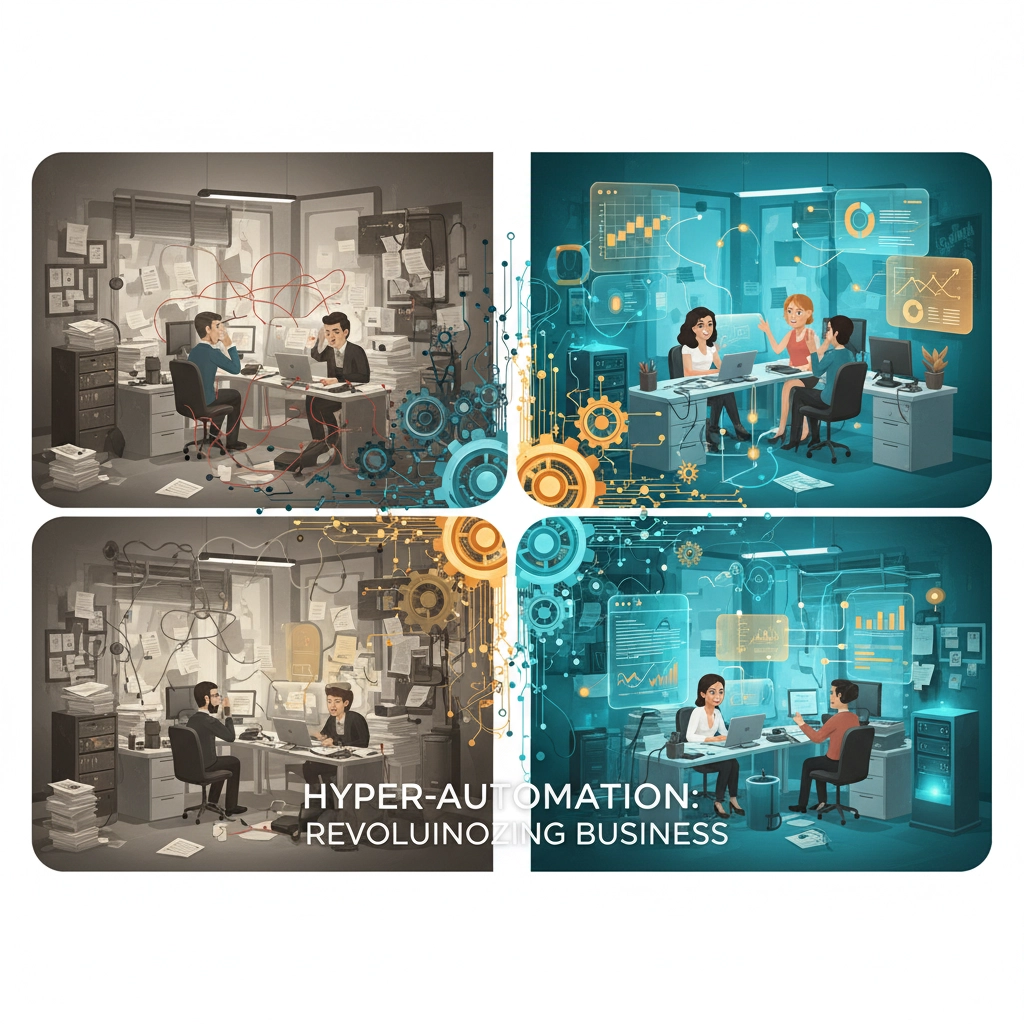
Organizations implementing comprehensive hyper-automation strategies typically see measurable improvements within 90 days:
- Processing Time Reduction: 60-80% decrease in routine task completion times
- Error Rate Improvement: 70% reduction in manual processing errors
- Cost Savings: 40-60% reduction in operational costs for automated processes
- Employee Satisfaction: Higher job satisfaction as staff focus on strategic work rather than repetitive tasks
Long-term Strategic Advantages
Beyond immediate operational improvements, hyper-automation creates sustainable competitive advantages. Companies develop better customer responsiveness, improved data quality, enhanced compliance capabilities, and increased scalability without proportional staff increases.
Overcoming Implementation Challenges
Change Management and Employee Adoption
Successful hyper-automation implementation requires comprehensive change management strategies. Employees need clear communication about how AI will enhance rather than replace their roles. Training programs should focus on collaboration with AI systems and development of higher-value skills that complement automation capabilities.
Data Quality and Security
AI-driven automation depends on high-quality data. Organizations must establish robust data governance practices, implement appropriate security measures, and ensure compliance with relevant regulations. Investment in data infrastructure pays dividends through improved automation accuracy and reliability.
Governance and Oversight
As AI systems assume greater decision-making authority, organizations need governance frameworks that balance automation efficiency with appropriate oversight. Clear escalation procedures, regular performance audits, and transparent decision-making processes build stakeholder confidence in automated systems.
Getting Started with Virtual Nexgen Solutions
Implementing hyper-automation successfully requires expertise in both AI technology and business process optimization. Virtual Nexgen Solutions specializes in helping US businesses navigate this transformation through comprehensive virtual assistant services enhanced with cutting-edge AI capabilities.
Our team understands that every business has unique automation needs and challenges. Whether you're looking to automate customer service operations, streamline financial processes, or enhance marketing effectiveness, we provide customized solutions that deliver measurable results.
Ready to Transform Your Business Operations?
Don't let competitors gain the hyper-automation advantage while your business relies on manual processes. The organizations implementing AI-driven automation strategies today will dominate their markets tomorrow.
Schedule a free 30-minute consultation with our automation experts to discuss your specific business needs and discover how Virtual Nexgen Solutions can accelerate your hyper-automation journey. During this consultation, we'll assess your current processes, identify automation opportunities, and provide a customized roadmap for implementing AI-driven workflow optimization.
Visit Virtual Nexgen Solutions to learn more about our comprehensive range of AI-enhanced virtual assistant services and discover how we're helping businesses across America unlock the full potential of hyper-automation.
The future of business operations is intelligent, automated, and responsive. The question isn't whether your business will adopt hyper-automation: it's whether you'll lead the transformation or follow competitors who act first. Contact Virtual Nexgen Solutions today and take the first step toward operational excellence through AI-powered automation.