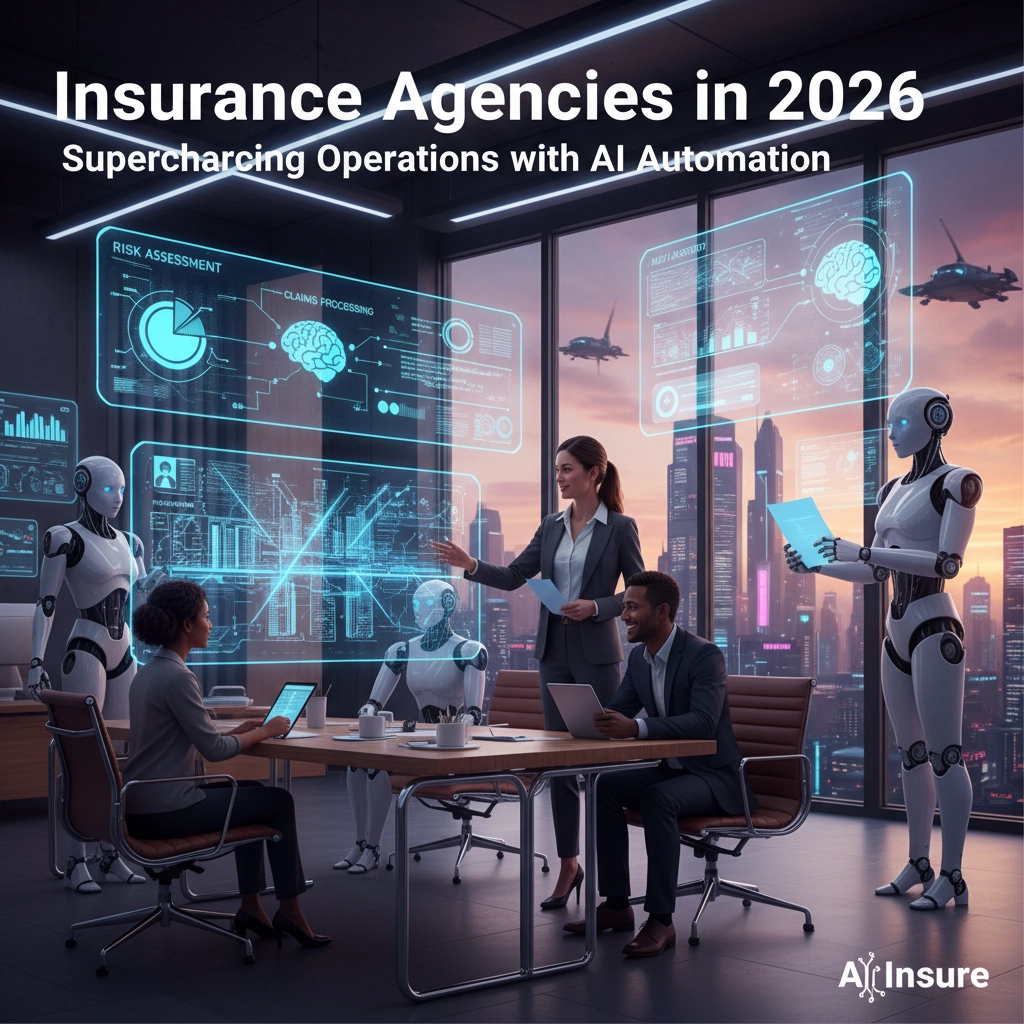
The insurance industry is experiencing a revolutionary transformation in 2026, with AI automation emerging as the game-changer that's reshaping how agencies operate, serve customers, and manage complex workflows. Gone are the days of manual paperwork, lengthy claim processing, and repetitive administrative tasks that consume valuable time and resources.
Today's forward-thinking insurance agencies are leveraging sophisticated AI automation tools to streamline operations, reduce costs by up to 40%, and deliver exceptional customer experiences that set them apart from competitors still relying on outdated manual processes.
The Current State of AI Automation in Insurance
Insurance agencies across the United States are rapidly adopting AI automation technologies to address critical operational challenges. According to recent industry data, agencies implementing comprehensive AI automation solutions are seeing dramatic improvements in efficiency, with claims processing times reduced by over 60% and customer satisfaction scores increasing by 35%.
The shift isn't just about replacing human workers: it's about augmenting human capabilities and freeing up skilled professionals to focus on high-value activities like complex underwriting decisions, relationship building, and strategic planning.

Key Tasks Insurance Agencies Can Automate
1. Quote Generation and Policy Administration
Automation Opportunities:
- Instant quote calculations based on customer data
- Policy document generation and distribution
- Premium calculations and adjustments
- Renewal processing and notifications
Step-by-Step Automation Process:
- Data Collection: AI systems automatically gather customer information from multiple sources including credit reports, driving records, and property databases
- Risk Assessment: Machine learning algorithms analyze hundreds of variables to determine risk levels instantly
- Quote Generation: Automated systems calculate premiums and generate personalized quotes within seconds
- Document Creation: AI generates policy documents, terms, and conditions automatically
- Distribution: Automated email systems send quotes and documents to customers with personalized messaging
Recommended Tools:
- Insurance CRM platforms with AI integration
- Automated underwriting systems
- Document generation software
- Virtual assistant platforms for customer communication
2. Claims Processing and Settlement
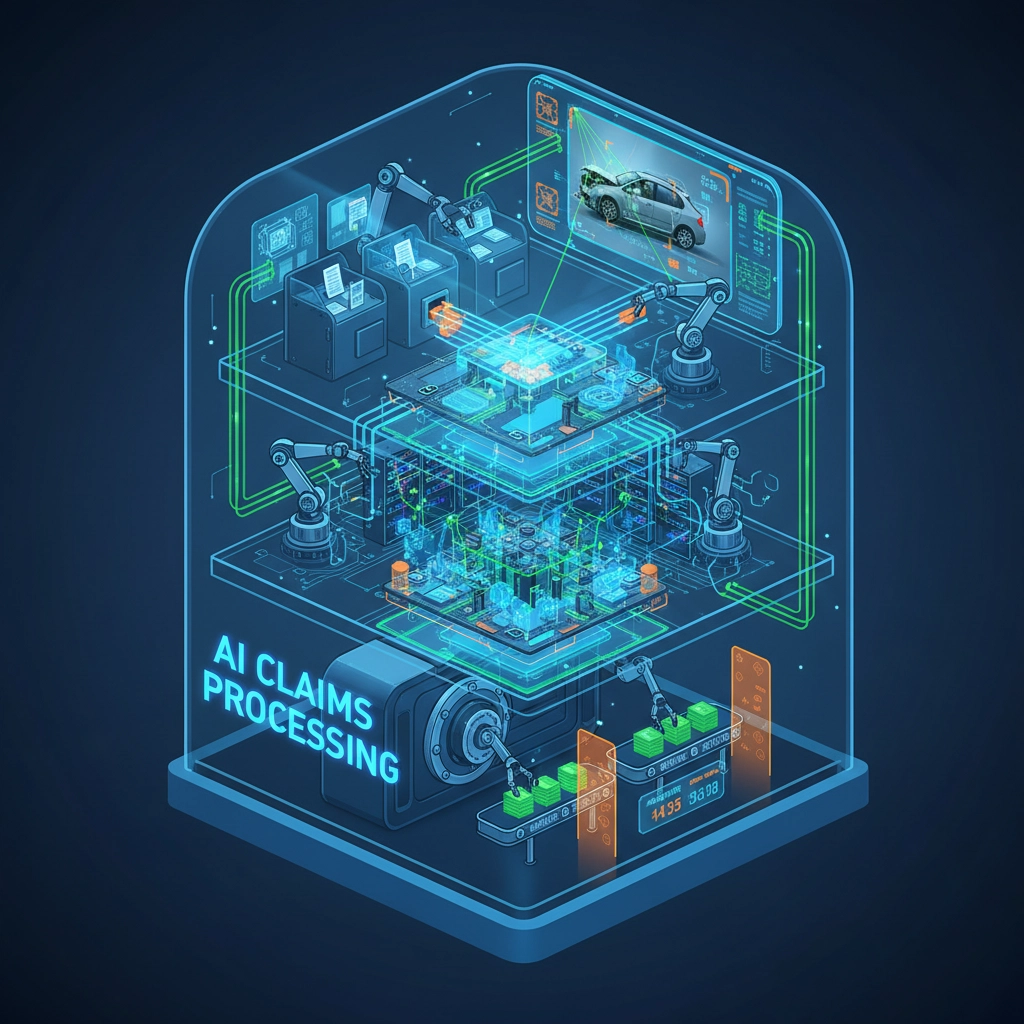
Claims processing represents one of the most impactful areas for AI automation. Leading insurers like Allianz have demonstrated the potential through their Project Nemo initiative, achieving an 80% reduction in claim processing time using specialized AI agents.
Step-by-Step Claims Automation Process:
- Initial Submission: Customers submit claims through AI-powered portals that use OCR technology to extract data from documents and photos
- Data Verification: AI systems cross-reference claim information with policy details and external databases
- Fraud Detection: Machine learning models analyze patterns to flag potentially fraudulent claims for human review
- Damage Assessment: Computer vision technology evaluates photos and videos to estimate repair costs
- Decision Making: Simple claims are approved automatically, while complex cases are routed to human adjusters
- Settlement: Automated payment systems process approved claims and notify customers
Essential Tools:
- Claims management platforms with AI capabilities
- Computer vision software for damage assessment
- Fraud detection algorithms
- Automated payment processing systems
3. Customer Service and Support
Automation Capabilities:
- 24/7 customer support through AI chatbots
- Automated appointment scheduling
- Policy information retrieval
- Payment processing and billing inquiries
Step-by-Step Customer Service Automation:
- Initial Contact: AI chatbots handle initial customer inquiries and gather relevant information
- Intent Recognition: Natural language processing identifies customer needs and routes requests appropriately
- Information Retrieval: AI systems access customer databases to provide instant policy information
- Problem Resolution: Simple issues are resolved automatically, while complex matters are escalated to human agents
- Follow-up: Automated systems schedule follow-up communications and satisfaction surveys
4. Lead Management and Sales Support
Automation Features:
- Lead scoring and qualification
- Automated follow-up sequences
- Appointment scheduling
- Sales pipeline management
Implementation Process:
- Lead Capture: AI systems capture leads from multiple channels (website, social media, referrals)
- Lead Scoring: Machine learning algorithms evaluate lead quality based on predefined criteria
- Automated Outreach: Personalized email and SMS sequences engage prospects automatically
- Appointment Scheduling: AI assistants coordinate meetings between prospects and agents
- Pipeline Management: CRM systems automatically update lead status and next actions

Advanced AI Tools Transforming Insurance Operations
Agentic AI Platforms
Agentic AI represents the next evolution beyond basic automation, deploying autonomous agents capable of multistep actions and complex decision-making. Companies like Superagent AI are pioneering solutions that can reduce new-hire ramp-up time by 50% and boost close rates by double digits.
Robotic Process Automation (RPA)
RPA tools handle repetitive tasks like data entry, document processing, and regulatory reporting, freeing up staff for more strategic activities.
Predictive Analytics Engines
These tools analyze historical data to predict customer behavior, identify cross-selling opportunities, and optimize pricing strategies.
Virtual Assistant Platforms
AI-powered virtual assistants handle routine customer interactions, appointment scheduling, and information gathering, providing 24/7 support capabilities.
Implementation Best Practices for Insurance Agencies
Start with High-Impact Areas
Begin automation efforts with processes that offer the greatest return on investment, such as claims processing or quote generation, where efficiency gains are most noticeable.
Maintain Human Oversight
Implement a human-in-the-loop approach for complex decisions, ensuring that AI recommendations are reviewed by experienced professionals before final approval.
Ensure Data Security
With sensitive customer information at stake, prioritize AI solutions that offer robust security features and comply with insurance industry regulations.
Train Your Team
Invest in staff training to help employees work effectively with AI tools and understand how automation enhances rather than replaces their roles.

Measuring Success and ROI
Insurance agencies implementing AI automation are tracking key performance indicators including:
- Processing time reduction (typically 40-80% improvement)
- Error rate decrease (up to 90% reduction in manual errors)
- Customer satisfaction scores (average 35% increase)
- Cost per claim processed (significant reductions)
- Agent productivity metrics (substantial improvements)
Future Outlook: The Competitive Advantage
Industry experts predict that agencies failing to adopt AI automation will face significant competitive disadvantages. As Clark Fisher from Farmers Insurance noted, "If this is just the beginning, I can't imagine how agencies will compete without AI agents in the future."
The agencies that embrace these technologies now are positioning themselves to capture market share, deliver superior customer experiences, and operate with unprecedented efficiency levels.
Common Implementation Challenges and Solutions
Data Integration Issues
Challenge: Connecting AI systems with existing insurance software and databases.
Solution: Work with experienced AI implementation partners who understand insurance industry requirements.
Staff Resistance
Challenge: Employees concerned about job security with automation implementation.
Solution: Emphasize how AI augments human capabilities rather than replacing workers, and provide comprehensive training programs.
Regulatory Compliance
Challenge: Ensuring AI systems meet insurance industry regulations and compliance requirements.
Solution: Choose AI platforms specifically designed for insurance use cases with built-in compliance features.

Transform Your Insurance Agency with Professional AI Implementation
The insurance industry's AI automation revolution is accelerating, and agencies that act now will gain significant competitive advantages. However, successful implementation requires expertise, strategic planning, and ongoing support to maximize results.
At Virtual Nexgen Solutions, we specialize in helping insurance agencies implement comprehensive AI automation solutions that drive real results. Our team understands the unique challenges facing insurance professionals and delivers customized automation strategies that streamline operations while maintaining the personal touch your clients expect.
Whether you're looking to automate claims processing, enhance customer service, or optimize your sales pipeline, our AI automation experts can help you identify the highest-impact opportunities and implement solutions that deliver measurable ROI.
Ready to supercharge your insurance agency's operations with AI automation? Book a free 30-minute consultation with our AI specialists to discover how we can help you reduce processing times, increase efficiency, and deliver exceptional customer experiences that set your agency apart from the competition.
Don't let your agency fall behind in the AI automation revolution. Contact Virtual Nexgen Solutions today and take the first step toward transforming your insurance operations for success in 2026 and beyond.