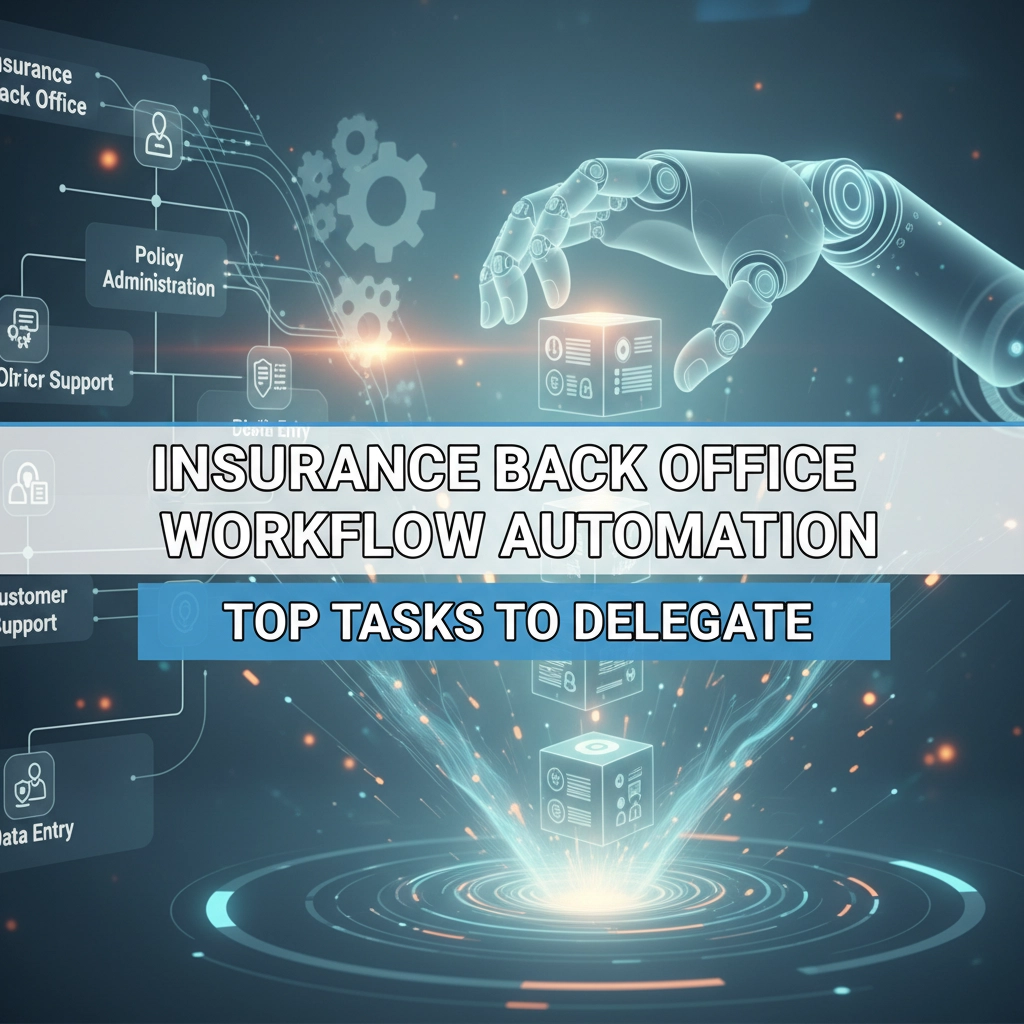
Insurance agencies today face mounting pressure to streamline operations while maintaining exceptional customer service. The back office: traditionally a maze of manual processes, paperwork, and repetitive tasks: represents the biggest opportunity for transformation through workflow automation and strategic delegation.
Research shows that insurance companies can reduce processing time by up to 50% and lower operational costs by 20-30% through effective back office workflow automation. But knowing which tasks to delegate and automate first makes the difference between transformation success and costly missteps.
The Hidden Cost of Manual Back Office Operations
Most insurance agencies unknowingly hemorrhage thousands of dollars monthly through inefficient back office processes. Policy renewals sit in email inboxes for days, claims processing crawls through multiple departments, and data entry errors cascade into compliance nightmares.
These operational bottlenecks don't just drain resources: they directly impact customer satisfaction. When a client calls about a claim status and your team needs 20 minutes to locate the file across three different systems, that's a relationship-damaging experience that automation could prevent entirely.
Top Back Office Tasks Perfect for Delegation
Claims Processing and Management
Claims processing represents the highest-impact area for insurance agency automation. Rather than having your experienced agents manually route claims through email chains, automated workflows can handle the entire lifecycle from First Notice of Loss through settlement.

A dedicated virtual assistant for businesses can manage claims intake, document collection, and initial processing while automation handles validation against policy data and workflow routing. This combination reduces processing time dramatically while freeing your core team to focus on complex claims requiring human expertise.
Key delegatable claims tasks include:
- Initial claims documentation and filing
- Status updates and customer communications
- Document collection and organization
- Basic fraud detection screening
- Settlement calculation and processing
Policy Administration and Renewals
Policy lifecycle management consumes enormous administrative bandwidth in most agencies. Renewal workflows, address changes, and payment processing follow predictable patterns perfect for systematization.
Virtual assistants can handle renewal packet generation, customer outreach, and documentation while automated systems apply business rules and trigger escalations when needed. This approach has increased customer satisfaction by 90% in agencies that implement it properly, primarily by eliminating renewal delays and communication gaps.
Data Entry and Document Processing
Manual data entry from applications, forms, and claims documents introduces both errors and delays that ripple through your entire operation. Modern back office workflow automation eliminates manual typing through intelligent document processing while virtual assistants handle exceptions and quality control.

This dual approach: automation for routine extraction, virtual assistants for complex cases: delivers superior accuracy while reducing processing times to a fraction of manual methods. Your internal team can focus on customer relationships rather than keyboard work.
Underwriting Support and Risk Assessment
Underwriting workflows involve multiple stakeholders, heavy document dependencies, and repetitive data verification. While final underwriting decisions require expert judgment, much of the supporting work can be delegated effectively.
Virtual assistants can gather and organize applicant data, perform initial risk scoring, and prepare comprehensive underwriting packages. Automated systems handle routine validation checks and data integration, allowing underwriters to focus on actual risk analysis rather than information gathering.
Quote Generation and Proposal Management
Sales teams lose valuable momentum when quote creation requires multiple manual steps and approval routing. Virtual assistants can manage quote preparation, competitor analysis, and proposal formatting while automation handles pricing calculations and approval workflows based on predetermined criteria.
This delegation strategy reduces quote turnaround times significantly while ensuring consistency in presentation and pricing accuracy across all proposals.
Customer Service and Communication Management
Insurance customers expect prompt, accurate responses to inquiries about policies, claims, and coverage changes. Virtual assistants excel at managing routine customer communications, appointment scheduling, and information requests.

By delegating first-tier customer service to trained virtual assistants supported by automated knowledge bases, agencies can provide 24/7 responsiveness while ensuring complex issues reach the right specialists quickly.
Key customer service tasks for delegation:
- Policy inquiry responses
- Appointment scheduling and confirmations
- Basic claims status updates
- Payment reminder calls
- Customer onboarding communications
Compliance and Reporting Automation
Regulatory compliance in insurance requires meticulous documentation, deadline tracking, and report generation. These processes follow strict protocols that make them ideal candidates for systematization.
Virtual assistants can manage compliance calendars, prepare routine reports, and ensure documentation standards while automated systems track regulatory changes and flag potential issues. This approach dramatically reduces compliance risk while freeing your team from routine monitoring tasks.
The Strategic Advantage of Hybrid Automation
The most successful agencies don't choose between automation and delegation: they combine both strategically. Automation handles high-volume, rule-based tasks while dedicated virtual assistants for businesses manage exceptions, customer interactions, and complex cases requiring human judgment.
This hybrid approach delivers several key advantages:
Cost Efficiency: Virtual assistants cost 70% less than full-time employees while automation eliminates the highest-volume routine tasks entirely.
Scalability: You can adjust virtual assistant hours and automation complexity based on business volume without hiring or layoff complexities.
Quality Consistency: Standardized processes ensure consistent service delivery regardless of volume fluctuations or staff changes.
Competitive Response Speed: Faster processing enables quicker customer responses and more agile market positioning.
Implementation Best Practices
Successful insurance agency automation requires strategic sequencing. Start with the highest-volume, most standardized processes like policy renewals or claims intake. These deliver immediate ROI while building organizational confidence in delegation.

Next, expand into customer service and administrative support where virtual assistants can handle routine interactions while learning your specific processes and customer base. Finally, tackle complex workflows like underwriting support where the combination of automation and skilled virtual assistance delivers maximum value.
Document all processes thoroughly before delegation. Virtual assistants perform best when they have clear procedures, escalation criteria, and quality standards. Invest time upfront in process mapping to ensure smooth transitions and consistent results.
Measuring Success and ROI
Track specific metrics to validate your automation and delegation investments:
- Processing time reduction percentages
- Error rate improvements
- Customer satisfaction scores
- Cost per transaction changes
- Employee satisfaction and retention
Most agencies see positive ROI within 90 days when they implement systematic delegation with proper virtual assistant support and targeted automation.
Transform Your Back Office Operations Today
The insurance industry's rapid evolution demands operational excellence that only strategic automation and delegation can deliver. Agencies that continue relying on manual processes will find themselves at an insurmountable competitive disadvantage within months, not years.
Virtual Nexgen Solutions specializes in transforming insurance back office operations through expert virtual assistant services and workflow automation strategies. Our dedicated virtual assistants for businesses understand insurance operations intimately and can immediately begin handling your highest-impact delegatable tasks.
We've helped dozens of agencies reduce operational costs by 30-40% while improving customer satisfaction and employee retention. Our proven methodology ensures smooth transitions and measurable results from day one.

Ready to eliminate back office bottlenecks and free your team to focus on growth? Schedule a free consultation to discover which tasks in your agency offer the highest delegation ROI and how our virtual assistant solutions can transform your operations starting next week.
Don't let manual processes continue draining your profitability and limiting your growth potential. The agencies implementing back office workflow automation today will dominate their markets tomorrow.